The Paying Guests, Sarah Waters, Ezra Pound, Poetry, Lesbians, and Man-Kittens

09-24pguests_standard_600x400[1]


My book club chose the historical fiction novel The Paying Guests, by Sarah Waters (published in September 2014) as our November read. My book club meets tonight to discuss this book, so I’m ordering my thoughts in advance, in hopes of sounding witty and dashing with my insightful commentary.

(Side Note #1: I’ve never been called witty or dashing in my life. So I should probably say “I’m blogging about this so I don’t sound dumb” and that would be more accurate.)

I discovered a whole new realm of personal ignorance while reading this book.

Not about the setting or the story, which follows a young woman facing hardship and a very difficult intimate relationship in 1922 London — no, I wasn’t ignorant about 1922 London or difficult intimate relationships — I was ignorant about Sarah Waters, who has been short-listed for the Man Booker Prize three times, and always writes about lesbians in her work.

I didn’t even know she existed before reading this book. (!!!)

Here’s a picture of Sarah Waters, famous writer of lesbians —

sarah-waters-188x200[1]


The New York Times article about Ms. Waters, “Weaving a Tale of Love and Death in London” by Sarah Lyall (Sept. 9, 2014) helped rectify some of my ignorance about the author. “Ms. Waters did not really set out to be a novelist, nor, in truth, did she know right away she was a lesbian. She grew up in a small town in Wales, where there was minimal acknowledgment of gayness, let alone gayness involving women.” “She had a girlfriend — secretly — in college, and then came out in earnest in the late ’80s. She moved to London, found a room in a ‘lesbian group house,’ wrote for lesbian publications and was swept up in an exciting, activist political movement.”

By now, if you haven’t yet read The Paying Guests, you can probably guess that the main character is a lesbian, and falls in love with another woman in the story. This took me completely by surprise, since the main character initially has more contact with a man in the story. Plus, there seemed to be a lot more electric tension/sexual frisson when the man was involved in a scene, rather than the other woman.

imagesCAZ64SCU


My favorite line from the novel (which is 564 pages long) comes very early, on p. 21, and involves the main character alone in her bedroom, after she’s stripped off her clothes in preparation for sleep. (Side Note #2: In the passage I quote, it’s the second sentence I love so much, since the first one is loaded with the most reprehensible pronoun of all — it — but I’m including the first sentence for clarity.)

My pick for best sentence:

“She rolled a neat little fag, lit it by the flame of her candle, climbed into bed with it, then blew the candle out. She liked to smoke like this, naked in the cool sheets, with only the hot red tip of a cigarette to light her fingers in the dark.”

RetroWomanCigarette[1]


There’s a delicious sensuality in that line, a sensuality I hoped would build and build through the novel —

But no. It didn’t.

At least, not for me.

After the beautiful image of this woman smoking naked in bed, I thought sensuality was pretty much non-existent in this book, though Ms. Waters does describe the sex scenes (which come much later) with carefully chosen detail, leaving no doubt in the reader’s mind as to what the two main characters do when they bang.

For me, the opening scenes were the story’s best. One involved this beautiful description of the food Frances (the main character) and her love interest (Mrs Barber) take on a picnic, their first extended period of time alone together. “Mrs Barber had made finger-rolls, pin-wheel sandwiches, miniature jam tarts: the sort of fiddly dainties written about in the women’s magazines that Frances now and then read over shoulders on the bus. She herself had brought hard-boiled eggs, radishes from the garden, salt in a twist of paper, half a round of seed cake and a bottle of sugarless tea, swaddled in a dish-cloth to keep it hot.” (p. 91)

Such a fabulous collection of foods, no? I love the details as well as the contrasts between them. Very lovely.

As to this picnic — these two women are not very far from Frances’s house — they’re in a little park down the street from the home where most of the story takes place. I really liked all of the details about this first tiny trip they take together; the whole scene was beautifully done.

One thing I didn’t feel in this book was desire. Meaning: I didn’t desire the person Frances desired (Mrs Barber).

[Side note #3: in British English, periods aren’t needed after titles, so that’s why Mrs is written without one. In case anyone worried I wasn’t paying attention, or was watching more Honest Trailers while I blog.]

As to my lack of desire for Mrs Barber, I pondered my lack a great deal.

Because I usually feel a lot of desire for people in love stories. Even the reserved and understated prose of literary fiction can often rouse me to swooniness.

But I felt nothing for Mrs Barber, perhaps because I always saw her as an inferior person, lacking the intellect needed to be arousing. Frances was stronger and smarter than Mrs Barber in every way, and I’m a love-at-first-brain kind of girl. Give me a smart and interesting character, and I am instantly attracted. No matter what a character is feeling, I always have insta-love for characters with brains.

(My one exception to this rule is Enrique Iglesias, who is so adorable, I could rock him in my arms like a doll baby for hours on end, he looks like a four-year-old to me, I don’t know why this is but he does have a baby face, just the prettiest lil face, he is the only person who could be a complete numbnut around me and I would still want to cuddle him and stare at his eyelashes and other weird stuff, like scratch his chin and pinch his cheeks. I don’t even want to know what kind of person he is in real life; some of the songs he sings are so skeezy I can only imagine how he is probably the last person on earth I should rock in my arms like a doll baby, but even so. He is just too much cuteness.)

Seriously — look at that baby face! He is like the man-version of a fluffball kitten, and I am like, come here, little kitty, I want to cuddle you and scratch your lil chin —

imagesCAOT12PV


Which is a very different feeling than saying, come here, I want to bang you, (which is how Frances and Mrs Barber feel about each other) — because Enrique would have to do something really brainy for me to feel sexually attracted to him. It’s only my cuddle drive that Enrique flips on — and men do NOT like it when you treat them like kittens. They also don’t appreciate hearing they have the baby face of a four-year-old. *emasculating*

So I would totally fail with Enrique Iglesias. He’d be like, “Get away from me, you psycho!!” and he would be right.

But back to my lack of desire in The Paying Guests — both for Mrs Barber, as well as for Frances.

The desire I felt in the beginning for Frances (which began with that beautiful line about her sitting naked in her sheets) — well, that initial attraction just got totally pummelled to death by the needs of the plot, which takes a very grim turn by page 288.

Now, I don’t want to spoil the book, so I won’t share any details, but if anyone does want spoilers they should just read this review by Carol Anshaw and then you’ll know everything that happens. Sometimes NYT book reviews share way too much of the plot than I think they should, and this review falls into that category.

So rather than spoil the plot, I’ll say that once the story takes its grim turn, the pages spared no grisly detail, and the reading felt punishing. Then Frances and Mrs Barber do some foolish things, because they are human, and very weak and fragile and scared, and the story grew even more punishing to read.

Then the story turns into a police procedural/courtroom-type drama, and by then, I grew very fatigued by the super-slow pace. This is a long, long book. The main characters are cowardly (and very, very human), and the book just wasn’t entertainment anymore. I wasn’t swept away in a story, but felt like I was receiving a beating, until finally, by the last one or two hundred pages, I gave myself permission to start skimming. I paused to read the important lines, to follow the plot, but I didn’t force myself to read every word.

It was challenging to read a courtroom-type drama written with the abundance of minutiae this author continued to pour into the story. It probably doesn’t help that I am not a Law and Order fan (I so rarely watch TV) and I don’t read John Grisham (I read his first book, and called it good) and I just don’t find courtroom dramas to be all that compelling. I’m a philistine, obviously, and I’d rather eat cinnamon rice pudding and watch J.J. Abrams’s Star Trek for the fiftieth time than read courtroom thriller/dramas involving lawyers and people facing the consquences of either 1.) their actions, or 2.) being wrongly accused by the law.

But one thing I do know about Law and Order and courtroom thriller/dramas — they are meant to move fast. And The Paying Guests actually seems to slow down even more after things take a grim turn by page 288.

The women in this book dress up for a party though (in the first half of the book), so here is a fashionable 1920s woman —

2010eg4150_norman_hartnell_fashion_design_290x290[1]


That belt is just all kinds of lovely, no? I love low-fitting belts, especially sparkly ones. And those sleeves!! And her hookah-like feather-wand!! She can come party at my house any day.

As to the ending of The Paying Guests, I would like to share the second half of the closing line. I do not want to share the whole sentence, as it would give the ending away, so I will just share half of it, to illustrate that the book ends with a truly beautiful sentence: “… the two of them in their stone corner, their dark clothes bleeding into the dusk, lights being kindled across the city, and a few pale stars in the sky.” (p. 564)

Sarah Waters does one of my favorite things great writers do in that sentence — in craft terms, I call it a mash-up. When you take words that don’t normally go together and make meaning with them.

Ms. Waters has “clothes bleeding” (we all know clothes can’t bleed, but what lovely imagery for the falling darkness!) and she has the electric lights of the city being “kindled” like a young fire, and she describes the stars as “pale.” (An orginal use of an adjective definitely qualifies as a mash-up. Poets are the best at mash-ups, and literary fiction authors are long-form poets at heart.)

There was one other place in the book where a mash-up stood out, and I’ll quote only part of the line: “… people… attracted by the horror and glamour of murder” (p.404). Putting horror and glamour together makes for a very nice mash-up.

Time for another 1920s fashionista pic —

_hilda_steward_fashion_design3_custom_base_custom_base_custom_base_custom_base_custom_base_custom_base_custom_base_custom_base_custom_290x290_0616164780[1]


Nothing like a fur stole to scream: I am elegant, damnit! And frivolous! Do you know how much my clothes cost? Do you??

Plus the orangey-brown shade of that dress just seems all kind of decadent.

Since I don’t work for a publishing company, don’t edit manuscripts professionally, don’t teach at an MFA program, and do not even possess an MFA, I lack any credentials to be discussing important aspects of craft like mash-ups. But I will discuss this anyway, because this is my blog, and I am the CEO of my blog.

*ultimate power*

You might have already guessed that similes and metaphors — the real heart of what makes exquisite writing so stunning to read — are also examples of mash-ups. But similes and metaphors need other words to work — for instance, most metaphors need a linking verb like “was” in their phrasing — for example, Her heart was the sea. Or, His smile was the sun. And similes must use the words like or as to operate: Her laugh filled the room like sweet music. Or, His laugh was low and dangerous as the growl of a leopard.

The simile and the metaphor (especially the metaphor! the mighty metaphor! *swoon*) may be the recognized kings of stunning prose (for good reason!), but mash-ups are the warrior armies who keep them so high on their thrones. Great writing is cumulative, and mash-ups build on each other, so that each subsequent mash-up (or simile, or metaphor) packs a stronger and stronger punch the further into the story you are.

Laini Taylor is particularly brilliant with mash-ups. Rainbow Rowell can wield them like a superhero as well. A mash-up condenses the language on the page, so the writer can say a whole lot with only a very few words. So this skill is highly prized, not only in literary fiction, but in YA fiction as well, where keeping your page count at 80,000 words is a huge goal. Laurie Halse Anderson’s YA novels Speak and Wintergirls are so short and succint because she is such a genius with mash-ups. Many YA authors are just omg amaze with this skill.

In thinking my own thoughts about mash-ups though, I had to turn to the man who defined the ways in which poetry works. Which means, I had to turn to Ezra Pound

220px-Ezra_Pound_2[1]


This is the part where my nonexistent MFA would *really* come in handy.

Because I’ve never studied Ezra Pound in any official capacity. Though I do know he turned into a horrible Hitler-promoting fascist and was tortured in a POW camp by being locked in a small metal cage, which gave him a mental breakdown. (Thanks, Wikipedia!)

Mr. Pound’s personal life aside, he had a lot of great things to say about how poetry works, and he used three words to describe the three different techniques he identified for using poetry to stimulate an emotional response in the reader: phanopoeia, melopoeia, and logopoeia.

(Yeah, I feel a bit squicked out just looking at the words. They just look icky, don’t they? Ick.)

But they are very cool, very useful words for writers to know.

I’ll quote mash-up king (and amazing literary fiction author) Ben Fountain to explain them:

“There’s phanopoeia, throwing an image on the reader’s mental retina, and there’s melopoeia, using the sounds of the words themselves to evoke some kind of emotion, and then there’s logopoeia, which is taking a word or a phrase and using it in a different context from what the reader is used to. Prose writers, at least this prose writer, would be well served to study the poets and see how they get that maximum compression, that maximum charge of meaning in each line.”

(That’s quoted from an interview Mr. Fountain gave in December 2009. I really want to meet Ben Fountain one day. Like, really. I want to meet him more than I want to cuddle Enrique Iglesias.)

Here is a picture of Ben Fountain, along with the cover of his brilliant *BRILLIANT* novel Billy Lynn’s Long Halftime Walk

images[10]


That novel should have won the 2012 National Book Award but it didn’t because sometimes judges suck. Louise Erdrich beat him that year for The Round House (which I didn’t read because I am lame) but I STILL THINK Billy Lynn’s Long Halftime Walk should have won!!!!

*tantrum*

*I am two*

*more tantrum*

Okay, now that I have my sippy cup full of milk and a binky, let me return to the issue at hand — how poetry works, which is also how exquisite prose works, because exquisite prose writers have the heart of long-form poets. (Like Michael Ondaatje, who is da masta.)

Phanopoeia is what any decent writer can do — create pictures with words inside the reader’s brain. Which is extremely magical, and truly not that easy to do, but this is the foundation of craft right here, so any decent writer can pull this off.

Melopoeia is the next step up. This element of craft is the writer’s recognition of the music in language, and how to make music with sound. This is a part of writing that cannot be taught, because recognizing pitch, tone, and rhythm in a sentence is an innate skill people either do or do not have. Writing hits a person the way music does — it is sound and emotion combined — and people who are tone-deaf and have no rhythm at all to sense the pull and sway of words on a page are just never going to pen things that utilize melopoeia. They can write great commercial fiction with exciting plots and racing action, and they can make a lot of money, but melopoeia is something more, something that transcends plot, because this type of artistry with language is far more soulful than the clunky wang-bang-pow of plot.

Logopoeia is often an aspect of phanopoeia — creating pictures with words — and, at its best, logopoeia is making use of melopoeia — using sound for effect — and when logopoeia embraces both of the previous skills — well, I think this is where the masters hang out. The writers like Ben Fountain, and Laini Taylor, and Michael Ondaatje, and Arundhati Roy, and the other writers that put me in pleasure-comas when I read their books.

So let me get back to The Paying Guests, and tell you which techniques of craft I think Ms. Waters employed in her novel —

The book excelled at phanopoeia the most, as each scene in the book was rendered with lavish detail, and so much attention was given to each piece of the story that the novel felt very real, like I was reading a memoir penned by the main character, rather than a novel.

While Ms. Waters is certainly a master with language, the straightforward storytelling didn’t lend itself to much melopoeia in the prose. Frances doesn’t describe things to be sensual or enticing, but in a stiff-upper-lip British way, so the melopoeia in the prose of The Paying Guests was utilitarian, not poetic or swoony. Ms. Waters concentrated on word choice, no doubt about it, because this novel is a fine example of literary fiction — but this is not urgent, chaotic, tumbling melody, but careful, deliberate sentences hammered out like a fine copper box. All the thoughts inside are neatly ordered. These ducks are lined up in a row.

As for logopoeia, it was rare. I quoted the final line of the novel because it stood out to me as a prime example of the technique this book used the most sparingly.

It’s also the technique I prize in books more than any other. The red meat my bloodhound nose goes right after. Though perhaps I am more like those hogs who sniff out truffles, and while I read, I am like, grunt grunt grunt where are the truffles?? Truffles! truffles!! yummy yummy good stuff here I NEED TRUFFLES.

My spirit animal could totally be a truffle-hunting hog. My inner monster is quite happy being a food-seeking pig with a wicked good snout.

And also, this —

Spirit Animal


This frog is so ME I just get all loopy-happy looking at him. This is the Buddha of frogs. Plus, he has sparkly eyes, and I love him.

Posted in My Thoughts | Leave a comment

The Good Word on Mockingjay Part I and My Issues with Hashtags

My last blog post about race and science fiction detailed my reaction to this picture taken from The Hunger Games: Mockingjay Part I

movies-hunger-112114-videoSixteenByNine540[1]


and I have good news to share! I did not see the film, but my Crazy Babe did (in real life, she goes by the name longtime critique partner Adriana Arbogast) and she said the woman in rags is the leader of her district, which has just been bombed, and that everyone else in her district was also dressed in rags. Adriana enjoyed the movie because she is Crazy a Hunger Games movie fan — but her synopsis of the film made this movie an easy pass for me. Plus, my granddaughter’s boyfriend revealed to me today (Happy Thanksgiving, by the way! It’s Thanksgiving as I write this! I hope you all had a wonderful Thanksgiving! And I hope you had pie! I had such amazing cherry pie today! It was sooooo heavenly!!) —

Um, where was I?

Before the pie?

Oh yes, Mockingjay Part I. Right! Let me get back to that.

I received this important news today: my granddaughter’s boyfriend revealed to me that Cressida *isn’t* a badass warrior in the movie, but “an interviewer” come to film and interview Katniss (this, I presume, would be for the propaganda videos Alma Coin needed in the book… though I could be wrong).

Whatever the details, I was crushed to learn Cressida isn’t a warrior.

0lcW8oyj31[1]


I’m so depressed I could just run downstairs and eat the enormous block of carrot cake and half a cherry pie I was sent home with post-turkey-feast.

(Why do people have to send me home with huge slabs of carrot cake and cherry pie? Why?? Because they know how depressed I’ll be over Cressida not being a warrior and somehow intuit I no longer keep emergency stashes of brownies in my house and will therefore need sugarload-help with the face-stuffing despair of Hollywood letdown?)

Um, the correct answer must be yes, obviously, because this is a tragedy.

My epic whininess aside, my granddaughter’s boyfriend loved the movie, as did my granddaughter, as did several friends. None of them were crying about Cressida not being a warrior. (*sob!* I feel so alone right now! Just me and my slab of carrot cake to soothe all my pain…)

After I join carrot cakers anonymous, I’ll be Tweeting about my experience in recovery. Because hey! I’m on Twitter now! My profile name is MelissaJStacy. I feel very groovy.

twitter-logo[1]


My previous exposure to Twitter has been really limited. But now that I’ve retweeted tweets and favorited tweets and made a few tweets myself (for five whole days!), I get what all the fuss is about. I can totally see why Twitter is addictive and fun.

But I will say this. People who Tweet and then repost their Tweets as status updates on Facebook (!!!) — *this* — more than anything else — is the reason I just want to puke every time I see a hashtag on Facebook.

It’s also the reason why I sometimes (sarcastically) write stuff like “hashtag-my-life-is-so-awesome” in a spirit of explosive sarcasm, frustration and spurious wrath. (As in, fake anger, though the frustration is definitely real.)

I do not like seeing Tweets as status updates on Facebook. Because if you don’t use Twitter (like me, as of before five days ago) — the hashtags just come off as pretentiously foreign and pointless. Like seeing a bunch of people eating Ramen noodles out of fine silver bowls at Wayne mansion. And Bruce is like, “Excellent dinner, Alfred,” (in his snootiest voice) while I am like, seriously?? Ramen at Wayne mansion for dinner? #wth

1056554[1]


(For my non-Tweeting friends, using a hashtag is just a way to lend emphasis to the words — in this case, envision my wth in bold, rather than following a hashtag, and you get the point. Hashtags are also used for sarcasm and irony, much the way I would write “hashtag-my-life-is-so-perfect” sometimes in Facebook posts. Because *frustration*)

But the biggest point of a hashtag is to “mark” a Tweet under a certain subject heading, so that people can search through all the Tweets on that subject. Because Twitter is just like Facebook, only a lot faster to scroll through, and everything on Twitter — all Tweets — are public. And because they are public, it’s nice to be able to reference everything people have said on a certain subject, like the protests in Ferguson.

As to using hashtags, I totally understand that it’s a lot less time-consuming to simply repost a Tweet as a status update on Facebook.

However.

If *I* ever start doing this, I need to be taken to a fish market and whapped in the head several times with frozen tuna. Then whapped a few more times. Then punched in the stomach for good measure.

Because I do not like hashtags on Facebook. I just don’t. Even now that I’ve started Tweeting, and “get the joke,” I still don’t like seeing hashtags on Facebook. Unless they’re being written out as the word “hashtag” rather than using the symbol. For me, writing out “hashtag” is still a totally awesome use of Facebook posts. (Because *frustration*)

Why do I feel this way?

Because more people — many millions more people — are on Facebook than Twitter. That means, every time a “hip Tweeter” hashtags all over a Facebook post, they are using a foreign language that many people reading their posts (like moi) are excluded from. It somehow doesn’t help matters that every time I see a hashtag it’s after someone’s boyfriend has just bought her airline tickets for a spontaneous trip to Hawaii and had a bazillion roses delivered to her at work and she posts a picture of her bazillion roses and airline tickets and a diamond necklace her boyfriend picked up on his way home from work as “an extra surprise” and then writes as her status update on Facebook:

#soblessed   #lifeisperfect     #lovethisman

and everyone is commenting with the smiley-face-with-heart-eyes emoticon (like, millions of them) and all I can think is:

#why #do #you #DO #this????

I feel the same way when I see a baby picture as a status update followed with:

#bestchildever    #lovemyfamily     #perfectboy     #myoneandonly

I’m back at Wayne mansion, asking Alfred — *ahem* — “Why in the F are we eating Ramen in Wayne mansion?? Can you *not* make something non-starchy that costs more than ten cents?? This is Batman Palace, for God’s sake. Read a cookbook.”

Erg.

Hashtag. Not a millennial. Hashtag. I’m the Grinch who stole Facebook Tweeting.

Hashtag. If I start Facebook Tweeting, take out the frozen tuna, and pummel me. Hashtag. *not kidding*

Hashtag — I do like Twitter though! It’s fun! And Tweeting is fun! Just not Facebook Tweeting. And I still love people who Facebook Tweet, because they are friends and family. And it does probably save people a lot of time. Just remember though: when some people (like moi) see Facebook Tweets, you’re serving Ramen at Wayne mansion, and it is weirdness.

Hashtag. The End.

Posted in My Thoughts | 1 Comment

Race, Science Fiction and Fantasy, and Mockingjay Part I

I finished writing Book I of Mark of the Pterren today, and it felt like such a HUGE win — because I was madly scribbling the last scene while getting my oil changed at Jiffy Lube here in Durango this afternoon, and a commercial came on the TV for The Hunger Games: Mockingjay Part I.

I didn’t realize the commercial was for Mockingjay, I just heard this mega-emotional-epic trailer music playing, and I was busy writing, and then I thought, oh man, this music is a bit much for a commercial, isn’t it? I mean really. It was so over the top. I was like, what is with this super-sapster-Nicholas-Sparks-esque trailer music?

Then I looked up and realized ohhhhhh — this is for Mockingjay!!!

I hadn’t seen a commercial for Mockingjay before. At the end of the trailer, the opening date of the movie flashed on the screen: November 21, 2014 — and I was like WHOA that’s TODAY!! Holy cow!!

Before I start making comments about movies, let me just say I love The Hunger Games trilogy. Because who doesn’t love The Hunger Games trilogy?

I just googled this question, and it turns out there is only one living creature on earth who does not love the books, and that is a leopard seal who never learned how to read. But I don’t even think his opinion should matter because he never learned how to read. That leopard seal needs to go to an adult literacy class, pronto.

So aside from one illiterate leopard seal in the southern ocean, everyone esle in the world loves The Hunger Games.

However. While many people love the movies, I do not. I only saw the first film, which I found so boring I think I fell asleep for part of it, my husband definitely fell asleep during several parts of it, and I just remember leaving the theater thinking I could have reread the book in less time than it took to watch the movie.

Plus I had to answer my husband’s repeated, “Why did you make me go see that? Why? Why??” in a tone of voice that would have been perfect in a super-emotional-Nicholas-Sparks-esque trailer, and I was like, “Honey, I’m so sorry, I had no idea it would be so slow. I just breezed through the books, I don’t understand it…”

I know people will want to throw stones at me (or at least a dozen rubber chickens at my head) for this evil hate speech confession that I did not love The Hunger Games movie. But after the first film, I couldn’t bring myself to watch Catching Fire — because if I fall asleep again out of boredom, that’s time I could be spending on important things, like watching Honest Trailers.

(If you haven’t seen it yet, the Honest Trailer for The Little Mermaid is really funny. The Little Mermaid is my all-time favorite Disney movie, but I still love the Honest Trailer making fun of it, it’s crass but omg with the giggles.)

Anyway — back to Mockingjay.

I’m not going to watch this film unless someone forces me to (which is doubtful). But I did read The New York Times movie review for Mockingjay tonight. Manohla Dargis wrote the review (I love her reviews!) and she wrote an insightful piece on Mockingjay.

What caught my attention the most was this picture though —

movies-hunger-112114-videoSixteenByNine540[1]


Typical war picture, right? People with weapons, walking through what looks like modern-day Syria, looking for people to kill.

But lately, I’ve been blogging about race in fiction, especially in sci-fi/fantasy fiction — namely the fact that, even in fantasy, the main characters are largely overwhelmingly all white. A writer named Amina Luqman wrote a poignant opinion piece about this for The Washington Post — “In the land of make-believe, racial diversity is a fantasy” — which I cited in a previous blog post, because this is an issue I started grappling with in a very serious way while writing Mark of the Pterren.

So. Here we have Mockingjay Part I. Probably the biggest blockbuster of the year. Let’s look at some of the main characters in Mockingjay Part I, shall we?

From the picture above, everyone knows Jennifer Lawrence plays Katniss Everdeen (including the illiterate leopard seal), and some people also know that Katniss had more olive in her skin (in the books) — and could have been played by an actress “of color” if she’d simply been cast that way. (Also, the phrase “people of color” kind of makes me queasy, since all people “have color” — but I’m just trying to go with mainstream labels, and “people of color” is a very mainstream way of discussing this, so there you go.)

Back to Katniss and Jennifer.

This is one situation where a main character could have been cast with darker skin, but wasn’t, although a lot of people forgive this immediately because Jennifer Lawrence is such a great actress. I’ll go on the forgiveness camp on this one, because I do love Jennifer Lawrence.

Let’s look at the other folks in the film —

Liam Hemsworth plays Gale Hawthorne.

Ym2CeTRlez[1]


Philip Seymore Hoffman plays Plutarch Heavensbee.

ccK7tdrMnw[1]


Donald Sutherland plays President Snow.

UVcE3FSusf[1]


Josh Hutcherson plays Peeta Mellark.

hunger2-master180[1]


(Can I just say how much I dislike the name Peeta? Also his hair in this picture is just omg with the mousse. Someone could have turned down the blow dryer just a tad.)

Julianne Moore plays this wench Alma Coin.

almacoin-618x400[1]


Natalie Dormer (on the right) plays Cressida.

0lcW8oyj31[1]


I don’t remember Cressida from the book but I love Natalie Dormer in Game of Thrones and the promise of seeing her in Mockingjay Part I with this totally badass hair-and-tattoo look she is rocking is seriously tempting me to go watch this movie. Because these actors have major talent and Natalie is just fiercely rad with that hair. I would marry her just so I could watch her stalk around in my house every day looking so badassly beautiful.

Okay, I think I’ve covered all the main characters in Mockingjay at this point, so let’s go back to the first picture again, the one that caught all my attention —

movies-hunger-112114-videoSixteenByNine540[1]


Guess what writer-me saw when she looked at this picture?

White people leading. Black people following. Black people cast in minor roles that might be named in the books, but I’d have to go see the movie, read the book again, and then read the credits very carefully to tell you.

What bothered me most about this picture though was how the black woman looks like she’s from the backwoods of Sierra Leone, while the other people are all decked out in smart-looking military gear. I mean, I know the people in District 13 are poor and everything, but why does the black woman have to be the one sporting the developing country look? Or the Mississippi-in-the-days-of-slavery look? I have to wonder if the actress playing this role questioned why she didn’t at least get a vest or long sleeves or something. She just looks so glaringly out of place in that picture.

The black woman from backwoods Sierra Leone is also featured in the picture with Cressida, so I’m assuming she speaks in the film. (I hope she speaks in the film!) There’s also a “woman of color” playing an assistant-type woman in the picture with President Snow. And a black man is walking behind the white leads in the war picture, too.

Because white people leading. And people of color following.

I love The Hunger Games. I most certainly do. But I hurt inside, looking at all of these images. I just do. I hurt for our art.

So I look at that picture, with the black woman who looks so out of place, and the beautiful white people striding along being totally beautiful in front of the camera, and I recast them as characters in Mark of the Pterren. Arren would be Katniss, and Arren is Hispanic, cinnamon-skinned with black hair. Lincoln would be Gale, and Lincoln is Japanese. Arren and Lincoln don’t come together in the first book — they don’t even meet until the third — but they are the cohorts of Katniss and Gale in The Hunger Games, so that’s why I picked them to share.

I love Jennifer Lawrence. I think Liam Hemsworth looks beautiful as Gale, and the filmmakers picked truly talented actors to play all of these roles.

So what can I say that hasn’t already been said? Sci-fi/fantasy movies are white people land. Even in Mockingjay, the main characters all get to be white.

While it’s not a sci-fi/fantasy book, the YA novel Eleanor and Park went against this. So did Aristotle and Dante Discover the Secrets of the Universe. I love those books. I want more of those books. I want those books to be turned into movies. Like yesterday.

But I have this ache in my heart. This pain that says do something. And then asks, Are you doing enough?

I don’t know. I have this anxiety now. I’m trying. I can tell you with 100% conviction: I am trying. I don’t know if it’s enough. But it’s something. Mark of the Pterren will be going off to my beta-readers in the next few days. I hope they’ll let me know what they think.

Posted in My Thoughts | Leave a comment

Thought Candy Is Here! Plus Popes with Armies

Thanks to my friend Adriana Arbogast’s husband, Paul Arbogast, my author blog now has a title: Thought Candy. And a cool new graphic to go with my blog page’s sugary goodness.

This. Is. AWESOME!!!

I am so thankful to Paul for doing this for me, especially since he didn’t demand a new car or a blood sacrifice in return for his work. Paul is a really good guy. Plus, he built this whole website for me. And he didn’t demand a new car or a blood sacrifice then, either. He is coolness.

The advice to come up with a title for my blog came from a chapter in Catherine Ryan Howard’s amazing book about self-publishing, which you should totally read if you are a self-publishing author. Catherine Ryan Howard is Thought Candy squared.

Speaking of candy and sugar, I had to drive to Farmington, New Mexico last night, to pick up a car battery for my mom, and Greg took me to dinner at Texas Roadhouse. I’ve never eaten at a Texas Roadhouse before. There were peanut shells on the floor, ’90s country music blaring on the overhead speakers, small silver buckets to hold condiments on the tables (as well as the ubiquitous peanuts), and we had to wait over an hour for a table. This was at 4:50 p.m.

By the time we were seated, I was so hungry, I devoured two dinner rolls, liberally slathered with whipped butter. It turned out this butter was mixed with sugar and cinnamon. Which meant eating these rolls was a bigger sugar load than eating two cupcakes. Plus, nostalgia. I was suddenly eight years old again, making toast with my brother Lee at five a.m., mixing a perfect bowl of cinnamon sugar to sprinkle on our Wonder bread toast soaked with margarine. Then we would feast and watch Saturday morning cartoons.

Ah, the good old days. I wouldn’t go back to being a child for all the money in the world, but some things are nice to remember.

In my author work this week, I continued revising Mark of the Pterren like a boss. Last Saturday, I reached page 482 of 733 total pages to revise. This weekend, I reached page 758 of 780 total pages — which means my book has grown longer, though I knew that would happen, since I had several scenes to add, as well as two additional chapters to write.

One of those two additional chapters is almost finished now. The other will be completed this week.

While eating my sugar-rolls at Texas Roadhouse, I discussed my chapter additions at length with Greg, who listened with great patience, and also grilled me a lot on why I have a priest with a standing army who can rival the army of the king.

A priest with an army made no sense to Greg.

“But this is just like history,” I said. “Popes and priests used to keep standing armies. They slaughtered kings and waged war. They were rich, powerful, and brutal. That’s why kings paid tribute to them and had to do what they said.”

Greg was like, ???

Then he said, “Seriously, that king should just kill the priest. No priest, no problem.”

I said, “The king can’t do that. It would mean total war.” I tried to explain about the hierarchy of the pterren priesthood. How one dead pterren priest was super-easy to replace. But it really came back to the problem of Greg failing to see how a priest could control an army. How a priest was basically a king in his own right, but with the super power of God’s might on his side. I assured him that pope-kings with armies was definitely true to history.

I said, “This is papal militarism.”

Then I wondered if that was actually a thing. Papal militarism. Because I’ve never actually heard that phrase before.

I have this major problem where I just say stuff without knowing at all what I’m talking about, but I can sound really convincing, and this is uncool of me and yet I can’t stop doing it. I am randomness eruptus and I can random all over the place. If I was on a comedy show, someone would need to splat me with a cream pie, but in real life Greg has no cream pies, so he just has to shrug and assume I am crazy.

So I googled papal militarism just now, and the phrase does exist, and appears on page 145 of a book titled The Papal Monarchy : The Western Church from 1050 to 1250, by Colin Morris, published by Oxford University Press, 1989 —

“The first striking manifestation of the new papal militarism was the expedition of Leo IX against the Normans in 1053. Its aim was to defend the territories of the Roman Church and to protect the population against Norman savagery, and it was undertaken after an appeal to Henry III had failed to persuade the emperor to repress the Norman menace. The personal participation of the pope shocked some contemporaries… […] Subsequent popes used force to secure their control of the Roman countryside, and the growing spirit of militarism may be seen in the practice of Alexander II…”

I can guarantee this is accurate because the Oxford University Press is one of the most badass publishing companies in the world, and they do not publish drivel or crap.

So here is an instance where my randomness eruptus proved beneficial to me.

However.

Greg’s inability to wrap his head around a priest with an army means I will also have readers who find a priest-controlled army equally questionable.

Which means after I drove home from Farmington last night, and during my writing time today, I was back at the beginning of Mark of the Pterren, trying to look at the novel through this lens — the lens of someone who never learned Church military history (especially pre-fall of Byzantium history), and doesn’t know that popes once possessed standing armies.

I just have to make it clear in the story that the pterren soldier-dudes (called gendarmes) who work for the High Priests are a force large enough, and frightening enough, to rival the King’s Army.

I have mini-fits of despair when I have to comb through the entire novel again. Especially when I still have 1.5 chapters to write, and hours upon hours of other edits to make.

And what am I doing? Starting at the beginning again… omg

But it will all be worth it in the end. Or someone better splat me with a cream pie.

Posted in My Thoughts | 1 Comment

Prince Charming Is Really the Heroine: Sacred Marriage in Fairy Tales, This Kind of Makes My Brain Hurt

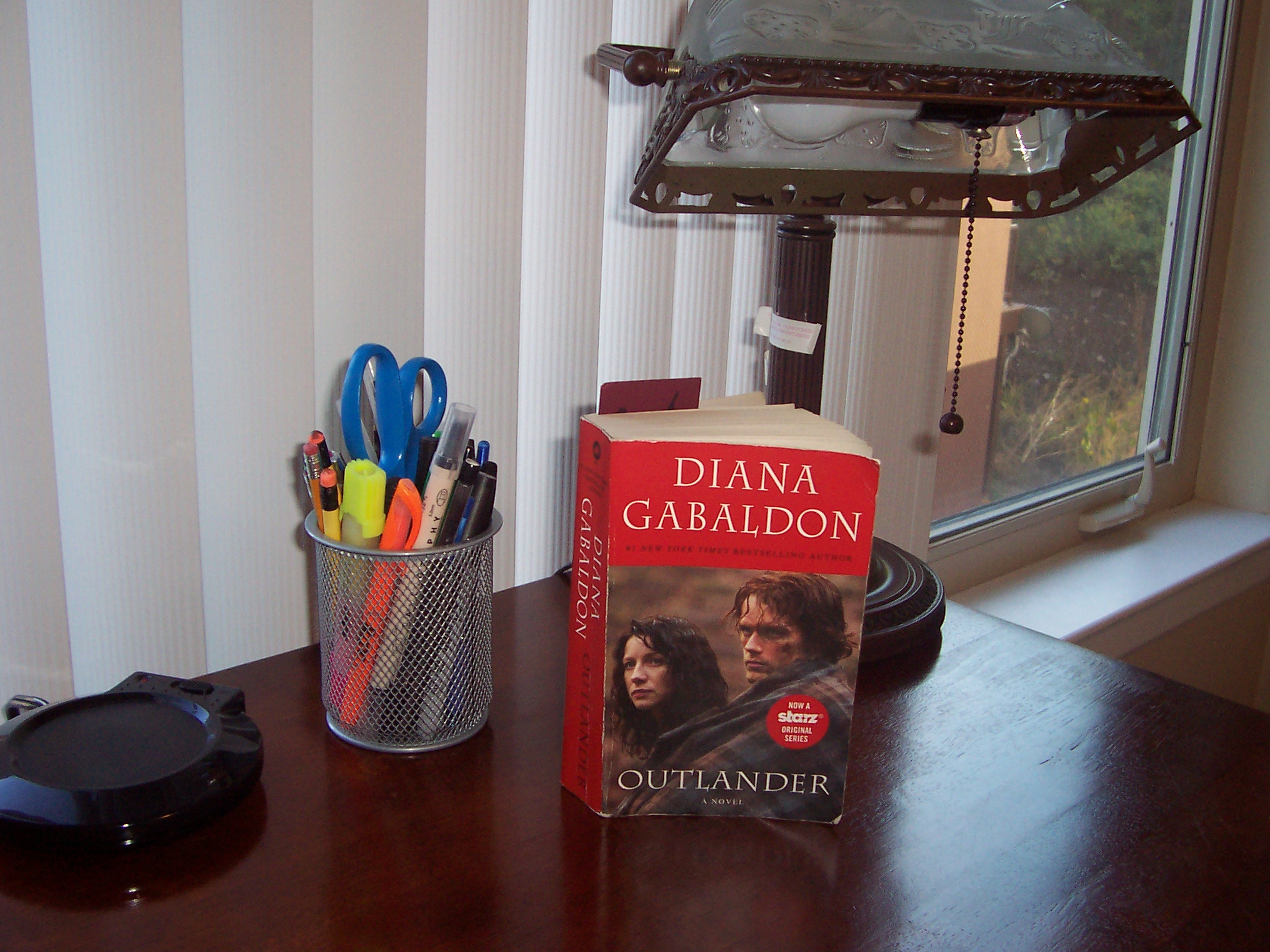
I’ve spent another week being Really Good — as in, not reading Voyager, the third Outlander book, and working on my sci-fi novel instead.

I’m doing one big, massive edit on the entire novel, which is around 733 pages long, and tonight I reached page 482.

So I have roughly 250 more pages to go, but I’m hopeful I’ll be finished before Thanksgiving. This sounds crazy incredibly optimistic and definitely fits with the NaNoWriMo theme for November, National Novel Writing Month, wherein people crank out entire novels in one month and Tweet/FB post/blog like crazy about the joy/insanity of such an endeavor.

First drafts are work, yes, but writing is all in the rewriting. Which means editing — transformative editing — can be more of a beast than any first draft. But people might not be as excited to sign up for NaNoWriMo if they found out they might have to rewrite their book ten more times… because that is tedious, to say the least.

But enough with the Debbie Downer stuff! If anyone reading this post signed up for NaNoWriMo this year, I commend you!! I love the inspiration people find in this event! And for extra kudos: the best NaNoWriMo novel I’ve ever read was the thriller Into the Darkest Corner, by Elizabeth Haynes, published in 2010. It’s being made into a movie now and I will be watching that movie on opening night because I spent a whole Friday night when that book came out reading the entire novel in one sitting — 5 p.m. to 3 a.m. — cause I could not stop till I finished. That book is a whole lot of scary and a whole lot of feels. The beginning is super slow, but after the slow start — Look. Out.

I’ve never signed up for NaNoWriMo, unless you count the last ten years of my life. Cause every day is a NaNoWriMo day in my world.

When I’m not working on Mark of the Pterren, walking the river, or engaging in that super-time-consuming task known as adulting (paying bills, doing probate chores, and other joys of the world), I’ve been reading a book about grammar usage by Mignon Fogarty called Grammar Girl’s Quick and Dirty Tips for Better Writing.

Grammar_Girl_2_small[1]


I’m hosting a library event in December and I decided to do a presentation about grammar, because one of my friends in town is always like, “Melissa!! Do a grammar workshop!!” even though I am most certainly not a grammar pro. But Blake Crouch was too busy to come and give a talk about the TV show based on his novels, so a grammar event sounded like fun.

I went to the library looking for The Elements of Style and found Mignon Fogarty instead. (God, I love libraries so much, they are better than ice cream, chocolate, and pomegranate sanpellegrino, I mean for reals.)

Mignon Fogarty has a Grammar Girl website full of all kinds of free podcasts. She’s also been on Oprah and she is pretty much just da bomb.

On the same shelf as Fogarty’s book was another craft book called How to Writer Killer Fiction, by Carolyn Wheat.

how_to_write_killer_fiction_the_funhouse_of_mystery_the_roller_coaster_of_suspense_by_carolyn_wheat_1564747050[1]


A lot of this book is full of the technicalities of what makes a mystery different from a suspense novel, and how to craft a plot to specifically fit either category. I read parts of it on a sunny day in October, walking from the library to Starbucks, where I bought some pumpkin bread and came across this quote that left me scratching my head and feeling like a dummie.

The quote involves fairy tales, because the author has a chapter called Myths and Dreams: Basic Ingredients of Suspense Fiction.

“All fairy tales are rites of passage, mystical handbooks teaching us how to change and grow, how to travel to a new place in life, how to prevail over the forces of darkness within and without. They all have certain elements in common, no matter what cultural background they come from.”

I was nodding along to this, like, yes, yes, I’m on board with this.

Skimming, I read, “The middle of the story involves tasks and tests, lessons and learning.” Yup, that’s fine. “Death is confronted directly.” Sure, I got it.

And then I read this quote (from p.98 in the paperback copy):

In fairy tales, all confrontations with death “are symbolic of the death of the immature being and the rebirth of the new, mature, tested hero who has traveled to a new state in life. The marriage at the end of so many fairy tales is described by scholars as a Sacred Marriage of the masculine and feminine within a single human being. Looked at this way, the Prince Charmings are more than door prizes, they represent the state of readiness for adulthood and the new strength the heroine gained by undergoing the tests.”

I was like, whoa, when did I miss the news flash? When did “scholars” decide Prince Charming was not, you know, a dude with a penis, and was actually the masculine energy inside the heroine?

cinderellaWedding[1]


Because that is just not what I’m thinking when I watch Cinderella. Or Snow White. Or Sleeping Beauty.

And those are the examples the author is using — especially Snow White, which she references a lot.

I don’t get to the scene at the end of Snow White and think, “Wow! Snow’s finally embraced her inherent testosterone and become a true badass! I’m so happy she’s merged her feminine and masculine energies together to become a true adult!”

SnowWhite[1]


Uh, no.

I’m thinking, “Good thing the hot homeboy showed up, cause Snow was in major trubs, that was a bad scene with the Queen and the apple. That witch should have read some self-help books before she went off the cliff with the boulders and stuff.”

I mean, Snow White is in a coma while the climax of the story takes place — both the witch’s death, brought about with the help of her dwarf friends, and her own resurrection, when Prince Charming kisses her.

How can a woman embrace her masculinity if she’s passed out while it happens? (Or, in the case of Cinderella, locked upstairs in her attic bedroom while her animal buds come to the rescue? Or, for Sleeping Beauty, lying asleep while the hot guy slays the dragon and then shows up to kiss her?)

Don’t get me wrong — I love that friendship and love saves the day in these stories. I’m all for friendship, teamwork, and the transformative power of love.

It’s just this interpretation of what the marriage at the end symbolizes for the audience.

I finished my pumpkin bread, skimmed a few more pages of the book, walked home and took out my copy of Women Who Run with the Wolves. Which is all about the girl-power in fairy tales. I tried to find a place in the book where this author might have made a similar statement about Sacred Marriage, but I just…. couldn’t read more than a few pages. I’ve outgrown this book since I was a 22-year-old right out of college, trying to empower myself and not be pathetic. So if I missed a chapter/paragraph/sentence in Women Who Run with the Wolves that talks about the Sacred Marriage in fairy tales being a merging of masculine/feminine energies inside the heroine — forgive me.

I mean, I like this interpretation of marriage. It’s just not at all what I feel or think about when I watch Disney movies or read the original fairy tales. I do not look at Prince Charming and think, “oh, he’s the objectified aspect of the masculine energy in Snow.”

I don’t look at Prince Charming and think he is really the heroine. Any part of the heroine. This pretty much makes my brain hurt.

If this scholarly interpretation of Sacred Marriage existed in my brain before I picked up How to Write Killer Fiction — well, that knowledge has since disappeared. Gone the way of the sine/cosine/tangent equations I memorized to solve calculus problems in high school and college.

But it reminded me of something a beta-reader told me after she finished reading my final draft of The Etiquette of Wolves. “You did something really different in that story.” I said, “How’s that?” She said, “You had Jimmy seated at the computer, cracking the Pack’s security codes, rather than give that role to the male lead. Most stories have men do the computer work at the end, or any computer work, really. Same thing for saving him later. Jimmy makes sure Alistair gets out of the tunnels, and then finds her own way out. She has help from her friends getting out, and gets rescued in turn, but it’s a group effort all the way, and I liked that.”

I was like, “hmmm, I never thought of that before.”

Then I thought of these fairy tale heroines and their supposed masculine-energy. Which they find, apparently, only in marriage. In union with Prince Charming.

Um, yeah. I guess that works for some people.

But me?

I’d love to see Sleeping Beauty wake up from her coma, pick up her own sword, and help Phillip fight the dragon, you know? Wouldn’t that be a cool fairy tale? To watch Beauty and Phillip being badasses together with swords?

Then I’m like, oh, wait. That is exactly the story I’m writing right now. The one with Beauty and Phillip both fighting with swords.

Now if I could just finish editing these last 250 pages…

Posted in My Thoughts | 2 Comments

Tan and Brown, White and Black: Changing a Main Character’s Race

I’ve dedicated every spare second I have this week to working on my sci-fi novel, Mark of the Pterren.

I’ve done another intense round of editing to the first 300 pages — and I can’t count the number of times I’ve edited those pages, but each time I do, I’m closer to the point of never having to edit them again — which means I’ve had moments this week when I realize, “Wow! These sentences suck so much less!” and that makes me happy.

So I felt productive, even though all I really wanted to do was read the third Outlander book, Voyager. I took my copy of Voyager to the hot springs in Pagosa last weekend, rested the book on a rock, and turned pages with my lips and chin (because my hands had to stay underwater, else turn to ice) — and of course people wanted to talk to me, and some succeeded, but God help me all I wanted to do was just read that book.

Gabaldon-Voyager-220x332[1]


FYI: The place where I put my book was just to the left of the woman’s arm in this picture —

REFLECTIVE100X150X72[1]


When I arrived home Sunday night, I told myself I had to return to my own work. I couldn’t keep reading Outlander books like a maniac.

So I threw myself back into Mark of the Pterren.

I recently had an epiphany concerning race in my fiction, which I blogged about in the post Why Football Matters, and on Monday this week, I kept examining race in my latest novel, and asking the universe, basically, to let me see my characters in new ways. To let them transform.

You might think this is something easy and simple to do — but it is NOT.

There is something very humbling and frightening about doing this. It’s an intensely unpleasant experience. The end result is powerful, and I cherish the process when it’s finished, but the process itself is like having my mind ripped open, and then sewn back together. Granted, the product I’m left with is something stronger and better than what I had to begin with. But still. There is the ripping and sewing part that comes first. Unpleasant enough that I cried, and felt a bit sick with myself, and my body shuddered, and I didn’t like it at all.

Because here is the thing about characters — at least, fictional characters as I know them: they show up in my head, the same way babies show up in a woman’s uterus — stamped with their own DNA. So when I ask the universe to transform my characters, something else is going to show up, with a new set of DNA, and I have no control over that. You would think I do, since I’m the author and we have this idea authors “invent characters” — but honestly, I think fiction writers are receiving devices. (Well, I can’t speak for all writers here, but I think a lot of writers might agree with me.)

Perhaps, sometime far in the future, scientists will have an understanding of energy that includes a theory of where thinking comes from that is like our current understanding of how light moves, as a wave/particle mash-up of energy matter traveling through space —

But. Until that day comes. Let me just say: thinking happens. We can choose what we focus on, but the thoughts arrive on their own. Like how our bodies know to breathe on their own, and our hearts know to beat on their own, and the bazillion other things that have to happen every millisecond to keep us alive. Our brains are like that, to the zillionth power, and we live in a big soup of energy around us that affects what we think every day, because the signals we’re sent, and the signals we learn to pay attention to, change all the time.

Or so I believe. I’ve heard authors at conferences say the concept of ideas “floating around us” is totally ludicrous and that there is no way any writer just “gets things handed to them” for a story — but this is actually what most writing feels like to me. I wear writer-antenna, tune in, and type what I find. When I’m editing at my best, I still do this — tune in, and type what I find.

I would like to claim “I made this” when I look at my stories — but it really feels more like they just arrive. My characters show up, and they dictate the plot, and the more I learn about those characters, the more the plot can change during editing.

Now that I sound thoroughly froo-froo and Out There and new-agey loopy, I’d like to say, when I asked the universe to transform my characters this week, I didn’t know what would happen. I didn’t know if a main character would change, or a secondary character — I just asked for change — and I ended up with a Japanese boy instead of a Spaniard.

That sounds so simple and straightforward, right? As if changing a character’s appearance was as easy as snapping my fingers. *Poof!* Done! Easy!

It. Is. NOT.

That main character lived in my head as a Spaniard for a long time. I started writing about him in 2009, and he existed in my imagination for years before then, so he’s had a decently long life in his original body.

He looked kind of like this —

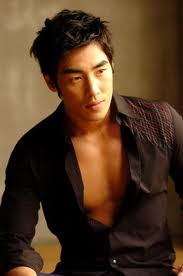
ordonez[2]


I’d grown very used to him looking like this.

Then the universe skinned him, reset his bone structure, altered his features, gave him new genes, and handed him back to me, transformed. I can remember him as a Spaniard, like remembering a loved one who has died. But now he looks Japanese. There is no Japan in this story, because the pterren have wiped out human nations, but the various races of humans survive in the pterren.

Which was fine. Figuring out new racial terms for this story wasn’t difficult. Time-consuming, but straightforward and simple.

Rebirthing a main character — not easy.

Now he looks like this —

imagesCATMMD5G


Or here’s an image in color, for a better comparison —

imagesCAZPOY4X


This morning, I came across an opinion article in The Washington Post — “In the land of make-believe, racial diversity is a fantasy,” by Amina Luqman, published on October 30, 2014.

The author is a black mother whose black son hesitated to dress up as Harry Potter for Halloween, which he thought would be wrong, after admitting to his mother, “But I’m not tan. I’m brown.”

As Ms. Luqman explains, “Tan and brown are terms for white and black that my son picked up at his progressive school; they’re seen as less political and more precise, and I guess they take some of the sting off. But the words don’t change the long-standing reality: In the United States, children’s fantasies are still largely imagined in white.”

Here’s a Harry Potter movie picture I copied off the internet, which helpfully illustrates that Harry Potter is, for the most part, white-people land:

310px-Harry-potter-epilogue[1]


Sure, there are a few “people of color” in the Harry Potter books and movies — but by and large, we’re dealing with Caucasians in this story. The main characters, the professors at Hogwarts, the bad guys — we’re in white-people land.

Don’t get me wrong. I LOVE Harry Potter — (like, oh my God, LOVE Harry Potter) — my life would be so much LESS if J.K. Rowling hadn’t written those seven books — and I’m not criticizing the race of her characters. Not at all.

But the truth remains, when most people envision superheroes, super stars, leading men of Hollywood, leading women of Hollywood, celebrities, and famous people in general, including cartoon characters — we are picturing white people.

India has a huge film industry, as does Japan, as does Nigeria — as well as many other countries trying to give their populations TV shows, movies, and advertisements a larger majority of their citizens can relate to, identify with, and enjoy as entertainment.

But the question of diversity in American pop culture comes up a lot. Which is fair, since America is “a melting pot” of immigrants and Native Americans, and the United States is due to become majority-non-white during this century.

So back to Ms. Luqman and her opinion piece for The Washington Post, writing about the dilemma her son faced in dressing up as a white fantasy character for Halloween.

“As a black parent, it saddens me that my son is faced with these tired racial confines. I also worry about his willingness to so readily accept the injustice of white cultural privilege. As an adult, I know things can be different. I know that somewhere there’s another adult sitting in a boardroom right now, deciding that the next big fantasy heroes — the next “Frozen” sisters — will be white, as if it’s some set rule of the universe.”

There’s a wee bit of a problem with what Ms. Luqman is saying, though I do empathize with her, and I definitely want my own stories to have more diversity in them — especially diversity in the main characters.

However.

This is easier said than done.

Now, I’m not saying that some art isn’t derivative, or that there aren’t people who “write to formula” and “rip off other stories” and “turn out crap” to “make a buck.”

snoopy-300x225[1]


But I’m not that kind of artist. I don’t set out to “copy plotlines” or “make money on trends” or “put white people in stories so they’ll make money.” I can’t even fathom trying to write books that way. My art is channeled, picked up on my antenna — and, guess what? I fail, too. My characters often arrive as white people, and I’ve lived almost all my life around white people, and I am, myself, a white person, and when I tune in to the energy around me, it’s not hard to see the correlation between what I am and what comes through my antenna, is it?

That’s a subconscious effect of racism — of identifying with my own race as well as the dominant culture portrayed in the American media/entertainment complex — and I fall victim to it as much as the next person.

Changing the race of a character means asking for something else to come through my antenna — like moving a satellite dish to face a different direction — and I’m still not in charge of what finds its way to me. Creativity is not a widget. I could slap a new coat of paint on a widget, and not think anything of it.

Fiction characters do not operate the same way.

Fiction characters are pieces of soul in the universe, and they can be as loved and cherished by readers as “real” living creatures because characters have a life on the page, which means a life in the mind, which means they are very much real, because thoughts are very much real. As real as beating hearts and the air in our lungs. The life of the mind is as solid, and ephemeral, as that.

So here is what I would like to say to Ms. Luqman. And anyone else who wants to point fingers at “the money-making machine” known as Hollywood and pop culture.

A lot of these big movies began as novels and comic books. Novels and comic books come from authors and artists. Authors and artists are making art through conscious and subconcious choices, but I would say mostly subconscious, and mostly outside their control.

Harry Potter became a movie because people bought and read those books by the millions. What people devour in literature often becomes what people want to pay money to see on the big screen.

As to the white characters in Harry Potter — J.K. Rowling wrote what came to her on her antenna, and what came to her were mostly white people.

Many authors and comic book artists are white. Their antenna are as attuned to seeing white characters in their work as audience members are used to seeing white people on TV.

I changed a main character this week — and it was scary and humbling, and it made me cry, and it was extremely difficult — and I dread going through that process again, but I know I probably will, because I want more diversity in my art.

But this process is not something I take lightly, and it is certainly not easy. For future projects, I feel more assured about diversity in my main characters. For instance, in my next two novels after Mark of the Pterren, I have a black main character in my YA novel, and a Middle Eastern Muslim main character in my vampire novel — because those characters came to me that way, and I didn’t have to face the question of altering what the universe had already given me.

Mark of the Pterren was different. I had two Hispanic main characters, and a bunch of white people, basically, with a few black characters mixed in. A racial makeup similar to the books I’ve already written.

I wanted Mark of the Pterren to be more diverse, and I’ve taken steps to make it that way — but even then, what came to me was outside my control, a function of the creative process, not conscious thought.

Though I was really relieved, when this process was over, and I told my stepdaughter Rachel that I now have a Japanese main character in my current work in progress, and she was like, “Japanese guys are so hot.” Because yeah, they totally are. Bye, pretty Spaniard boy. Hello, hot Japanese boy. Welcome to this story you’re starring in — you are a pterren with silver wings, and the future world you’re living in kind of sucks, so good luck being a badass warrior boy, I’m rooting for you.

Posted in My Thoughts | Leave a comment

Self-Printed: The Sane Person’s Guide to Self-Publishing (3rd Edition)

I have such great news today!!

It’s here!!!

Catherine Ryan Howard’s completely revised, completely updated, and completely new Bible of the Self-Publishing world, Self-Printed: The Sane Person’s Guide to Self-Publishing (3rd Edition), is out now in paperback and ebook and available from Amazon!!

*huzzuh-zuhs begin!!*

selfprinted2banner[1]


Anyone who has ever visited the For Writers page on my website, or attends Writers and Scribblers meetings here in Durango, knows I’m a fan (a huge fan) of Catherine Ryan Howard’s AMAZING site, Catherine, Caffeinated. I subscribe to her newsletter, I cite and share her information a lot, and in August, she announced she would be releasing her third edition of Self-Printed in October. She also said authors were welcome to ask her questions about the book in return for posting the answers on our social media sites.

Yes, yes, and YES. I sent her a question.

Actually, I sent her a bunch of questions, because sometimes I fail. Catherine kindly pointed out that each person could ask one question, and allowed me to pick one from my list, and she also answered my question about her order at Starbucks.

Here is a lovely picture of Catherine: writer, self-publisher and caffeine enthusiast from Cork, Ireland.

DENIS author 1.jpg


Her order at Starbucks is always a venti wet latte extra hot.

This information is second only to knowing that her 3rd Edition of Self-Printed is out.

Catherine has also published memoirs and a novel.

I read her first memoir, Mousetrapped

mousetrapped[1]


about her year (and a bit) working on a J-1 visa at a hotel in Orlando, Florida.

I also read her memoir Backpacked

backpacked-kindle-300x224[1]


about her adventures in Central America after she was finished working in Orlando, Florida.

Since I’ve taken two trips to India, and my second trip involved backpacking in the Himalayas, I read Backpacked with joyful abandon and total delight. Catherine Ryan Howard is a great writer, super funny, super witty, super smart, and that is why she is simply amaze with her self-publishing information and tips.

Here was my question for Catherine concerning her new book:

Do you address the topic of Advanced Reader Copies and how to use giveaways on Goodreads in Self-Printed 3.0?

Catherine’s Answer:

Yes I do.

She also shared the section on ARCs from Self-Printed 3.0:

In the traditionally published world, reviewers are sent advanced reader copies (ARCs) or proofs. These are rough-and-ready paperbacks put together just so the publishing house has something to send out when the actual finished copies are still months away.

Usually they have a different cover to the finished product, haven’t yet been proofread and are marked with warnings like“Uncorrected proof copy – not for resale or quotation”. They’re likely to have typos or other errors but the reviewers who receive them know this, and overlook them because they know it’s an unfinished book. They may also be printed on flimsier paper or cover card than the final book will eventually be.

If you are being a very organised and professional self-publisher, you may be approaching reviewers long before your book is finalised. If you’d like to send them paperbacks, here’s how to make your own proof:

 1.    Put your copy-edited but not yet proofread text into an MS Word template provided by CreateSpace, but don’t worry about page numbers or any of that stuff.

2.    Upload it to CreateSpace as if you were making a “proper” book, but leave all sales channels unchecked and:

3.    Use Cover Creator + your Canva (www.canva.com) Kindle cover to make a cover for your proof copy. One of CC’s many templates is a cover whose whole front is taken up with a photograph and whose spine and back cover can be left blank or just have some text added to it. Insert your Kindle cover as the “front” picture and then type something like “Advance reader copy – not for resale or quotation” on the back. Leave the spine blank. Finalise your book and then order as many of your new proof copies as you like.

Alternatively you could order your maximum five proof copies at the proofing stage and send them to your reviewers. If you need more than five, re-upload your cover or your interior. You’ll have to resubmit your book then (even though strictly there haven’t been any changes) and once it’s done, CreateSpace will come back and invite you to order a new proof (which will be exactly the same!) and there you go: another five copies.

****************************************************************

Coolness, yes?

Catherine Ryan Howard’s work is the self-publishing author’s dream resource. Her tips and advice are awesome. Even traditional publishing houses cotton on to her savvy.

In answering my question, Catherine also included this link to a recent blog post she did about Goodreads giveaways, which is also included in Self-Printed 3.0:

http://catherineryanhoward.com/2014/08/18/goodreads-giveaways-dont-do-what-youre-told/

I’ve been sharing the information in that blog post with members of Writers and Scribblers. In fact, this blog post was the topic of our October meeting.

If you are a self-publishing author, please join Catherine’s train of awesome and check out Self-Printed 3.0. You’ll be stuffed with self-publishing smarts like Garfield chowing down on lasagna.

garfield11[1]


And if you aren’t trying to publish your work, but know someone who is, please send them this information! Spread the good news! Help turn your writer friends into smarties concerning the incredible undertaking known as self-publishing. You will be Buddha to them! Handing out the Four Noble Truths and the Eightfold Path like a boss.

Here is a quote from an author who has found success using Catherine’s self-publishing knowledge:

“SELF-PRINTED is my self-publishing bible. It taught me how to format, create and upload my e-books and print-on-demand paperbacks. It showed me practical things such as how to build a website/blog and how to promote my books. More importantly, it taught me how to compete with the professionals. Just look at the results – The Estate Series has sold nearly 100,000 copies and following that I got a traditional book deal with Thomas & Mercer too, so I’m now a hybrid author. Jam-packed full of hints and tips all in one place, I’m always referring back to it. In a word, it’s priceless.” Mel Sherratt, author of The Estate Series and DS Allie Shenton Series 

Yeah, it really is that awesome. Selling 100,000 copies is a massive success. Heck yes to success! I’m all for it.

Posted in My Thoughts | 1 Comment

Why Football Matters: Race, Money, Stories

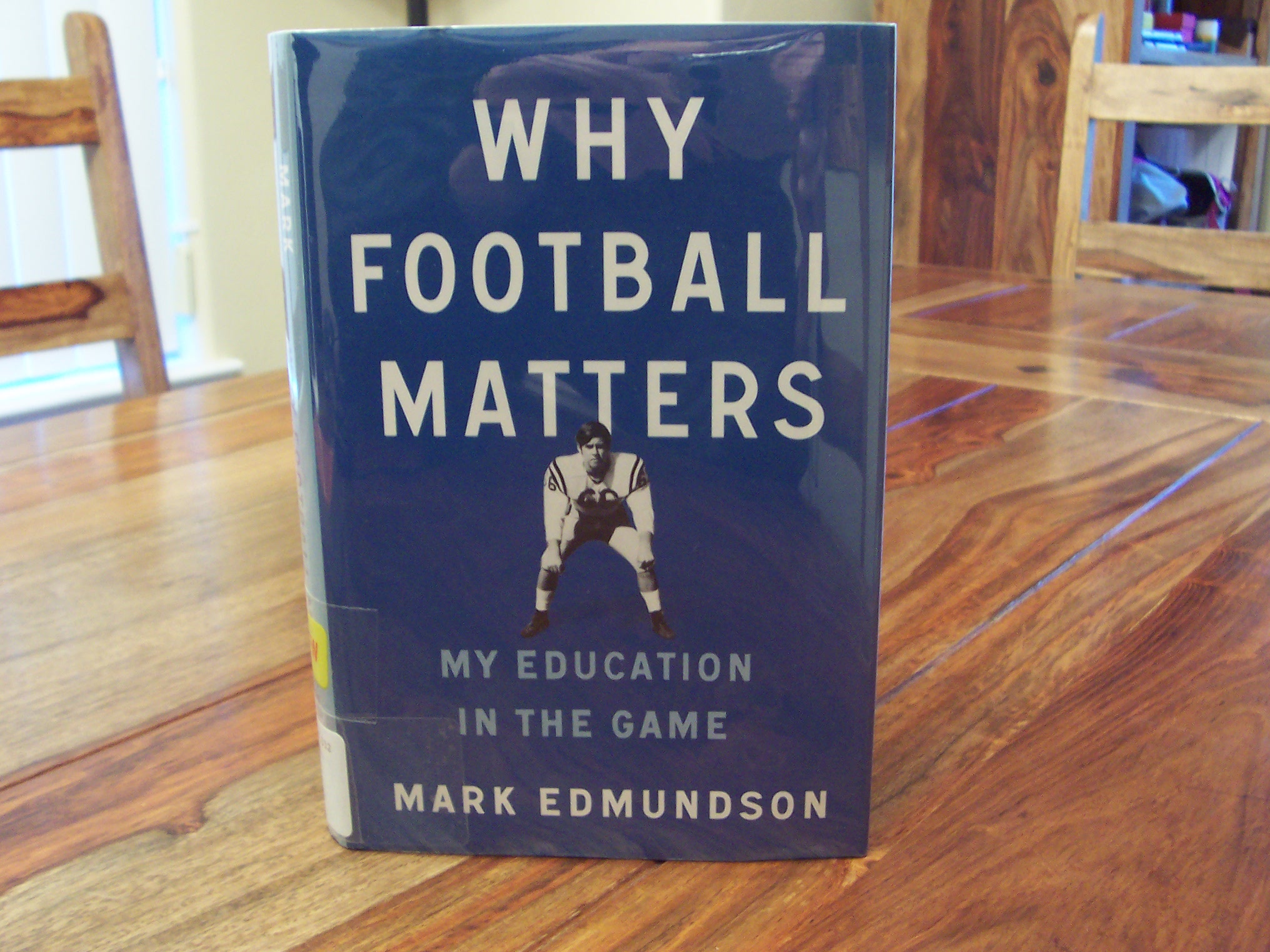
I’ve been reading Mark Edmundson’s short memoir Why Football Matters: My Education in the Game, which was published this fall.

100_2093


Mark Edmundson teaches in the English Department at the University of Virginia. He’s published numerous works of cultural criticism, including Why Read?; Literature Against Philosophy, Plato to Derrida; and Teacher. I’m not familiar with those writings, but I am familiar with Edmundson’s book Why Teach?: In Defense of a Real Education.

Why Teach? was published in 2013, and Edmundson was interviewed on the PBS NewsHour on September 4, 2013. You can watch that interview here, which has a running time of seven minutes, thirty seconds.

ShowImage[1]


Mark Edmundson asserts that “a real education” is “humanities-based,” and since I’m a graduate of a liberal arts university, of course I agree with him. I’m someone who adamantly needs to find my own truths in all things, so swallowing perceived wisdom and rote memorization is simply never going to work for me. It’s why I drifted away from my biology courses in college, and found myself in the religious studies and philosophy departments. Being able to argue in class, for me, was a very good thing.

Like Edmundson, I also believe all people are better off finding their own truths than regurgitating someone else’s ideas without question. Though I do understand not everyone agrees with this opinion. For some, toeing the line as a mindless salary person, or running a corporation making millions upon millions of dollars to buy a house to beat the Joneses and die with a large inheritance is the height of success, the best life has to offer, but I would rather live a life of creation and service and (gasp!) humility, and leave the life of cutthroat wealth amassment to someone else.

It’s not that I don’t enjoy having money, or think money is evil, I just don’t think accumulating money is my mission in life. I keep writing books, and I sure would like to sell them, but even if my books don’t sell, I will keep writing them. Creation is the driving force, and making a profit is an ancillary concern.

Since I agree with Mark Edmundson a great deal, I like him a lot, so when I learned he’d written a new book about football, I put in a purchase request for the Durango Public Library. The library acquired the book, and I read it this week.

The President of Wesleyan College, Michael Roth, wrote a summary review of the book for The Huffington Post, published September 4, 2014, which you can read here. It’s a nice enough summary and covers the major points. It’s also completely banal.

The book has something very edgy and dark to say about football and race, so startling and true I felt a bit sick with the horror of it. Nothing of race was mentioned in Michael Roth’s trite book review. Sadly, this doesn’t surprise me. If people knew Mark Edmundson was discussing race in his football memoir, and not simply giving everyone a feel-good golly-darn-gee-isn’t-football-just-super-for-helping-turn-unruly-teenage-boys-into-men — well, I think we all know a lot of consumers are happier with books that don’t leave them with horrified truths in the pits of their stomachs.

James Trefil, a professor of physics at George Mason University, wrote a more thorough review of Why Football Matters for The Washington Post. Trefil does mention that Mark Edmundson brings up race in his book, and that he does so by making an analogy with a scene in Ralph Ellison’s novel, Invisible Man. But Trefil simply mentions these things. He doesn’t point out that Edmundson is showing a dark, disturbing, and sick side of football at the NFL level, where almost 70% of the players are African American, though African Americans are only about 13% of the United States population.

You can read Trefil’s review here.

I agree with Trefil and Roth in saying that Why Football Matters is a good book. It’s short, easy to read, reflective, and memorable.

But what gives it a measure of greatness is what it has to say about race.

As Edmundson summarizes the opening scene, called the Battle Royal, in Invisible Man, he describes the scene as one “no one who encounters it forgets” (p. 171).  Simply reading a summary of this novel’s brutal opening was enough to horrify me.

In the Battle Royal, rich “white grandees of a certain Southern county gather regularly for a ritual.” At first, “there’s drinking and cigar smoking” and “a beautiful tall woman, naked, there to be ogled by all. But then comes the main event. Ten young boys, all black, stripped down to their shorts, wearing boxing gloves, get shoved into a ring. They have blindfolds on.” When “the signal sounds” they “go to work in the Battle Royal, trying to beat the life out of each other.”

Edmundson summarizes the brutality of the fight scene, which “goes on an unbearably long time,” noting that the narrator of the scene, one of the young black boys, is waiting “to deliver” an “edifying speech on the Negro and his future in America” (p. 172).

Then the finale arrives.

“Finally the pummeling is over and it’s time for the boys to get their reward. The white men roll out a mat covered with treasure. There are dollar coins, high-denomination bills, gold pieces. There are gold pieces!” (p. 172)

The bloodied and broken boys leap onto the mat to grab up their treasure, but as they do, they suddenly reel back. “The mat is wet; there’s an electric charge crackling through. But the boys want the money anyway. They dive and they take the shocks. They squirm and shake with pain, but they gather what they can from the buzzing floor. The white men on the periphery roar with pleasure. This is almost as amusing as the Battle Royal. It’s wonderful, absolutely wonderful, what kinds of entertainment these boys provide” (p. 173).

The-Invisible-Man[1]


Since I can’t even type that without crying, I’ll pause to dry my tears and share that Invisible Man was published by Random House in 1952. It won the U.S. National Book Award for Fiction in 1953. In 1998, the Modern Library ranked Invisible Man nineteenth on its list of the 100 best English-language novels of the 20th century.

Face dry now, I’ll return to Why Football Matters, and the comparison of the Battle Royal with the modern-day NFL.

Like the rest of his book, Edmundson’s use of this analogy is nuanced and graceful.

As he writes, “you can’t say the guys out on the football field are being exploited, can you? Pro football players are rich. They live like royalty. They buy blazing cars, palace dwellings; they throw parties the way Darius of Persia did. No one glues their dollars to the carpet; no one puts counterfeit currency in their hands. They live like kings.” (p. 173)

“Or they do if they last. A five-year career in the pros is a triumph. A running back averages two and a half. Every week in college ball and the pros there are career-ending injuries. A kid works his whole life with the dream of playing big-time football.” (p. 174)

“What does NFL stand for? Ask the players; they know: Not For Long.” (p. 174)

“Some players emerge with princely wealth, sure. But will princely wealth give you back the knees you had as a boy, before other men stoked on steroids decided to knock them out from under you time after time? Will it return the grip to a hand that’s been stepped on repeatedly? Most of all, what can wealth do to repair a brain that has been concussed a half-dozen times?” (p. 174)

Mark Edmundson does not ever mention the horrifying Frontline documentary League of Denial: The NFL’s Concussion Crisis — but anyone who has seen that documentary can certainly answer the question: Can money repair concussive brain damage? No. Without a doubt, no. What League of Denial proved, with a massive amount of medical research, is that it is not the “big hits” that cause the horrible, debilitating brain damage many NFL players (both former and current) suffer from — it is the repeated “sub-concussive” hits that are doing the most damage to the brain. Repeated sub-concussive hits are far more dangerous than five or six “big hits” in a player’s career. And this goes doubly for young players, whose brains are still developing. Even high school players (when they die young and their brains are studied) can have an incredible amount of brain damage by the time they’re eighteen.

Why Football Matters made me reflect on brain damage, and racism, and the NFL. And crying over the Battle Royal in Invisible Man made me think about how I write about race in my own books. Namely, that I don’t write about race very much.

Of my two point of view characters in The Etiquette of Wolves, one (Kim Korra) is Korean-American, but the other (Jimmy Fairchild) is a straight-up white girl, with blonde hair and blue eyes to boot.

And in Love and Student Loans and Other Big Problems, my point of view character (Mary Jane) has a black best friend (Hanna), but Hanna is dead before the story begins. Mary Jane is coping with the loss of her friend, but Hanna doesn’t play an active role in the story. She lives in memories, and the memories are those of a white girl.

As far as the men go, in both of those novels — either the reader can assume they are white, or their race isn’t mentioned at all.

This suddenly seemed like a huge failing. Like such a missed opportunity. I could have made it clear those men had more diverse backgrounds than “straight-up white guys,” but I didn’t. I was more concerned with staying focused on the plot than taking “extra words” to describe secondary characters.

The fact that the people with diverse backgrounds were all secondary characters is actually the main point.

Two months ago, while editing my work in progress, Mark of the Pterren, I went through the manuscript to make it clear certain characters are black. But while I read Why Football Matters this week, I realized none of my point of view characters are black. Two of the most pivotal characters, a king and a warrior child, are Hispanic/brown-skinned, and I have struggled from the beginning to convey this in a way that doesn’t sound overtly racist.

But none of my main characters are black. My next book (after Mark of the Pterren, which will be a vampire story) will star a girl who is Middle Eastern and Muslim, and my book after that (a YA fantasy story) stars a black main character, but the fact that I currently have no black main characters hit me with a crushing sense of despair. I read Why Football Matters while walking the river trail, and I stopped walking several times, I felt such an awful sense of lack.

As a writer, my characters are found, not invented. They pop into my head the way Greek deities show up in myths, as fully-formed people ready to have sex with virgins and start petty wars and cause mayhem.

But I realized, as I thought about race in my books, that I can work harder at finding ways to diversify my characters. To look for avenues to portray them as more than saying “dark-skinned” and “black-haired,” and to find ways for more characters to be black in the story.

Why does this matter? I can hear people saying this is a useless endeavor. A black man is President of the United States right now, so African American boys have a new “measure of success” to emulate that doesn’t involve being a rapper thug with gold chains and hos, or being a handgun-toting gang member, or being an NFL football star — right?

I wish the world was that easy.

But it’s not.

Race is such a pervasive, creeping darkness in life. Easy to deny because it’s so hard to confront. And when you live in white communities, as I have my whole life, it’s even easier to shrug and say, “that’s someone else’s probem.” Someone who is black.

And that is the whole damn dealio.

I want more for myself. I want more from my writing. I have to demand it of myself, I have to be fierce and vigilant, or I am just shrugging and sliding along, saying, Let someone else worry about black boys and their role models. There’s nothing I can do to change that. I’m white, I’m the majority in this country [for now], and these African American boys growing up in poverty and hopelessness can get bent. I don’t live in the inner city. I don’t have anything to do with ‘those people.’ If they want stories about black people, let them write them.”

I can hear those words. I can hear the excuses. All the reasons I should “just write white people” because we’re supposed to “write what we know” and what do I know, as a white girl, about “being black.”

Truthfully, I don’t know what it means to “be black.” But I know what it means to be human. I know what it means to love and hurt and sacrifice and fail and fail again and sometimes achieve awesome things.

Skin is a wrapping around a human heart. And all of us have hearts. That’s how I step into any character, by knowing their heart, and then hearing their thoughts. What we believe about skin comes from thinking. Thankfully, the meaning of humanity runs a lot deeper than thought. We all know people are more than their wrappings. Like icebergs and oceans and the earth’s crust — the exposed surface is just the tiniest, tiniest fraction of the whole. That is my truth as a writer, and that’s why I want more from myself, from my stories, from my life. We have to be the change we want to see in the world. It all starts with us.

Posted in My Thoughts | 1 Comment

Outlander and Me

For the past two weeks, I have been an Outlander junkie.

I picked up Diana Gabaldon’s first novel while I was in Bookworks, waiting for Jen Sincero to arrive and begin her book signing. I’d had a recent encounter with a woman with brain damage who had professed her abiding love of Gabaldon’s work, and I knew the time had come to pick up Outlander.

The opening lines of the novel hit me the same way a car fan recognizes the roar of a Lamborghini — exquisite, perfect, and full of destiny.

The sound of great power. That’s what I heard in Gabaldon’s prose: a masterwork of engineering. A gifted writer.

My fingers buzzed. My head buzzed. I felt breathless and faint, even though I was kneeling on the floor and not in danger of falling over. I put the book down after only a minute, walked around the store with a sappy grin, somehow managed not to stumble into anything, since I couldn’t see anything in front of me but the words I’d just been reading, then I returned to the science fiction section and picked up the book again. I read as much as I could in ten minutes, which felt the same way I imagine drinking shots feels, slamming down an elixir that hits your body with a painful euphoria, the primary difference being that alcohol is a poison to the body, and words are only poisonous if we allow them to be. In this case, Gabaldon’s words were far from toxic, so I should probably return to my first analogy: opening her book was like taking a seat behind the wheel of the high-end Lamborghini she’d built, and starting the ride.

I didn’t buy the book right then for two reasons: 1. I had already purchased a book at the store (a copy of Jen’s You Are a Badass, of course), and 2. I knew I could buy Outlander at a small store in Durango, White Rabbit Books, which I pass by almost every day when I walk the river. I shop local whenever I can.

So Greg drove us home the next morning, right to the door of White Rabbit Books, and I met Keena, the owner, and purchased a copy of Outlander.

The book has lived on my desk since then —

100_2077


and I’m not someone who keeps much on my desk. A lamp, a cup warmer, a jar of pens, and a calendar on a clipboard. Those items, plus my desktop machine, are all I can tolerate having around me. I need emptiness to get work done. Open surfaces, and absolutely no loose papers.

But Outlander has been my constant companion for the past two weeks. It’s over 350,000 words long, and I’ve read it twice now. Certain sections, I’ve reread as many as ten times, maybe more. And I will definitely read the entire novel again. Just picking it up, and touching the paper, and smelling the glue in the binding gives me such an intense high, I could fall out of my chair and lay on the floor with feverish glee. I’ve always loved books with insane abandon, and the love I have for Outlander is a savage delirium, the kind of love that drove Romeo and Juliet to kill themselves in a fit of despair. Love hurts as much as it fills us with joy, and that is how I love Outlander — so much that it hurts, so much that it’s like dying and then being reborn, every second, when I hold the book in my hands.

And then there is the TV show, which debuted on August 9 this year.

outlander-watch-win-codes[1]


The TV show is so badass, it’s like having another gorgeous Lamborghini parked in my driveway, which I can take out and drive anytime. Each book of Outlander (and yes, it’s already been picked up for a second season) will be given 16 episodes, which is amazing when you consider the fact that Game of Thrones is only given ten episodes for each book.

How flipping cool is that?? 

The first eight episodes of Outlander have already aired, and I watched them all this weekend with Greg. We have Starz in our cable package, and the Outlander episodes are available through the Starz On Demand channel, which is channel 240 on our box. It took me five days of agony to figure this out, as I originally just tried searching through all the Starz channels to find the times Outlander aired. I so, so rarely watch TV (outside PBS) that I didn’t realize my life could be so infinitely awesome with Starz On Demand. I can now watch Outlander episodes anytime I want, because they’re free with my Starz subscription.

The second eight episodes of Outlander will debut starting April 4 of next year, which means a delirious wait to see the rest of the first novel brought to the screen.

Don’t get me wrong — no matter how beautiful the TV show is, it will never — EVER — be as orgasmically brilliant as the book.

But the show is still really brilliant, gorgeous in its own right, and I love it. I love it in a very different way than I love the novel, and not nearly as intensely as I love the book, but it is still a powerful love, even if it is exponentially different than the feverish glee the book gives me.

And then there are the videos on the Diana Gabaldon YouTube Channel, which soothe my nerves, because I love to listen to Diana Gabaldon speak. Her voice and demeanor are so calming and inspiring, I could listen to her interviews all day.

200px-DianaGabaldon-BookSigning-August11-07[1]


She is 62 years old — and this picture was taken seven years ago (in 2007), but she doesn’t look any different — and I can say this with authority, as I’ve watched several of her videos from the past two months.

Amazing, yes? She looks my age, or younger. She started writing Outlander at age 35, and I’ll turn 35 next spring. (While I’m watching the next 8 episodes of Outlander on Starz.)

I haven’t devoted my whole life in the past two weeks to Outlander, much as I’d like to. My readings and YouTube watchings have generally taken place only at night, often keeping me up past two in the morning, and waking me again before six, so I can squeeze in a bit more reading time before “the day starts.”

But I have the second book on order with White Rabbit Books, and I’ll be reading them all. The eighth book in the series, Written in My Own Heart’s Blood, came out this summer, and Diana has been on a book tour for the eighth book as much as she’s been helping promote the TV show.

Also, Outlander is not for everyone. I was reluctant to read the novel because I’ve seen enough terrible reviews on Goodreads that I avoided the book for a long time.

Fans of the book would quietly defend their love for Outlander in the comment threads of those scathing reviews, and encourage people not to write the book off based on someone else’s opinion. One young woman in particular stands out in my mind, saying Jamie and Claire have one of the greatest love stories of all time, and now, months later, having read the book, I can say I agree with her. Outlander knocked me over. I’m going to have to add a second list of My Favorite Books soon, a new list of 20 favorite reads on my webpage, and Outlander will be at the top.

Posted in My Thoughts | 1 Comment

Jen Sincero: The Badass

On Tuesday, September 23, my husband drove me to Albuquerque so I could meet Jen Sincero, author of You Are a Badass, at her signing at Bookworks.

This is the same bookstore where I met Laini Taylor in April, which you can read about here. That was an epically good time, with a huge turnout and a huge production on behalf of the store.

I saw Connie again, the woman who was in charge of that party, but Jen Sincero’s reading was a much more low-key event. Jen took a photo of her audience and posted it to her Facebook page — which I have copied below —

7085_809608959077364_291833072585537944_n[1]


The woman with her hands up in the back is a good friend of Jen’s, as is the woman waving beside her, and the woman sitting next to me. (Greg and I are sitting up front, because I get to these events an hour before they start, move chairs around so Greg and I get seats with cushions, and generally act like the weirdo I am.)

I also had Greg take this picture of me posing by the road sign advertising this event —

Me with Sign


Thank goodness I have a husband who loves me so much to do things like this — because it’s clear I’m a bit OCD about books and their authors, yes?

I mean, I was thinking about this today, how I have no allegiance to social activities outside of this passion I have for networking with writers and readers of all stripes. Thank goodness for my family and friends who keep my life a bit more diversified, because clearly, when left to my own devices, I just have books and scribbling, scribbling and more books — and I wouldn’t even have this webpage if I didn’t have great friends, because I just have that kind of OCD.

At least, this is what Greg is always telling me, and yet he still supports my habit like the total junkie-codependent relationship we have, also known as being married to an author.

I took this selfie of us while we were strolling through Old Town before the signing began —

100_2064


We were sitting in front of some giant metal flowers but you can’t see them too well in this picture.

I also went into a candy shop selling insects —

100_2061


For $2.99, you can buy a box of dried crickets or a box of dried mealworms with some kind of spicy powder all over them.

And yes, those are real insects, I even checked the ingredient labels, and these boxes were on display above a row of bubble gum.

There were also chocolate-covered mealworms for sale —

100_2062


And other boxes of plain crickets —

100_2063


We kept walking around Old Town, and I took this picture of an adobe wall painting of Our Lady of Refuge —

100_2065


I love paintings like this, how the theme of mother and child plays out in so many different ways across time and space.

I also took this picture of a Pueblo mudhead–

100_2068


Because I just totally love this mudhead painting!!! I’m not going to even pretend I can explain what a Pueblo mudhead is, so I’ll just link you to the Wikipedia page about Pueblo Clowns here. They are part of the Kachina religion of the Pueblo Indians, and I like the mudheads the best, maybe because of all the circles. I love round things, like curvy women and big scoops of ice cream and ripe strawberries. What more do you need in life, really?

Except books, of course. Which are certainly not round, but I can’t hold that against them, being as I love them so much.

I also discovered that Breaking Bad items are huge sellers in Albuquerque, on t-shirts and other tourist items, and I took a picture of this candy store advertising Breaking Bad candy —

100_2066


It’s not quite at the level of Twilight in Forks, Washington, (which I blogged about earlier here), but Breaking Bad is definitely a sales presence in Albuquerque right now.

(Side note: I have not seen any episodes of Breaking Bad, but I did buy my brother Mitchell a box set of all six seasons, because it’s his favorite show ever.)

At the book signing, Jen Sincero asked me, “Are you the one who drove here from Durango?” (she saw my comment on her Facebook post advertising the event) and when I said, “Yes,” she gave me the MVP award of the night and let me pick a passage of her book to read aloud. I picked two pages near the end, from the money section, and the audience laughed a lot when she read them, which made me very happy.

She also read the section about “loincloth man” and Greg laughed a LOT for that one.

When she opened the floor to questions, I asked her about her boot camp (she let a boot camp grad answer this, and chimed in at the end), and I asked her if she’d ever read Loving What Is (yes, and she described the book for the audience) and Psycho-Cybernetics (no, had never even heard of it), and I asked if she had ever been to a Tony Robbins seminar (no, but she said she watches his videos online and loves him), and if her next project was to write a book about money (because she had mentioned that she wanted to do this earlier, but she said no, books are so draining and take so much work, that she’s not writing another book for quite some time).

I think the best question of the night was asked by a woman named Billie, from Las Vegas, New Mexico, who wanted to know what Jen did with the brand new Audi she bought right before she decided to give up her apartment and live a nomadic lifestyle abroad. The answer was really hilarious — Jen had to keep finding friends to watch the car, and eventually sold it while she was writing You Are a Badass, but not before these two goats destroyed the hood with their hooves. It was such a funny tale! (And she thanks those two goats, and a horse, at the end of the book, but now I know the story about why she thanked them.)

The entire reading and signing ended up being a little less than an hour long, and I waited 15 minutes to get my book signed —

Me and Jen 1


I didn’t give Jen a thank you letter like the one I wrote for Laini Taylor, but I did give her a bar of chocolate (dark chocolate with almonds and sea salt) and a copy of Love and Student Loans and Other Big Problems. I gave her that book because I think the protagonist of the story is a badass, and I think Love and Loans has more humor in it than Wolves does, and Jen writes really humorous stuff. I don’t think I did a good job explaining this to her though, I just said, “I brought you a copy of this book I wrote, because I thought you might enjoy it and it might make you laugh.”

She lived in Durango for a while, so she’ll understand all my references in the book, too. I could have mentioned that, but I didn’t, because I am lame sometimes, and don’t think.

For all of the copies I give away of my books (mostly to family and friends), I keep selling copies of them online. Mostly ebooks (I make $1.82 per book), but often one or two print copies as well, and while you can’t get rich making $14.00 or $16.00 a month, these are still actual sales, and I’m guessing I do not know these people, or they would be asking for free copies, or I would be sending them free copies, because those are the perks of knowing an author.

Or I might have friends who go online periodically and just buy the book again, though I hope that’s not the case. I just remember an interview I read with Hugh Howey, when he said his mother would do that for him when no one had bought a copy of Wool in a long long time. (This was before he was famous.) His mom would go online and “buy more copies” to try to “help his sales” and give him exposure on Amazon, and that’s so extremely sweet — when I think about being loved like that, it makes me just get all teary and need a tissue.

I don’t know who those seven or eight customers are each month, but I’m grateful to them, very grateful. They are like having a voice whispering in my ear every day, saying, “You might not be advertising, but you’re still selling books,” and that is a really nice whisper to hear.

Posted in My Thoughts | Leave a comment