A Wrinkle in Time: My Happy Place, Aunt Beast, and Boxes of Tissues

Oh man, this past week has flown by in a crazy haze of editing Mark of the Pterren for my Round Two beta-readers — but I started this blog post last weekend, and decided I should *probably* finish it. Because goals and perseverance and all.

I bought my sister a copy of A Wrinkle in Time (first published in 1962) for Christmas.

(Actually, I bought her a copy of Scarlet, by Marissa Meyer, which is the sequel to Cinder, a book I gave her as a birthday present in June, but then I discovered my sister had already read Scarlet [because she loved Cinder so much], so I returned the book for a copy of A Wrinkle in Time, which my sister has never read before).

And I would just like to say that I think the current book cover is the best cover EVER for this novel —

A_wrinkle_in_time_digest_2007[1]


The darkness in the center of the cover represents The Dark Thing, and then there are the three stars-now-manifested-as-women on the left side: Mrs. Whatsit, Mrs. Who, and Mrs. Which, and they’re drawn the way they appear in the book. At the bottom of the cover is a tiny image of Mrs. Whatsit-turned-beautiful-centaur-creature-with-wings, with Meg, Calvin, and Charles Wallace on her back. On the right side of the page, you see the three children knocking on the door of CENTRAL Central Intelligence, home of IT. And at the very top of the book cover, you see the three children tessering, or moving through the universe by using the fifth dimension, because the fifth dimension, according to this novel, is a tesseract.

This book cover is ABOVE AND BEYOND BETTER than the covers I’ve seen on this book over the years, especially THIS one —

WrinkleInTime5[1]


I don’t know who thought this would make a good book cover for this novel — but this is the book cover I had growing up, and I NEVER LIKED IT. It’s freaky and horrifying. Mrs. Whatsit’s centaur-creature with the skinny rainbow-trout wings looks as scary as the evil green head in the orb — which is supposed to be representing the man inside CENTRAL Central Intelligence who is under the control of IT. The frightening dark landscape full of sharp peaks and eerie green clouds doesn’t look anything like the worlds the children travel to in the book. This cover is just a whole lot of bad LSD trip. As far as I am concerned, it’s the biggest BOOK COVER FAIL in all history.

While looking at different book covers for A Wrinkle in Time online, I came across this one —

wrinkleintime6[1]


This cover is SO much better than the cover I grew up with, I could just weep. Why couldn’t my school library have owned THIS book? Why?? Why did I have to grow up with Bad LSD Trip Cover when an artist had created a cover that represented the book so much better?

*sadness*

But I also felt happy that not every child had to grow up with the horror of the green-head book cover. Because that cover is just serious bad news.

I also came across this piece of artwork —

A_Wrinkle_in_Time_by_Warlord_of_Noodles[1]


Which is so much cuteness!! There is Meg, and Charles Wallace, and Calvin, and the stars, drawn with whimsy and color, and I dig this picture a lot.

Before sending the book to my sister, I decided to re-read it myself, because Aunt Beast has been My Happy Place since childhood. Anytime I’ve ever faced difficult trials in my life, whether those trials are fear-based stress, loneliness, financial despair, sickness, death, car accidents, whatever — when I am alone, and there’s no one there to comfort me or hold my hand in the night, then I curl up with Aunt Beast. When I’m with Aunt Beast, I feel loved and safe. Aunt Beast is a neverending source of unconditional love, and some people find that in their parents, some people find that in religious devotion, some people find that in nature, but for me, my mind reaches for Aunt Beast, and then I am okay.

While my love for Aunt Beast will never diminish, and I still weep like a baby with joy when I reach the end of this book (tissues and/or long sleeves are required) — reading A Wrinkle in Time as an adult has its challenges. There is the way Calvin uses the word “moron,” for instance. That bothers me a great deal. And then there is the whole plot of the book, which centers on The Dark Thing, which is a physical source of evil spreading through the universe. The Dark Thing, and its counterpart, IT — well, they are (to put it bluntly) the Devil. Or Satan. Or The Forces of Darkness. Or whatever you want to call Lucifer, or the thing that creates evil in Christianity.

Madeleine L’Engle had her own form of Christianity she believed in, and she made a lot of Christian people very angry with her, but she made other Christian people very happy. (The publisher of this novel would be an example of a Christian who was very happy.) But for all the fantasy in the pages of A Wrinkle in Time, there is the underlying belief that there is an outward force of evil at operation in the world, and that this evil can take you over and control you if you let it.

Which is not something I personally believe in, but I know others do. This is just one of those elements that makes reading A Wrinkle in Time challenging for me as an adult.

Another scene that bothers me in the book occurs when the star-women and the children name the “fighters” against The Dark Thing, and Charles Wallace says, “Jesus!” (of course) and then Mrs. Whatsit adds, “There were others. All your great artists.” Which leads to Calvin naming Leonardo da Vinci and Michelangelo, and Charles Wallace adds Shakespeare, Bach, Pasteur, Madame Curie, and Einstein, to which Calvin adds Schweitzer, Gandhi, Buddha, Beethoven, Rembrandt, and St. Francis, and then Meg adds Euclid and Copernicus to their list.

Which is all fine and good. As a child, I took it in stride that this was what being a “fighter” was — you had to achieve greatness on this kind of scale. (And, of all the names listed, I never questioned that only one was a female, and the others were all male. I was aware of the difference, but I didn’t know enough about women’s history yet to say, “Hey, WAIT a minute!!”)

But that was how I felt as a child. Adult-me isn’t so satisfied. Not just with the list, but with the idea of greatness to begin with. Adult-me thinks of all the “non-great” people out there, who do mighty things, but will never, ever be remembered by history. All the moms nursing babies and changing diapers. All the dads bottle-feeding their children and changing diapers. Love on that scale. The day-to-day care and nuturing that goes into raising a child.

I’m not trying to criticize A Wrinkle in Time. This novel is a cherished piece of literature for me, and always will be. There are very few books that make me openly weep, and when I get to the end of this book, tears stream down my face like the big baby I am.

But I know things now I never did as a child. I know that Madeleine L’Engle wrote herself into her books in a big, big way, and that she was beset by issues involving her parents, and the lack of care she received growing up. Her problems in childhood were so much different than my problems. My coming-of-age didn’t involve realizing my parents couldn’t save me — I knew that as a very small child. But this realization is one of the big themes of Ms. L’Engle’s body of work. So is the existence of Charles Wallace — the sibling Ms. L’Engle never had in real life. She gave herself the comfort in her fiction that she never had in the real world.

I understand doing that completely.

However, Charles Wallace is a 45-year-old man inside a 5-year-old’s body, and that always bothered me as a kid. I *always* resented how smart Charles Wallace was. He just seemed like an alien presence, not a human at all. I also never liked how Calvin goes from being a stranger to Meg’s true love in 0.3 seconds. Because why couldn’t life be that easy for me? I just meet this one guy and BAM!! true love and No Problems Ever between me and my man, we’re just fighting the external source of darkness attacking the world.

Yeah. I can’t be the only one who’s ever wished romantic love operated like that. In fact, I know I’m not, or Ms. L’Engle wouldn’t have written her novel this way.

*wishful thinking*

*oh how I love you*

So those are a few of my thoughts about reading A Wrinkle in Time at age 34. Which are very different from my thoughts at age 8, or age 12, or 18, or even 25.

Here are some other books I’ve been trying to read. (Before Mark of the Pterren killed my desire to do anything except edit.)

Called Again: A Story of Love and Triumph, by Jennifer Pharr Davis (2013) —

81AClcbU3JL[1]


This is a memoir of Ms. Davis’s journey to set the overall record on the AT — the Appalachian Trail. This book is amazing. AMAZING. I love this book. It fills me with such joy when I read that I end up running around the track where I walk — just because: JOY. So much joy. I’m mailing this book to my Super Fan Leslie as soon as I finish, because she’s training for a half-marathon right now and I think of her constantly as I read this book.

I also finally picked up The Snow Leopard, by Peter Mathhiessen (1978) —

91gSahSjwsL[1]


I don’t know how I’ve lived my life without having read this book before now — but this account of a trek through Nepal in 1973 is full of such BRILLIANT, out-of-this-world AMAZING PROSE, I am just reeling and dizzy in a swoon-fest of ecstasy.

I broke out a blue pen and started underlining and squiggly-marking the margins — this is the kind of prose that is the dense, condensed poetry I love most in the world — it’s like my brain just squeezes and squeezes these sentences with a delirious burst of pure passion — this book goes on my own-forever shelf, and I’ve only read 30 pages.

And I picked up a copy of this YA fantasy, Doon, by Carey Corp and Lorie Langdon (2013) —

17745735[1]


Author Colleen Oakes raved about this book a while back on her blog, so I wanted to give it a go. I’ve never watched Brigadoon, and this book is a Brigadoon-retelling, but I’m hoping my lack of familiarity with Brigadoon won’t be a problem. I’ve read the first few pages, and the setting is very much “escapist teen world” with a lame/hot boyfriend-turned-ex and perfect best friend and hot-Scottish-guy-in-kilt showing up in the school parking lot in a dreamy flash — but I’ve read far worse openings. There are cliches in the writing (e.g. “the material pulled apart and evaporated into thin air” [p.13]; “His brows lowered and our eyes locked” [p.10] etc.) but I’m willing to forgive a few cliches because the story is moving quickly, and that is exciting.

It really is amazing how much you can forgive in a book when there are quick, active scenes and enough snappy sentences to forgive the ugh ones.

Granted, the Scottish dream-guy who magically shows up in the parking lot is described uber-lamely: “He was gorgeous; like someone who’d just stepped off the pages of a magazine.” (p.10) Yeah, that is some cringe-worthy stuff right there. But this is teen lit, and I recognize that. It’s not trying to be literary teen lit, like Laini Taylor or Rainbow Rowell — this is the guilty-pleasure brain-candy don’t-have-to-think teen lit, so it is what it is. And in this kind of story, as in many stories, the male main characters have to possess GQ-level hotness — and their physical looks come before any other character development. Because that’s a big draw of escapism, and I get it. I write “hot guys” too, who could pose for GQ, and have the stereotypical muscle-bound forms of ridiculous good-looking-ness that we’re all programmed to think is what good-looking-ness in men should be.

0506-gq[1]


So I can’t bag on a book that does the same thing I do in my writing. But “stepping off the pages of a magazine” for your first character description is not what I would call great writing. It’s like a warning light quietly telling me, “oh f*ck, this book might be painful, but it’s moving fast and the mc is about to go to Scotland with her BFF, so maybe it will be awesome.” That’s what I’m hoping, anyway.

Plus — that BOOK COVER. Maybe the best cover EVER. I love it SO MUCH. The green, the mist, the mountains, the green swirly title, the stone path, the red dress, the castle — this book is worth owning for that artwork alone.

So what about you, dearest Thought Candy reader — do you have some thoughts to share on A Wrinkle in Time? Are you reading something right now you just need to rave about? Do tell.

Posted in My Thoughts | 2 Comments

Code Name Verity: A Book I Wanted to Love

I finally — finally! — finished Code Name Verity last night.

code_nameverity.jpeg.size.xxlarge.letterbox[1]


This was a book club read with one of my friends. We have a book club of two people, and it is awesome. We don’t meet in person, or Skype each other — but we have long — long — book discussions via email. It’s a book club of moral support, since we push each other through “need to reads” — e.g. I need to read Proust, please read Swann’s Way with me, so I’m not facing this alone.

And then we do. We read All The Things. It’s great.

Like having a jogging buddy, or a marathon-training partner. That’s what a 2-person book club is like.

We started reading Code Name Verity together ages ago, circa January 3 of this year, and here it is, January 17, and I have finally finished. I blogged about hitting a wall with this book 10 days ago, and shared how I was encouraged to keep reading for “one really great line.” I never found the great line, and neither did my book buddy, though we both read very carefully, looking for it.

I really wanted to love Code Name Verity. I wanted this to be my OMG read of 2015. (I mean, I know it was published in 2012, but still. You know what I mean.)

Here is the author, Elizabeth Wein —

e wein by david ho 2[1]


And here is a picture of a Puss Moth, one of the planes Maddie flies in the novel —

300px-G-abls[1]


I couldn’t visualize a Puss Moth the entire time I was reading the novel, so I just thought of the plane they flew in The English Patient, another WWII story, and pictured this plane in my head —

The-English-Patient-001[1]


Which is totally NOT the same plane at all.

Fail. I just fail. I couldn’t visualize any of the aircraft in Code Name Verity.

For instance, here is a Lysander —

300px-Lysander_5_Aug_2012_a[1]


Lysanders were introduced in 1938 and retired in 1946, so this was a WWII-aircraft only.

This is the plane Maddie is flying when she and Verity crash-land in France.

My brain didn’t visualize a plane like this at all. I pictured something a lot bigger, with Verity standing up and moving around boxes tied up in back and stuff. I knew the Puss Moth had to be little, but I thought the Lysander was much larger.

Here’s a picture of some WWII wireless operators

jedburgh_radiotrng_700[1]


At least *this* was something my brain could visualize without any narrative description. A bunch of people sitting around boxes covered in knobs and dials and thingy-ma-jigs, wearing headphones and writing stuff down on paper.

Here’s a picture of a WWII USSR sergeant female combat pilot

IL2Gunner[1]


And this gal right here could have been Maddie

NARA-542191-WASP-pilot[1]


The subject of women fighting in wars lends itself to such heavy, heavy doses of beauty and bravery, it’s a wonder that more books like Code Name Verity don’t exist.

Then I remember we live in a world full of ridiculous gender roles and baby evangelism and slut-shaming, and I laugh, shake my head, and say, “What was I thinking?” Code Name Verity is about a female James Bond — and how can we possibly respect masculinity if a woman can be as badass as James Bond?

Spoiler: women can be as badass as James Bond.

News flash to anyone who wants to be aggro about this: Get. Over. It.

So typed up below is my review for Code Name Verity, the book I wanted to love. It’s a long review (sorry about that!) but I wanted to explain my reasoning, since giving only 3 stars to a book about a female James Bond felt like an epic fail on my part.

But books are like music. Some songs work for people, and others don’t. Code Name Verity was just one of those tunes that didn’t move my heart, but this book moved a lot of people a great deal, and I’m still excited to see it being made into a movie. I’ll be there in the theater to see it.

************************************

Code_Name_Verity_-_Electric_Monkey_cover[1]


This was a very difficult novel for me to read, and though it had all the elements of a book I should love — a tale of female friendship and bravery set during WWII — this wasn’t a book I enjoyed reading at all. It feels terrible to have to admit that, and go against the grain of so many rave reviews and awards and gushing praise for this book, so I want to explain as best I can why I felt nothing for either one of these two main characters, and didn’t use up boxes of tissues weeping in delirium by the time I arrived at the end.

I also don’t want to spoil the plot of this novel for anyone who hasn’t yet read it, so I’ll avoid spoilers.

The novel begins with these words, written in memoir-style by the main character, who is a captured female Scottish spy with the code name Verity: “I am a coward. I wanted to be heroic and I pretended I was. I have always been good at pretending.”

The root of my biggest problem with this novel is right there in the opening words — Verity has already made it absolutely clear that she is an unreliable narrator, and that the reader can’t trust a word she is writing. She has been captured by the Gestapo, and is writing a novel about her life while they interrogate her, and Verity tells us that she is giving up lines of code in order to get her clothes back, and avoid the worst forms of torture.

When a narrator tells her reader — which is the Nazi Gestapo reading her novel — that she has “always been good at pretending” and is giving up “sets of wireless of code” in exchange for her clothing, as well as paper and pen to write a novel of her life — well, as far as I was concerned as a reader, this was a recipe for my own personal agony. For the next 200 pages (almost 2/3 of the novel) I knew I was reading a bunch of lies and make-believe, as Verity spun her tale for the Gestapo to read. It aggravated me a lot, since it seemed obvious that of course she would be lying about everything she printed for her torturers to read. I felt frustrated that we never got a break from reading Verity’s novel, so I could have some kind of scope on the extent of her lies and adjust to the story better. The author obviously intended the reader to read the novel twice, as if the reader didn’t already understand that Verity is playing a game of “gotcha” here. Well, I understood that perfectly well on the first page, and 200 pages of “gotcha” made for highly unenjoyable reading.

Why? Because I couldn’t emotionally bond with a main character who was lying to me the whole time. There was no trust between myself and Verity, and that was deadly to me as a reader. Verity also shares several stories she was never even a witness to, stories that only involve her friend Maddie’s life, further shredding any belief I could have that she was telling me something true.

And here is my second-biggest problem with this story: I could never buy into the idea that the Nazi Gestapo would let a captured secret agent spend her hours in captivity writing a NOVEL. Especially since Verity’s novel is full of anecdotal stories about her youth and her family, as well as the coming-of-age history of her friend Maddie, the female pilot who was shot down along with Verity in October 1943, shortly before Verity was captured.

Verity tells us on p.57 and 58 that her interrogators recognize that she is writing a novel, and that they know she is writing about herself in the third person. In her stories, Verity frequently describes herself as extremely beautiful and gifted with extraordinary intelligence. And when she recounts her interactions with her Nazi interrogators, she is amazingly defiant despite her own mutilation and torture, and possesses the same laugh-in-the-face-of-death bravery of James Bond. On p.57, Verity yells at her most brutal interrogator, “I am not English, you ignorant Jerry bastard, I am a SCOT.” I’m certain that this is one of the places in her narrative that is absolutely true, which means, not only is Verity actually saying these things, but then she’s recording them for the Gestapo to re-experience while reading her novel, which she peppers with lines like, “YOU STUPID NAZI BASTARDS” (p. 5).

Verity is clearly a superhuman superhero, a Wonder Woman James Bond, and this explains why so many readers love Verity’s character so much. Personally, I couldn’t stomach this main character’s penchant for writing about herself in the third person about how brilliant and gorgeous she is, but to each their own. My issue with reading all of this was: WHY WOULD THE NAZI GESTAPO EVER LET A CAPTURED SPY WRITE A NOVEL? This is late 1943, and the war was going downhill for Germany by late 1943. Things were starting to look bleak. If they had a captured Scottish spy, they would want code, operation details, names, and coordinates. Not stories about a girl’s coming-of-age during the war along with her best friend.

The premise of the Nazi Gestapo allowing Verity to write a novel while she was being tortured for code never made sense to me. There was no justification given for this, other than one interrogator noting on p.57 that Verity is “making use of suspension and foreshadowing” in her tale. Which I suppose was meant to convey that he was enjoying her coming-of-age story so much, he was content to let her keep writing so he could keep reading it.

Um. Ohhhhh–kaaaaayyy.

There is also the fact that Verity is So Extremely Gorgeous that the interrogator might have been utterly charmed by her, and therefore didn’t see her as an object, as an “other” to use, abuse, and dispose of as quickly as possible, and that he allowed her to keep writing a novel because he still saw her as a human being. Even though he is torturing her and other prisoners around her in gruesome ways.

The author’s given explanations of the interrogator being spellbound and charmed by Verity’s novel worked for a great many readers who loved this book. For me, however, they were far too weak to support the level of believability I needed. The idea that the Nazi Gestapo would allow a captured spy to write a novel in late 1943 was not sufficiently justified, and contributed to the agony I felt in knowing I was reading a made-up story about WWII. I already knew Verity was lying nonstop, and the premise of the novel-writing was a flimsy fabrication, not something I could ever realistically believe ever happened.

As a side note to that train of thought — it doesn’t bother me that the author made up many elements of the story — such as the names of airfields and the name of the city in France where Verity was captured — because I expect novels to have that kind of license. But to fail to justify the set-up of the story adequately wasn’t a make-believe element I could be on board with as a reader.

A third major problem I had with the novel involved the fact that “Code Name Verity” is labeled and marketed as a YA (Young Adult) novel. However — Verity tells us on p.8 that Maddie is 16 years old in 1938, which means she is 21 in late 1943 — when Verity and Maddie are shot down, and the events of the story take place. While Verity does pen several anecdotes involving a teenage Maddie, as well as anecdotes involving Verity’s own teenage self, we know that Verity and Maddie are roughly the same age. So here is my issue: these are two young women in their early twenties — and they do NOT classify as YA narrators.

On a personal level, it feels very unjust and wrong that this novel was labeled YA, and won so many prestigious YA awards, when the main characters are outside the publishing demographic for the YA category, which is targeting young people between the ages of 13 and 18.

In a similar vein to this point, I winced at the way Verity makes it clear on p.136 that she hasn’t been raped during her torture and imprisonment. In the context of history, this dismissal of rape felt very false, like I was being coddled as a reader because I was “reading YA.” It’s made clear at the very beginning of the novel that Verity is “giving up code” in order to get her clothes back, and that she is also extremely beautiful. In real life, rape is always the first tool used in war, and quite often used in torture, a violation performed against women as well as men, but especially women. I have many speculations as to why the author made it a point to include a firm dismissal of the possibility of Verity’s rape. Most of my theories center on the author’s portrayal of Verity as a tough-as-nails-badass-female-James-Bond (because James Bond would never be forced to suffer “the indignity” of having his anus violated by one of his torturers) and also this issue of coddling the reader due to the story being classified as YA.

There were two places in the book that read very quickly for me, and gripped my heart. The first involves the death of a young French girl, which Verity records in her novel. I thought that scene was very well done. The second heart-wrenching situation takes place in the final third of the novel, when Maddie takes over as narrator, and is keeping a journal of her war efforts while trapped in France. Maddie describes a raid to try to rescue some prisoners on a bus, and the Nazis start killing people, and then mutilate two men in a very horrific way. My heart ached for those men, because they survive and get loaded back up on the bus.

The point of that scene, however, is to illustrate one of the novel’s main points: how death is humane, and can be viewed as a noble rescue. I don’t disagree with that point, and think it was a good and powerful statement for the novel to make. However, given that theme, the fact that those two men were NOT rescued with a humane death, their mutilation was especially haunting, and especially horrifying to witness. I felt the same way watching those two men as I did watching “12 Years a Slave,” in which Solomon Northup is rescued from Hell, while Patsey remains — very much alive, very much subject to the continued torture and mutilation of her body at the hands of her captors.

I think “Code Name Verity” should have been classified as literary fiction, because I thought this novel demanded a lot from the reader. If I had read this book as a teenager, 80% of this story would have gone over my head. There was SO MUCH inferencing I had to do, both in terms of period detail and cultural knowledge (especially concerning British and Scottish history, their class system, language styles, and military networks), that I could never have made sense of much of this book as a teen. The disjointed storytelling, and the type of prose this book uses, would have been far beyond my reading abilities at 16 or 17.

“Code Name Verity” isn’t written like (the YA novels) “We Were Liars” or “Daughter of Smoke and Bone,” which both display a large amount of poetry in their sentence construction as well as in their use of simile and metaphor. “Code Name Verity” is a bit more like reading Alice Munro, in that Verity’s novel is like a bunch of linked short stories tied together somewhat chronologically — though I think Ms. Munro’s prose displays more of a phonetic poetry in each line than “Code Name Verity” does. The inferencing level is often the same though, which is why I think this novel should have been labeled literary fiction, rather than YA.

“Code Name Verity” dealt with big subjects — war, torture, female spies, female pilots, female friendship — and for that, I give the book 3 stars. I never bonded with either main character though, and reading Verity’s unreliable-narrator-novel was like putting my brain on a cheese grater. This is a book I’m glad I read, so I can understand for myself what all of the fuss is about, and I would never discourage anyone else from reading it, because this book swept up so many major YA awards, and it will be made into a movie. The problems I had with the structure of this book will probably all disappear when it transitions to film, so I look forward to seeing “Code Name Verity” in theaters. Instead of Verity telling me over and over that she is beautiful, I’ll just be able to see her on screen. Instead of all the events in Verity and Maddie’s lives unfolding as backstory, I’ll witness them in real time. And maybe the screenplay will give me a solid explanation as to why the Nazi Gestapo is letting a captured spy pen a novel in late 1943. That would be great.

Posted in My Thoughts | Leave a comment

The Age of Innocence: Edith Wharton Is a Badass, Part II

In the summer of 2014, I read the novel Ethan Frome (published in 1911) aloud to my husband, and discovered the total badassery that is Edith Wharton.

edith-wharton[1]


Yeah, I still love looking at this picture of her. SO MUCH.

(And if you want to read my thoughts about Ethan Frome, you can find that blog here.)

Over the past three days, I read The Age of Innocence (1920), which was awarded the Pulitzer Prize in 1921, and have compulsively enjoyed, once again, the exquisite beauty that is Ms. Wharton’s prose.

authors_edith-wharton_2271[1]


I freaking love this woman. *massive crush*

(Plus — her necklace in this picture is coolness!! And she is totally rocking that lace-and-velvet gown all the way. Her husband’s multiple nervous breakdowns were no doubt caused by the fact that his wife was insanely brilliant AND gorgeous, and he went into overwhelm mode and could not. That’s my professional medical opinion. Because suffering from a cannot is a thing. Obviously.)

I have a crush on Edith Wharton the way I crush on Mary Wollstonecraft, and her amazing daughter, Mary Wollstonecraft Shelley. (Side note: this always makes me think of my crushes on Barbara Kingsolver and Barbara Ehrenreich [who are both still very much alive], because writers with matching first names make me smile.)

*giddiness*

There are so many people in history who make me so swoony — and Edith Wharton was tough and compassionate and awesome. During WWI, (quoting the ever-thorough Cliffs Notes here) — she “demonstrated her deep love of France by lending her efforts and influence to numerous efforts to care for the wounded, for refugees, and for war orphans. In Fighting France, from Dunkerque to Belforte (1915) she praised the French war effort and told of her visits to the troops on the various battlefronts. For her contributions to France during the war she was awarded the Legion of Honor.”

Coolness, yes?

*yesssss!!!*

(Granted, to all the people who hate France and renamed French fries “freedom fries” after 9/11, then Ms. Wharton’s efforts during WWI might actually be called treasonous — she helped France! what an ingrate! she’s un-American! — but I was never on board with any of that freedom fries stuff, and I think France is awesome. So there.)

Never_Forget_Freedom_Fries_by_sexysexy[1]


Edith Wharton was born in New York in 1862 into “a distinguished and wealthy family” — and little girls born into wealthy society families in 1862 were certainly not encouraged to become writers.

Because writers are a bunch of immoral reprobates — or, in the parlance of Edith Wharton’s day, “dissipated bohemians.”

If you are wondering what a “dissipated bohemian” is, it is useful to note that “dissipated” means “overindulging in sensual pleasures” and a bohemian (lowercase) is “a person, as an artist or writer, who lives and acts free of regard for conventional rules and practices.”

(Different from a Bohemian [capitalized] which is a resident of Bohemia, which is a region in the West Czech Republic. Bohemian can also be synonymous with Gypsy. I’d say Europeans had little to no respect for Bohemians, or their title wouldn’t have become such a slur. Because when 1870s New Yorkers were calling people “dissipated bohemians” it was not meant as a term of endearment, as there was NO admiration for people who broke with convention. You followed the rules or you were voted off the island to live in your perpetual Den of Iniquity and Absolute Shame.)

I seriously need to build myself a Den of Iniquity and Absolute Shame. It would look something like this —

Cannot Even Believe This House


And this topless cowboy would live there and serve me espresso in bed on a small silver tray —

Very Nice Torso on This Guy


Actually I just picked that photo randomly because the idea of a half-naked cowboy living in a billionaire’s mansion is so absurdly incongruous I have to smirk.

Plus I can’t even imagine paying the property tax on a billionaire mansion — because if I had money like that, it would go to causes and charities — so I would totally fail with my Den of Iniquity. But if I did have to pick a servant to serve me espresso, I would pick this guy —

Terrence Davin


Because he is very pretty and he has nice bangs. I look at him and think dang, can this guy hair, or what? That is some seriously nice hair. He could be my iniquitous barista any day.

You know who would *not* be my barista?

Newland Archer, the main character in The Age of Innocence.

The_Age_of_Innocence_9594_Medium[1]


(Side note: Daniel Day-Lewis plays Newland Archer in Martin Scorsese’s 1993 film based on the book.)

(Side note #2: I would stop to say I love Daniel Day-Lewis here, but who doesn’t love Daniel Day-Lewis? Seriously. Like, him and The Hunger Games have no haters. Not even in YouTube comment threads.)

(Side note #3: No, I have not seen this movie yet, but I did buy a copy on DVD for $3.59 on Amazon. The movie received a great review from The New York Times, which you can read here.)

But back to the point.

About why Newland Archer could *not* be my barista in my Den of Iniquity.

Simply, this: because Newland Archer is a spineless douche.

I love him. I do.

But still. He’s spineless. And he’s a douche.

He blames his choices on other people. He is weak.

He’s so full of himself that his stuffing overflows when he sashays down the street. This is a result of being born 1.) white, 2.) rich, and 3.) male. Newland Archer is a product of his times, which is 1870s New York.

However.

The beauty of Newland Archer is that he is also — in his way — very noble. He has a good heart. He loves, and loves deeply. And he suffers. A lot.

The premise of the story, as Paul Montazzoli wrote in his Introduction to the novel in 1996, is this: “Will Newland Archer desert the virtuous but vapid May Welland — his fiancée and later his wife — for the dashing but scandalous — and already married — Countess Ellen Olenska?”

Mr. Montazzoli goes on to say, “Edith Wharton keeps this question open until the penultimate chapter of her episodic romance, The Age of Innocence.”

MV5BMTQ5NTQ4NjkyMF5BMl5BanBnXkFtZTYwNzM5MDg4._V1_SY317_CR2,0,214,317_AL_[1]


What is so enthralling about The Age of Innocence is not merely its soap-opera-esque plot. (Though it always helps to have high stakes and a strong plot in a book, of course.) The Age of Innocence is gripping because Edith Wharton is gripping — she employs a high form of irony at every turn of the page, and Newland Archer is himself a victim of “the patriarchy” as much as the “vapid May Welland” and “the dashing Ellen Olenska” both are. I love that. *LOVE*

Because in real life, the lines are all blurred, and people who benefit most from “the patriarchy” are often also victims of the privilege and power structures that outwardly help them — and I like stories that deal with this duality.

(And by “victims of privilege” I mean the psychological and emotional price of power and privilege — not so much a physical toll, such as lacking food, housing, safe drinking water, etc. “The price of privilege” is too big a subject for one blog post, however, so if anyone is like, “how can you even say that privilege would be hard on anyone?” then maybe just google it and see what you get, because yeah, I think there’s a big area full of shades of grey in most aspects of life. Very, very little is ever black and white.)

(However, people who believe in things like the Devil as an operating force of evil in the world, for instance, would *not* agree with me AT ALL on this hardly-any-black-and-white thing, to which I can only say, I don’t subscribe to any religous doctrine that supports a belief in an external source of evil operating in the world — I’m a writer and a dissipated bohemian, obviously — so if you need to read a blog proclaiming “the Devil is real, evil is out there, and it’s coming to get you” — well, there are other blogs for that.)

The only Devil in my Thought Candy blog is the little voice in my head that says things like, “mmmm… sea salt caramel gelato is so yummy, and I’d really like a cup of coffee even though it is ten o’clock at night, because I love bitter coffee” — and if that is the Devil, then I’ll just go be Satan’s Helper and live in my Den of Iniquity sipping espresso prepared by a barista with really great hair while I’m reading The Age of Innocence and crushing on Edith Wharton.

I would also like to say that I read The Age of Innocence in order to distract myself from having to finish Code Name Verity. I reached p.254 (of 332 total pages) and just needed a break from the tedium and non-enjoyment that is still my fate with this book.

I would also like to say that I helped convince my book club to read The Age of Innocence for our January read because Orphan Train was such a total fail in December. My friend Mary said (at our last meeting), “I can’t read another Orphan Train!! We need to pick something with GOOD WRITING. I need to read something GOOD. NO MORE ORPHAN TRAINS.”

(If you’d like to read my review of Orphan Train, to help explain Mary’s high emotions on this, you can find that here.)

(I would also like to say that Mary is a big fan of Love and Student Loans and Other Big Problems, and that makes me feel awesome. She thought my first book was enjoyable, but she really loved my second one. So: go me. Someone who yearns for GOOD WRITING enjoyed my work, and that is a total WIN.)

Mary was *all for* reading The Age of Innocence this month. She championed this pick! So I hope she enjoys it as much as I did, because I found the story enchanting and timeless, one of those tales that is true in any era. The final chapter is so incredibly brilliant — those are the words that transform Newland Archer’s story from the tale of one man into the tale of any generation, and make this novel the Pulitzer Prize-winning tour de force that it is. *LOVE*

And I still want to read The House of Mirth. And a biography of Edith Wharton. Because this much badassery deserves more obsession.

Okay, dearest Thought Candy reader — have you read any books by Edith Wharton? Any thoughts to share on The Age of Innocence? (Either the book or the film?) Or would you rather get to the real point of this blog post, and share what would go in *your* Den of Iniquity?

Yeah, I thought so.

Posted in My Thoughts | 1 Comment

Books I’ve Read Lately: We Were Liars, Sh*t My Dad Says, Orphan Train, Code Name Verity

Okay, on other author blogs I read (and love) the authors often post their book reviews on their blog page as well as on Goodreads.

So here is me trying to adopt that practice —

Because right after I made my list of Top Ten Best Books of 2014, I read two very short books, and wrote reviews for them.

One was the Twitter-feed-inspired memoirish-collection of fatherly vignettes, Sh*t My Dad Says, by Justin Halpern (2010, memoir).

{C4655F49-0411-4280-B8A3-3D0A1D8FA396}Img400[1]


I’d been meaning to read this book for a long time — it’s certainly one of those it books that had escaped me till now. Pithy, touching, and hilarious — I thoroughly enjoyed this short, easy read. Four stars.

The other book I read right before Christmas was We Were Liars, by E. Lockhart (Young Adult novel, 2014).

WeWereLiars__140612011956-575x883[1]


I really wanted to love this book. The writing is excellent. The beautiful prose sucked me in right away and kept me turning pages. In the opening pages, I felt a powerful “God of Small Things” vibe and so I anticipated the major plot twist of the story almost immediately. The “surprise ending” was therefore no surprise to me, but my disappointment didn’t hinge upon that.

Here’s a one-sentence summary of the story provided by The New York Times: “A grandchild in a New England clan with a private island off Martha’s Vineyard tries to piece together the story of a catastrophic accident that clouded her memory in this intense, cunningly constructed novel with a surprise ending that shatters.”

Even though the ending didn’t surprise me, I was not “shattered” by this book. Since I refuse to spoil this story for other readers, I will simply say that the “catastrophic accident” in this story is the result of some majorly ridiculous stupidity. I don’t mean the reasoning behind the event — I mean the execution of the plan that leads to the accident — and I just could not believe that characters who I had come to think of as somewhat intelligent could suddenly no longer have brains when it came time to execute what they’d decided to do.

There are four of them involved, and all four suddenly no longer have a brain at the same exact time. Their willful stupidity meant the ending didn’t feel like a tragedy at all, didn’t move me with sympathy or regret or sadness for them, since the ending became nothing more than a grim consequence for being so blatantly foolish.

tumblr_mxk4emjTkt1sm095go1_500[1]


In searching for another voice to echo the strong sense of apathy I felt by the end of this tale, I found the words of Meg Rosoff, who wrote the review for this novel (May 9, 2014) in The New York Times:

“This is an ambitious novel with an engaging voice, a clever plot and some terrific writing. In the end, however, its portrayal of a shattered family and the desperate consequences of silence and greed, feels oddly flat. I couldn’t help thinking that the terrible fate of the Sinclair family might as well be happening to a collection of fairy tale characters. Or to those preppy models in the Ralph Lauren ads. Did I care how they lived or died? Probably not as much as I should have.”

Those words rang true for me. I wanted to care deeply for these four teenagers — the “Liars” of the title — and in the end, their stupidity in executing their plan robbed me of my despair. These children had so many things handed to them — and in the end, they played right into the stereotypical moronic behavior most people expect of spoiled children of privilege.

The most heart-wrenching moment for me involved the fate of two dogs in the story. I was deeply moved by what happens to the dogs.

****************************

My book club, Women Reading Women, chose the novel Orphan Train, by Christina Baker Kline (2013) as our December read.

orphan2[1]


Okay, for anyone who hasn’t heard of this novel, let me quote the brutal piece of mostly-unheard-of American history noted on the book jacket: “Between 1854 and 1929, so-called orphan trains ran regularly from the cities of the East Coast to the farmlands of the Midwest, carrying thousands of abandoned children whose fates would be determined by pure luck. Would they be adopted by a kind and loving family, or would they face a childhood and adolescence of hard labor and servitude?”

If you want more information about why these orphan trains were invented, and why hauling children out of cities into the rural countryside to be “adopted” by strangers was ever put into practice — well, you need to read the “About the Book” section after the novel, because that information isn’t woven into the story.

And just so we’re all clear: many of these children were “adopted” by people who used them as slave labor. That is why this novel’s premise is so compelling — this is child slavery we’re talking about, and the horrors abound.

However.

This story is solidly women’s fiction, and it’s designed to be warmly uplifting, hopeful, and layered with wave after wave of redemption. Anger and outrage are not to be found in these pages. Resentment and fury aren’t conducive to the constant lemons-into-lemonade message pounded into this story.

The main character of the novel, Vivian Daly, age 91 in 2011, recounts her journey as an orphan train rider in 1929. As a child, Vivian suffers terribly, experiences a number of horrors during the early years of her girlhood after losing her family, and then one day, by age ten or eleven, a decent middle-class family finally takes her in, and the rest of her girlhood, adolescence, and young adulthood is ordered, predictable, safe, and calm. At age 21, Vivian is magically reunited with her true love, a young man she met briefly as a young child, and two years later, Vivian suffers hardship again, but at the age of 91, she finds a wonderful happy ending. All is roses.

The other narrator is a seventeen-year-old Penobscot Indian in foster care. Her name is Molly. While this is a fascinating narrative choice, and I commend the author for placing a Native American child into a place of prominence in her book, I found Molly’s voice, behavior, and emotional fortitude so incredibly unbelievable as a 17-year-old Penobscot Indian who’s grown up in foster care and who has no support network whatsoever that I was glad Molly’s narrative sections were much shorter than Vivian’s. Molly’s life plays a much smaller role in this novel, and I was very grateful for that, because nothing about Molly’s character felt true to her background. She read like a sad white girl to me, not like a child of mixed heritage who’s grown up in extremely un-ideal circumstances, facing poverty, loss, and abandonment issues all her life.

But books are much more than their plots. There is also craft to consider, and the writing in this novel is very pedestrian. These paragraphs don’t zing, zip, or swerve with brilliant lines or great insights. These sentences don’t possess flavor or phonetic music as you read. There aren’t gorgeous similes and metaphors to make the reader pause with delight and read them again. This is a tale you read to learn what it felt like to be an orphan train rider, not a tale you read for stunning craft.

Which is fine. I don’t have a problem with pedestrian prose, as long as the story itself is compelling enough.

However.

The author begins the book with a Prologue, and the first sentence of the novel is, “I believe in ghosts.” We are in Vivian’s point of view (since this novel is really her story, not Molly’s). As to the ghosts, Vivian continues, “Sometimes these spirits have been more real to me than people, more real to me than God. They fill the silence with their weight, dense and warm, like bread dough rising under cloth.”

The Prologue is the most beautifully written section of text in the novel. These are all powerful statements, written with literary flair (I even quoted a line using a simile — another example of how this one-page Prologue is such a departure from the rest of the novel).

Now, you would think that this novel would develop this theme of ghosts, and Vivian’s belief in ghosts, her belief in God, and why she believes ghosts fill the silence around her.

But you would be wrong.

Because there is NO FURTHER MENTION of ghosts anywhere in this novel. No further mention of God. Or anything Vivian believes concerning God and ghosts.

This Prologue reads like something an editor asked the author to add at the beginning to “help suck the reader in.” It has absolutely no bearing on anything else in the book.

So let me return to what kind of character Vivian is, if we’re not reading a novel about ghosts, God, and beliefs. Unlike the prose in this Prologue, Vivian is one of those narrators so common to women’s fiction — she is blandly insecure, silently yearning for approval and acceptance. She isn’t given to powerful surges of emotion, doesn’t suffer rage or despair. She silently frets. She longs for safety and comfort. She suffers quietly, without trying to bother anyone, and life rewards her with the comfort and safety she wants.

Molly is much the same way. Despite her background of poverty, insecurity, and the bankruptcy of any support system, Molly is not angry and broken inside, not desperately struggling and stressed about what her future will bring, not suffering the ravages of grief and a crippled self-confidence — no. She is blandly insecure, has moments in her internal monlogues when she “feels angry,” but these moments are so muted, so stifled and brief, and never expressed as anything close to real fury, that Molly easily falls under that category of female narrators who “have to stay nice” or “readers won’t like them.”

Which I understand. Writers want people to love their characters. I get it.

However. This is a book about the orphan trains.

And I would have liked for someone — anyone — in this book to have expressed some kind of outrage or horror over these orphan trains. Not all of the children put on these trains were “abandoned” — some were simply rounded up off the street and shuttled onto these trains like cattle. Separated from families who were still alive. Or given to people who beat them, starved them, abandoned them all over again. Or given to people who let them freeze to death sleeping in a barn, or outside on the ground. Or outright killed them by any other method of negligence. Young girls (and I’m sure many boys, too) were raped and suffered all forms of sexual violence.

While I don’t mind books with overpowering messages of lemons-into-lemonade storylines, I didn’t like how the novel focused on only “the success stories” of adult orphan train riders, including magical twists of fate for Vivian, her true love, and the other train riders she knew. In this book, no one’s life is destroyed by these orphan trains, because we politely look away, and remind ourselves that hardships make us stronger. The children who died young — brutalized, raped, starved, and beaten to death — are no longer alive to speak for the atrocities they suffered, and this book makes it clear that is okay. No one needs to speak for the dead, for the ones who died young and will never be able to share their stories of redemption and make lemonade out of lemons. The survivors who made it into old age were redeemed, and that is what really matters. What matters is looking on the bright side of life. The silver lining that glows around any brutality, and should remain the focus no matter what.

I recommend this novel for anyone who wants to learn about a piece of history with a large dose of sugar, positivity, and wishful thinking. This writing won’t tax you, the story is told very simply, and happy endings glow like radiant sunbeams all over the second half of this book. Magic is real. Magical twists of fate are how the world operates. Silver linings abound. And then, if you want a bit of historical information concerning the trains, there’s a very short write-up about them in an “About the Book” section at the end. So you can educate yourself, feel uplifted, and feel good about the world, knowing that anyone, anywhere, can make lemonade, no matter what lemons they’re dealt.

However. If you are a reader like me, and would prefer a novel that addresses the soul-crushing hardship of loss, the horrors of building an identity when you have no family to learn from, and the despair of poverty when you grow up with nothing — well, this book might not explore those issues deeply enough for you.

I’m glad the author chose to illuminate this piece of history though. Because I had no idea these orphan trains existed. So the book is a three-star read for that reason. I just wish someone had been horrified by these trains, because I certainly was.

***********

What am I reading now?

code_nameverity.jpeg.size.xxlarge.letterbox[1]


Code Name Verity, a highly acclaimed YA novel by Elizabeth Wein.

I’m halfway through, but I’m struggling with it. This book has everything I should love — female pilots and spies in WWII — and while I knew on page one that I was dealing with the MOST UNRELIABLE narrator EVER, so many important parts of the plot are so completely incredulous that I’m baffled by everything: the plot, the narrative choices, the behavior of the Nazis in the story — everything baffles me — and in my mess of confusion trying to turn what feels like an alternate reality into what’s meant to be actual history — I can’t find a reason to care. My emotions aren’t engaged.

The narrator telling the story — whose name is Queenie right now, a code name for Verity, which is also a code name for her actual name (as yet unrevealed) — well, Queenie writes about herself in the third person, and she describes herself as rich, gorgeous, and incredibly talented, over and over again — and she also makes it clear she’s amazing for befriending a girl who’s a working-class Brit, a girl who is also the Most Amazing Pilot EVAH — and I’m very tired of how full of itself this story is. The prose reads like a jackhammer going off in my head, and being at the whim of the MOST UNRELIABLE narrator EVER means every sentence I read is like putting my brain on a cheese grater, and then shredding with savagery.

Last night, a friend urged me to keep reading this book, insisting there is “one really great line” toward the end of the book. “Come on, Melissa,” she said. “You can read a book for one line.”

So I guess that is my goal now. To discover this one great line.

What about you, dearest Thought Candy reader? Have you read Code Name Verity? Or any of these other books? What did you think of them?

Posted in My Thoughts | 5 Comments

Bad Feminist: Such a Great Book, I Want More

Roxane Gay’s collection of essays on “feminism, race, gender, sexuality, and their intersections with popular culture,” Bad Feminist, came out in August 2014, and I’ve been dying to read it.

140804_DX_BadFem.jpg.CROP.original-original[1]


I bought the book right away, so my sister and I could read it together (purchased on a warm summer day while we ate gelato and walked along the river) — but shortly after that summer day, my sis moved to Denver, and took the book with her.

Months passed. My anticipation of reading this book reached crazy heights. I kept my name on the waiting list at the library, even though I’d already bought a copy, and didn’t need to be taking up space on the waiting list.

Such was my desire though, that I kept my name on the list anyway.

Then my sister came home for Christmas, brought the book back — and I started to devour it immediately.

This book was everything I thought it would be — honest, brutal, funny, poignant, inspiring, enlightening — and full of beautiful, perfect prose. Ms. Gay is a wonderful writer, and this clear-eyed examination of our crazy world is the kind of book that demanded compulsive, obsessive page-turning.

Here is Roxane Gay’s author pic —

4UU90MHT[1]


I almost cannot with how adorable she is. Put her in a cupcake wrapper with some icing on top and I would stuff her into my mouth.

Here is another image of her, which I found on this TNB interview

Gay-Roxane-photo-credit-Jay-Grabiec-1024x682[1]


I told my husband I need to marry this woman because she is brilliant, and he was like, “How many wives do you need?” and I said, “I need all the wives,” and Greg munched his gluten-free spaghetti a moment and then asked if I planned to watch Antiques Roadshow with him, and this is why I can’t have a serious conversation about bigamy with my husband. Because he’d rather discuss vases and old sake jugs rather than my need to marry lots of smart women.

Alas, Roxane Gay wouldn’t marry me anyway, because she has man-friends and would like to have a baby one day, and since I’d rather live my life sans children, I would be a horrible partner for her.

However, in my imaginary collection of female spouses, Roxane Gay is totally mine.

So much of Bad Feminist made me intensely grateful, to the point of feeling triumphant, and I learned things about Tyler Perry and Chris Brown and the song “Blurred Lines” that I never knew before.

(I should also note that I hate the song “Blurred Lines” as well as Robin Thicke’s other popular song, “Give It 2 U,” and I always change the station whenever either one comes on the radio. We probably all have songs that rub us the wrong way, so my ignorance about “Blurred Lines” can certainly be attributed to the fact I don’t like it, and therefore don’t listen to it.)

But Bad Feminist is about so much more than sexist music and misogyny in popular culture. Roxane Gay uses contemporary issues as a starting point for many of her essays, but they go to much deeper places, into the underlying order of things.

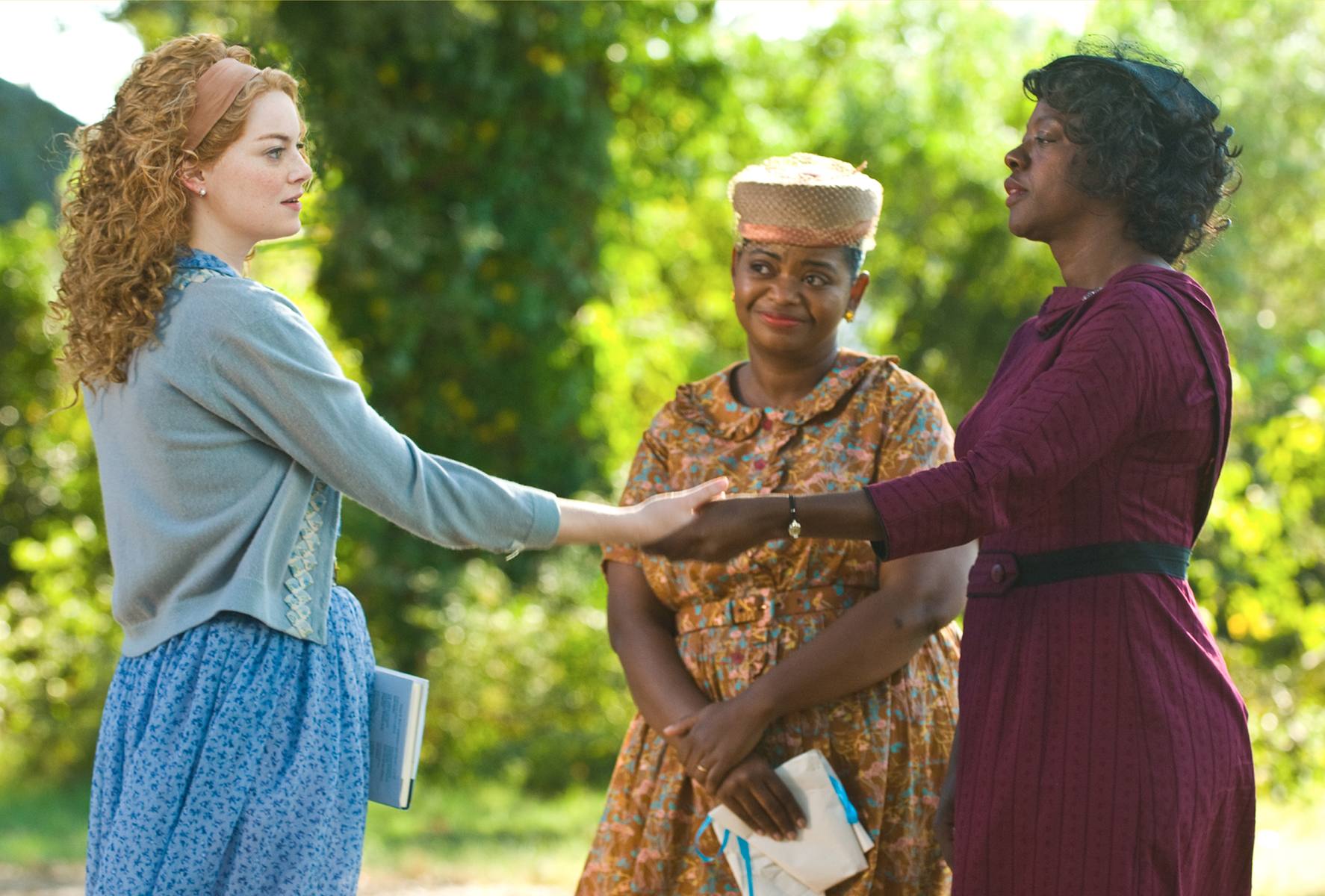
I felt especially vindicated by Ms. Gay’s essay titled “1960s Mississippi: Thoughts on The Help” — because The Help was one of those novels I just couldn’t stomach. The author, Kathryn Stockett, is a truly wonderful person. I listened to Ms. Stockett give a presentation and answer audience questions at the Aspen Summer Words writers conference a few years ago, right after the movie of The Help had gone into production —  and I loved listening to her, and found her extremely witty and charming. I really, really enjoyed every moment she was on stage. I thought she was enchanting.

But as for The Help, I tried to read it, and I couldn’t. I just couldn’t. I hit this horrible wall with that book. Normally, I can push through mental walls and read about anything — but I failed with The Help. I read the beginning, became suddenly aggro, skimmed large chunks of the book, flipped to the last page, and then read Kathryn Stockett’s comments about her real life at the end. I liked her comments about real life, and read those with focused absorption, but trying to read her novel was like driving spikes up my fingernails. I just couldn’t do it.

Everywhere around me, women kept asking, “Have you read The Help yet? Did you love it? Didn’t you just love it??? and I had no idea what to say. I felt like a failure as a reader, because I hated the it book. I couldn’t stomach The Help. Couldn’t even get through it. I felt so alone. Sometimes not loving the it book can feel like a moral crisis. That was the case with me and The Help.

For the record, here are popular it books I have loved: The Red Tent, Wild, The Fault in Our Stars, The Glass Castle.

But I could not read The Help. I can’t even paste a picture of the book cover here in my blog post, because I disliked that book so much. The book cover is burned into my mind though, because when The Help was the it book, it was Everywhere, All The Time, and there was no escape from that cover.

So Roxane Gay’s essay on the book — and the movie made from the book — came as a joyful revelation to me. I felt like finally — finally!! — someone else understood! Someone else knew why I picked up that book and felt so angry and frustrated that I couldn’t even read it.

THE HELP


Because I never liked that Skeeter (the young white woman) uses those black women’s stories to empower her own life and career by publishing a book that, had it been real, would’ve meant those maids would now fear for their lives — but we’re supposed to believe that Skeeter is helping fight racism and oppression by interviewing these women, and that racism in the ’60s was sad and uncomfortable but not mind-numbingly horrifying.

For the record: racism in 1960s Mississippi was mind-numbingly horrifying. Black lives meant nothing. Black people were lynched and killed in terrible ways all the time. I feel sad that there are so many people alive today who want to deny this reality, because maybe they have fragile egos and maybe they think they’ll be burdened by white guilt or something by accepting the truth —

And I’m certainly not saying we should all walk around feeling guilty because a bunch of white people in Mississippi were racist murdering assholes, as if only white people can be racist assholes who murder people.

Of course that’s not true, nor is it the point. The point is being loyal to the truth.

And the problem was, for me — reading The Help didn’t match what I knew about the Civil Rights movement, or the horror of how so many white people in the 1960s looked at black people as something akin to pigs, animals to be chopped up and used however white people saw fit. Reading The Help was about how a white girl wants to prove she isn’t really a racist, even though she’s been raised to be racist, and decides to interview maids and publish their stories in a book so she can feel really awesome about herself and show the whole world how awesome she is.

the-help-movie_95773-1600x1200[1]


The plot of this book just felt wrong. I felt wrong trying to read it, I felt even more wrong for not being able to read it, and I felt super-wrong for not loving it.

Then I read Roxane Gay’s essay, which goes into far more detail and insight than I ever could on this matter, and I felt profound thanks that someone else understood, and understood far, far better than I.

Because I am no Roxane Gay. When she writes in her essay, “The Help, I have decided, is science fiction, creating an alternate universe” (p. 209) — I can stand up and cheer, but I could never have come up with that thought myself. Ms. Gay is insightful and rational, whereas I couldn’t see past my own jumbled and ragey emotions on this.

When Ms. Gay writes about Hollywood’s infatuation with “the magical negro” and how “The Help provides us with a deeply sanitized view of the segregated South in the early 1960s” (p. 214) — well, she is being brave enough, intelligent enough, and supremely awesome enough, to put into words the things I was never smart enough to say.

the-help-movie-screenshots6[1]


I am someone who wants so much for the world to be better than it is. For all women to be treated with respect and dignity, for all children to grow up with full bellies and loving families, for there to be no wars, or caste systems, for there to be no need to judge and condemn others — not even in silent, unspoken ways — because their skin isn’t white.

I am such a horrible person sometimes. I judge, I condemn, I lash out at others — even if I don’t say the words aloud, I’ll suffer them in my mind — and I grew up with people who freely used the n-word, and still use hateful epithets for Hispanic people, and my own grandmother once told me she’d never speak to me again if I ever got it into my head to marry “some [bleeping n-word].” I’ve been in so many situations where using the n-word is like being able to smoke cigarettes — it’s a way you can show people you belong, you fit in, you are one of them. That’s a powerful compulsion to have. Just like I couldn’t enjoy reading The Help, there have been so many moments in life when I could never fit in — but do I speak up?

I used to try. When I was young, certain family members used to say racist things to me because they knew such comments would deeply upset me, and I would argue with these people until I ended up sobbing. That was the only time I felt brave enough to speak up, and I lost, every time. No one was swayed by my pain, or my pleas. And when I’m around adult white men, I don’t even try. They stand there and spew their visceral hate of the black race, or of Hispanic people “coming into this country” to “steal their jobs,” and I am silent. Because I know they will hate me if I speak up. They will turn their visceral hatred on me — the dumb, stupid female, who might as well “go rut with those [bleeping n-words],” if I want to “love them so much” — and this is where I know I am a coward.

movie-still-from-the-help[1]


I would like to think I am brave enough for a group of white men to all call me a “dumb stupid b*tch” and then rationally counter with something like, “Well, I’m sorry you’re all so insecure and judgmental, but I actually don’t care what you think.”

But the problem is, I do.

And angry white men really scare me. They own guns. They like to shoot things. They feel really threatened by women. And they feel especially threatened by black people. And when they’re all in a group, drinking beer together, spewing vile, racist things — they scare me the most.

I say nothing.

Groups of angry white men were not in The Help.

But groups of angry white men, and the women who agree with them, are a force to be reckoned with. White privilege, and the defensive anger white privilege often gives rise to, is toxic as hell, and when you are around it, it’s like being doused in acid.

The Help gives us a fairy tale in which we are not doused in acid. The pain of reality is muted, transcended, as if horror is simply a bad dream we once had, and we can smile at the version of history shown here in this movie, dressed up in a ribbon, so pretty and sweet.

We want the fairy tale. We want that fairy tale so bad.

“I’m like Skeeter! I care about black people!”

This is what I heard every time a white woman grabbed my arm and told me all about this amazing book, The Help, and how the novel was incredibly brilliant and moving, “honest and true,” and one of The Best Books Ever Written.

I stood there in silence, as I often do, because that is me burying my head in the sand. That is me being a coward.

I want to be a better person than I am. I want to be braver.

Bad Feminist is like a clarion call to have courage. Small acts of compassion matter. One of Ms. Gay’s essays on grief and atrocity focuses on that message alone: Keep trying. Do the work. Don’t give up.

As Roxane Gay states in her final essay in Bad Feminist, “No matter what issues I have with feminism, I am a feminist. I cannot and will not deny the importance and absolute necessity of feminism. Like most people, I’m full of contradictions, but I also don’t want to be treated like shit for being a woman.”

“I am a bad feminist. I would rather be a bad feminist than no feminist at all.”

Please publish another book of essays soon, Roxane Gay. I need to keep reading your words.

Posted in My Thoughts | 1 Comment

This Nightmare I Had Starring a Small Child

Today is December 26th, the day after Christmas — and I hope every Christian and Christmas-celebrating person reading this post had a wonderful holiday!

holiday_banner-892x267[1]


I spent Christmas Eve day with my family in Silverton, Colorado, and then Christmas Eve (evening) with my husband’s family outside Bayfield, Colorado, and then Christmas Day, we were snowed in, so Greg and I spent the day at home. I read books and made chili, gave my husband a hard time about taking a vacation (he wants to go on a cruise to Alaska, but never buys himself the tickets to take the trip) — and other than that, my brain was very quiet on Christmas Day, pretty much fuzzed out by all the weeks of commotion leading up to the holiday, and then blanketed by a deep sense of calm, much like the world covered in snow.

I have so many children and family members to shop for, and send packages to, that I just appreciate how, come the actual Christmas Day, I have no children at home to care for, and can be silent, and selfish, and do nothing more than read a couple of books, call/text/email a few people, and wash a few loads of laundry. I would have spent the day in Montrose, Colorado, at my brother Lee’s house, but I spent the day in my jammies instead, and I was content and happy, even if I was really craving dark chocolate, and I had no dark chocolate to eat.

truffles1[1]


Today I have no cravings for chocolate, and no desire to do much of anything other than lay around like a lazybones and read more books. I was supposed to take two young boys out to lunch and then shop at the bookstore with them, but both of these teenagers cancelled on me, my sister hasn’t come to town as she’d planned, and here I am, reading, doing some light stretches to help my lower back, and I drank a glass of (homemade) eggnog a couple hours ago.

Holiday Eggnog


So I thought I’d share this frightening nightmare I had a few days ago.

Because this is my Thought Candy blog, and while I could share my sweet family pictures here, and chat about lovely things, I’d rather talk about icky stuff instead.

Yeah, I know. I’m one of those people.

In my nightmare —

I dreamed I had an 8-year-old son with sandy brown hair, and in the dream, I was waking up from a nap. (In real life, I only sleep in the afternoon if I’m sick, but dream-me was a nap-taker. Maybe because she was also a mom, and moms have lives much more stressful than mine.)

At any rate, dream-me was also a phantom. I could float. I floated out of my house, and I floated to my son’s classroom at school.

I don’t know why I did this, but it felt really urgent. I had to go find my son, right away.

school-boy--think_19-129771[1]


So phantom-me floated into his classroom. My son’s desk was near the back of the room, and I saw him kicking the chair in front of him, harshly whispering to the girl who occupied the seat, “Fat-ass, fat-ass, fatty fat-ass,” low enough the teacher couldn’t hear him, but the other students all could, and the popular ones snickered appreciatively while the unpopular ones stared down at their papers in mute terror, scared he would turn his attentions on them.

Then my son used a straw to launch several spitballs into the girl’s hair, which she didn’t feel hit her because she had big, frizzy black hair that the spitballs stuck to (and looked repulsively ugly in), but she didn’t know they were there.

My son snorted and laughed with glee, and then he started to whisper other things to this girl, sexual things about her body (her nipples and breasts), and proceeded to tell her how ugly she was —

At that point, I started awake with a bolt of pure horror, no longer the phantom-me in the dream but real me, and I actually leapt out of bed and ran down the hall, convinced my son was asleep in my guest bedroom.

I kept thinking, “How could I let this happen? How could I raise a bully? How could my child act like that? Have I taught him nothing?

I had a whole list of things I had to do right away, to correct for this terrible state of affairs. I pulled back the blankets on the bed in the guest room, and only then did I realize I did not have an 8-year-old child — and I had not, in fact, raised a bully.

female-bully-1[1]


Some people might laugh at that dream, and some people might giggle about boys torturing girls, and say, “Boys will be boys,” and look at such antics as “cute.”

Take the picture of the little boy pulling that girl’s hair up above — I know a lot of people who would find this image humorous, and call that “healthy kid behavior.” Especially when both children are dressed so cutely, and the little boy is wearing an argyle sweater-vest and a plaid collared shirt. Adorable, right?

However. I’m not one of those people.

There are few phrases I dislike more than, Boys will be boys, which, as far as I can tell, was invented to give males a blank check to act like assholes. At any age.

Bullies do not make me giggle, and that nightmare freaked me the hell out.

I sat on the guest bed for several minutes, with my head in my hands, thanking God I didn’t give birth to a child who would go out and cause pain and suffering in this world. Thanking God that I have never given a child a blank check to torture people with abandon. Because a boy who could do what my dream-son was doing at age eight… well, it’s a small step from that kind of torment to much worse violations.

And then I thought of all the rapists who exist in the world… and how many of them come from loving families, families who have no idea they’ve raped girls of all ages — young girls, teenagers, freshmen in college…

I thought of all the rapists who go home for Christmas, and wear cute argyle sweater-vests with nice collared shirts, and pass the potatoes at dinner, and watch sports with their dads.

Boys will be boys, and all.

*shudder*

This is not what I believe.

I believe we are born to strive to be our best selves. I believe morality is innate. I believe we are happiest when we feel intense gratitude, and I believe helping others is a life-affirming expression of gratitude.

I would have told my son all of these things.

I would have made him go shopping with me. We would have picked out gifts for the girl he was tormenting. Flowers, Monster High dolls, glittery lip gloss, a robot set, Lego Star Wars toys — I would have made my son think long and hard about what she might like. He would have hated me for doing this. I wouldn’t have cared.

I would have made him write something to share with all of his classmates, and his teacher. About his behavior, and how his behavior needed to change, and why.

I would have taken all of my son’s toys away, and I would have made him read books with me. We would have started with Wringer and Maniac Magee. Jerry Spinelli is a beautiful writer, and reading those books together would have been a starting point for a conversation I would be having with my son for the rest of our lives.

It feels rather bizarre that I would make an action plan over a nightmare concerning a life I don’t have. Such is the power of dreams in convincing us they are real. But giving free range to a bully — raising a child who could torment and abuse other people — ranks near the top of my list of Horrifying Events I Thank God I Don’t Have to Suffer.

Perhaps now would be a good time to go find some dark chocolate.

Un cuore nel cioccolato


Hot chocolate also sounds really good.

Hot chocolate, books, and a clean, quiet house free of bullies — this is post-Christmas heaven to me. I am grateful.

Posted in My Thoughts | Leave a comment

Sia’s Video for Chandelier: So This Is Love

It’s getting so close to Christmas now and the days are pretty much madcap craziness. On top of trips to the Post Office and all kinds of shopping and gift-wrapping, I’ve had birthday parties, graduation parties, book club parties, and all kinds of other non-holiday-but-celebration-related activities going on.

I love all these events, but I’ll be a bit glad when December 26th arrives and I can hole up with a manuscript again like a troll.

When I don’t start my day at work on a manuscript, I always feel anxious at night. And since I didn’t work yesterday, I didn’t want to go to sleep last night, and I discovered this music video around midnight —

It took my breath away, and I can’t stop watching it —

It’s the official music video for Sia’s hit, “Chandelier” —


The first time I heard this song on the radio, my reaction was, “Mmm… not my favorite, but I won’t change the station.” I thought it was just a mindless party-girl club song, and if you take the time to figure out she’s singing an anthem to getting wasted, via rock-bottom self-esteem, with the lyrics, “1 2 3 1 2 3 drink” as the subject of the song trashes herself into oblivion — well, this wasn’t a piece of music that moved me.

Which means this wasn’t a song I listened to on my computer — so I never watched the video.

Then I found out last night that Saturday Night Live and Lena Dunham have both parodied this video — and I was like, okay, I have to watch this now.

(The SNL parody, with Jim Carrey and Kate McKinnon, completely rocks by the way — you should totally watch it if you haven’t seen it yet!!)

It’s easy for me to know why I love this music video so much — it’s a perfect work of art, with a simple perfection in lighting and filming that gives every moment a powerful beauty — but it’s so much more than that. It’s the contrast between the dancer and her setting; the pairing of the wig and the color smeared on her hands; the exquisite way she moves when spinning and tumbling, coupled with the ferociousness of her expressions and moods. She’s a violent babydoll, she’s a woman and a child, she’s lost and sad and deeply knowing, she’s lashing out and subversive and unhinged.

She’s totally gorgeous, thrilling, living art. There is wild magic here, and I can’t stop smiling.

When I watch the video, I feel this gigantic, tawny goddess with the mane of a lion rise up in my chest, and she carries a spear coated in blood and a battered shield decorated with a black ankh — and when she studies this dancer, my lion-goddess possesses me with incandescent delight. She says, “Play it again…” and I do.

Posted in My Thoughts | Leave a comment

Top Ten Best Books of 2014

It’s that time of year! Assessment! List-making! Summing up the last twelve glorious months of reading time!

So I can share the Ten Best Books I read in 2014!!

Of course, I read a lot of great books this year, and they weren’t all published in 2014. But I pick my ten best from the past twelve months, regardless of publication date.

Last year, I didn’t take the time to type up my list of books read, I simply listed my ten favorites — but this year, I decided you should know what I’m choosing from. So first, I will share the titles of the books I read this year, and then I’ll reveal which ones made my Top Ten List.

Let’s get the party started.

Books I Read in 2014 (mostly in the order in which I read them)

1. The Good Soldiers, by David Finkel (2009) [nonfiction]

2. Gone Girl, by Gillian Flynn (2012) [mainstream novel]

3. Hopeless, by Colleen Hoover (2012) [New Adult/NA novel by a self-publishing author turned superstar]

4. City of Thieves, by David Benioff (2008) [literary fiction]

5. The Last Samurai, by Helen DeWitt (2000) [this literary novel is NOTHING like the Tom Cruise movie]

6. Divergent, by Veronica Roth (2011) [dystopian YA novel]

7. Claire of the Sea Light, by Edwidge Danticat (2013) [literary fiction]

8. Queen of Hearts, by Colleen Oakes (2014) [YA fantasy novel]

9. Prize Stories 1999: The O. Henry Awards, published 1999 (award-winning short stories)

10. You Are a Badass: How to Stop Doubting Your Greatness and Start Living an Awesome Life, by Jen Sincero (2013) [self-help book]

11. Where’d You Go, Bernadette, by Maria Semple (2012) [epistolary novel]

12. Old Bones, by Gregory Picard and Wendy Picard Gorham (2013) [mystery novel by father & daughter indie authors]

13. People Who Eat Darkness: The Fate of Lucie Blackman, by Richard Lloyd Parry (2012) [nonfiction]

14. Fangirl, by Rainbow Rowell (2013) [NA novel]

15. Lungs Full of Noise (short stories), by Tessa Mellas (2013) [Iowa Short Fiction Award Winner]

16. Attachments, by Rainbow Rowell (2011) [NA novel]

17. Catch-22, by Joseph Heller (1961) [literary fiction]

18. The Orchardist, by Amanda Coplin (2012) [literary fiction]

19. Bird by Bird: Some Instructions on Writing and Life, by Anne Lamott (1994) [nonfiction]

20. Dreams of Gods and Monsters, by Laini Taylor (2014) [YA fantasy novel]

21. The Rosie Project, by Graeme Simsion (2013) [mainstream novel]

22. Infidel, by Ayaan Hirsi Ali (2007) [memoir]

23. Ignited Hearts Inspiring Hope: Women Sharing Journeys of Awakening (2014) [nonfiction; indie group of authors/editors]

24. The Next America: Boomers, Millennials, and the Looming Generational Showdown, by Paul Taylor (2014) [nonfiction]

25. Man Walks into a Room, by Nicole Krauss (2002) [literary fiction]

26. Red Rising, by Pierce Brown (2014) [dystopian YA novel]

27. All Joy and No Fun: The Paradox of Modern Parenthood, by Jennifer Senior (2014) [nonfiction]

28. Life After Life, by Kate Atkinson (2013) [literary fiction]

29. The Girls’ Guide to Hunting and Fishing, by Melissa Bank (2000) [This book of short stories was a reread; I first read this in 2004]

30. Orange Is the New Black: One Year in a Women’s Prison, by Piper Kerman (2010) [memoir]

31. Dirty Love (four stories), by Andre Dubus III (2014) [literary fiction]

32. No B.S. Sales Success, by Dan Kennedy (2004) [This nonfiction book was a reread; I first read this in 2004]

33. Flash Boys, by Michael Lewis (2014) [nonfiction]

34. Couldn’t Keep It to Myself: Wally Lamb and the Women of York Correctional Institution, edited by Wally Lamb (2003) [nonfiction/memoir]

35. Backpacked: A Reluctant Trip Across Central America, by Catherine Ryan Howard (2011) [memoir; indie author]

36. Boy, Snow, Bird, by Helen Oyeyemi (2014) [literary fiction]

37. The Giver, by Lois Lowry (1993) [dystopian YA novel]

38. Hard Twisted, by C. Joseph Greaves (2012) [literary fiction]

39. The Secrets of a Fire King (short stories), by Kim Edwards (1997) [literary fiction]

40. The Signature of All Things, by Elizabeth Gilbert (2013) [literary fiction]

41. Mousetrapped: A Year and a Bit in Orlando, Florida, by Catherine Ryan Howard (2011) [memoir; indie author]

42. The History of Love, by Nicole Krauss (2005) [literary fiction]

43. The Aging Athlete: What We Do to Stay in the Game, by Martha McClellan (2014) [nonfiction; indie author]

44. Re-Making Love: The Feminization of Sex, by Barbara Ehrenreich (1986) [nonfiction]

45. Blood Rites: Origins and History of the Passions of War, by Barbara Ehrenreich (1997) [nonfiction]

46. Outlander, by Diana Gabaldon (1991) [I read this historical fiction/time-travel novel twice, one reading right after the other]

47. Dragonfly in Amber (Outlander #2), by Diana Gabaldon (1992) [historical fiction/time-travel]

48. Why Football Matters: My Education in the Game, by Mark Edmundson (2014) [memoir]

49. The Shopkeeper and the Traveler, by J.D. Hanning (2014) [time-travel novel; indie author]

50. Dead Man Walking: The Eyewitness Account of the Death Penalty that Sparked a National Debate, by Helen Prejean (1994) [memoir]

51. The Language of Flowers, by Vanessa Diffenbaugh (2011) [women’s fiction]

52: Grammar Girl’s Quick and Dirty Tips for Better Writing, by Mignon Fogarty (2008) [nonfiction]

53. The Paying Guests, by Sarah Waters (2014) [literary fiction]

54. Ethan Frome, by Edith Wharton (1911) [literary fiction]

55. The Time Traveler’s Wife, by Audrey Niffenegger (2003) [women’s fiction/literary fiction]

56. One Thousand White Women: The Journals of May Dodd (a novel), by Jim Fergus (1998) [historical fiction]

57. The New Psycho-Cybernetics, by Maxwell Maltz (first written in 1960) [self-help]

58. Loving What Is: Four Questions That Can Change Your Life, by Byron Katie (2003) [self-help and a reread; I first read this book in 2004 and 2005]

59. What Do Women Want? Adventures in the Science of Female Desire, by Daniel Bergner (2013) [nonfiction]

****************************

One thing I’ll say for my list — there is some variety there. Fiction, nonfiction, YA, NA, short stories, and memoir. Indie authors as well as traditionally-published writers. I don’t read cookbooks, or middle grade fiction, or books by celebrities… but everything else is fair game.

Any book that was “a reread” in 2014 doesn’t qualify for making my list of best books for 2014 — because the fact I’m rereading them is proof enough they’re great books. And if I’d been blogging 10 years ago, those rereads would have been on my top ten list for prior years, not 2014.

Also: I’m not putting Psycho-Cybernetics on my top ten list because I’ve been a Tony Robbins addict for years (especially since leaving teaching in 2011 to be a full-time writer), and Tony Robbins uses Maxwell Maltz a lot in his work. Maxwell Maltz is amazing, his work is amazing, and if you’re a Tony Robbins addict like me, you’ll “hear” Tony Robbins when you read Maxwell Maltz. Psycho-Cybernetics is a great book, a book I wish I’d been able to read in high school — because I was pretty much a train wreck in high school and college, self-esteem-wise, though I did manage to survive all 8 of those years.

But those would have been much better years if I’d had a copy of Psycho-Cybernetics when I was twelve.

So Psycho-Cybernetics gets its own special place in the pantheon — a place of honor for inspiring my favorite guru ever, Tony Robbins, to be who he is.

Now on to my ten favorite reads of 2014

*drumroll!!!*

*more drumroll!!!*

Okay. It’s time.

Number Ten — You Are a Badass, by Jen Sincero (2013)

x37566[1]


This is such a fun book! And my inspiration for a couple of different blog posts this year. Plus, I got to meet Jen Sincero in Albuquerque this year. She’s awesomely funny. And her book is delightful. *hugs* to this book!

Number Nine — City of Thieves, by David Benioff (2008)

cityofthievesppk[1]


This novel is amazing, and it features one of the most badass women I’ve ever met in a book. I fell in love with Vika as much as the main character does (and he falls for her hard). This story takes place during the siege of Leningrad, when 17-year-old Lev Beniov (the mc) is arrested for looting a dead German soldier. Along with a fellow prisoner, he’s tasked with the impossible: finding a dozen eggs in a city full of people starving to death. If they don’t find those eggs — to be used in a wedding cake of a Soviet colonel’s daughter — they lose their ration cards. This is the skeleton of the plot of City of Thieves, a story full of sex, violence, the horrors of war, and this total badass woman who I LOVE. Long live Vika. I’m so glad she’s immortal because she was born in a book.

Number Eight — Infidel, by Ayaan Hirsi Ali (2007)

Infidel


This book was a game-changer for me. It made me look at Islam in new ways. It also made me feel like my hair had turned white because reading about female genital mutilation from a survivor is a horrifying experience. This memoir is gripping, especially the first half of the book. The final third of the story, detailing her flight from Europe to the United States, was less interesting than reading about her youth in Somalia, Kenya, Saudi Arabia, and elsewhere — including how she fled her arranged marriage to strike out on her own. I love this book. Ayaan Hirsi Ali is smart and tough, and so is her memoir. A brilliant read.

Number Seven — Fangirl, by Rainbow Rowell (2013)

fangirl02[1]


I *loved* Eleanor & Park (which I read last year) and I *really* loved Fangirl. It’s a novel that stars a writer, for one. And two, there is Levi. Levi. It’s been months since I read this book, and I am still crushing on Levi. SO much. If you haven’t read the book, and you want to know what’s up with Levi, please read Literary Crush: Levi from Fangirl by Rainbow Rowell. That short, sweet post even contains some gorgeous, gorgeous artwork of Levi and Cath kissing and being all swoony together. If you haven’t read anything by Rainbow Rowell yet — you are missing out on some serious joy. Her books are heavenly. I’d suggest reading Eleanor & Park first, and then Fangirl. Because Levi. Levi is awesome.

Number Six — Blood Rites: Origins and History of the Passions of War, by Barbara Ehrenreich (1997)

0805050779.01.LZZZZZZZ[1]


A truly beautiful, brilliant, and amazing book. Love it, love it, love it. One of the best nonfiction books I’ve ever read. These pages explain so much, not just about war, but human beings everywhere. A magnificent book full of research and enlightenment. (And oh my God how I *LOVE* Barbara Ehrenreich. So much author-love for her — she is one of my favorite writers Of All Time. Brilliant. She is simply brilliant.)

Number Five — What Do Women Want? Adventures in the Science of Female Desire, by Daniel Bergner (2013)

life_ac_what-do-women-want_book_640x480_0[1]


Please be warned, this book is not for people who get easily enraged when conventional wisdom is questioned. In fact, if you are someone who cherishes conventional wisdom, DO NOT READ THIS BOOK. Bake brownies, walk the dog, call a relative, play with the baby, watch a movie, read your Facebook wall, do the dishes. But DO NOT READ THIS BOOK. Because What Do Women Want? is the most empowering book I’ve read in a long time. Why do I love this book so much? Because women are amazing. Because understanding desire is key to understanding who we are, as women, as men, as transgender people. And that’s all this book is doing– talking about how science blinded itself for so long, and how some scientists are taking off their blinders. There are so many things I learned in this book. So. Many. Things. This book is awesome. Melt-my-brain awesome.

Number Four — All Joy and No Fun: The Paradox of Modern Parenthood, by Jennifer Senior (2014)

All Joy and No Fun


Wow. WOW. I LOVED reading this book. Beautifully written, insightful, and full of superb information. The stories shared by family members in this book, as well as the research information Jennifer Senior provides for her readers, make this one of the very best books I have read in a long time. This is an exquisite read! I say YES to this book. SO MUCH YES to this book! Read it, read it, read it. It’s worth every second of your time.

Number Three — Dreams of Gods and Monsters, by Laini Taylor (2014)

Taylor_DreamsofGodsAndMonstersHC[1]


This book ends the trilogy that began with Daughter of Smoke and Bone — and this novel freaking ROCKS. *heart-pounding beauty right here* Plus the cover rules. I love this book. I love this book so much. If you haven’t read this trilogy yet — then what are you doing reading my blog post?? Go read these books!!

Number Two — Flash Boys, by Michael Lewis (2014)

895[1]


Man, this book is GOOD. Good good GOOD. I’m in love with Brad Katsuyama and his Robin Hood team. In LOVE. I was outraged to read about Sergey Aleynikov’s arrest and prison sentence– eight years in federal prison for an innocent man. This nonfiction book about the U.S. financial markets had my pulse pounding faster than a thriller. Because this is all TRUE!!! Gahhhh!!! Michael Lewis is just so phenomenal. His books are amazing. Flash Boys is a brilliant, amazing read. Long live Michael Lewis, and the incredible human beings he writes about. Brave, compassionate, and full of integrity. His books are always about good and evil, presented in their most thrilling, nuanced best. I’m rooting for IEX. I so want this stock exchange to succeed!! GO IEX! GO IEX!!

Number One — Outlander, by Diana Gabaldon (1991)

Outlander-TV-cover-195x300[1]


This book is amazing. So much WOW for this book. I devoured this novel, and then immediately read it again. I also watched the first 8 episodes of Season 1/Book 1 that debuted on Starz this summer and fall. I’ll be tuning in to watch the second 8 episodes of Season 1/Book 1 of Outlander in April 2015. I might have a major crush on Levi in Fangirl, I might totally swoon for Vika in City of Thieves, but I have *massive* love and worship for Jamie and Claire in Outlander. Like, build-a-shrine-in-my-room kind of worship. Like, weeping and sobbing in ecstasy, I love this book so much adoration and JOY. (The freak is in the house when it comes to me and this novel.)

In reflecting on my Top Ten List for 2014

I have four fiction titles, and six nonfiction titles. One nonfiction title is a self-help book.

Last year, my choices were split equally: five fiction titles, and five nonfiction titles.

Something else I can’t help but notice — none of the books I’ve chosen (this year or last) were published by indie authors. [Side note: *I* am an indie author.]

Yeah, I’ll just sit with that for a while.

lonely2[1]


Cause I know I’m in a business writing stories that compete with all of these fantastic books — written by people I revere as gods — (er, I mean I revere them as gods in a non-psycho-way… more like a worshipful-adoration way… okay, maybe I am just the teensiest bit psycho about these authors — or a lot — um, yeah, probably a lot psycho) —

But not everyone has to be psycho over an author to love a book. In fact, most people do *not* operate this way, and that’s probably a good thing. Because I definitely feel like Gollum with his Precious when it comes to me and my books.

So here’s the thing. I’ll self-publish Mark of the Pterren in 2015. And maybe — just maybe — someone will love that sci-fi story so much that it will be one of their Top Ten reads of 2015. (Which will probably only happen because they don’t have 58 other books to choose from, but Details. A girl’s gotta have a little hope she can compete with the big dogs, no? Mount Olympus looks pretty darn nice to us mortals.)

Diana Gabaldon, Michael Lewis, Laini Taylor… these authors are in a different class than me. They are the heavyweights, and I’m the puny high school kid who weighs 92 pounds and dreams of a title one day.

*must go lift weights now*

*lifting lifting lifting*

Here were the books I wanted to read this year, but didn’t get a chance to

Brown Girl Dreaming, by Jacqueline Woodson (YA, 2014)

Bad Feminist, by Roxane Gay (essays, 2014)

Redeployment, by Phil Kay (stories, 2014)

Code Name Verity, by Elizabeth E. Wein (YA, 2012)

*********************

Looks like I’ve got my next month’s reading lined up. *happy grin*

So. Dearest Thought Candy reader — what about you? What were your favorite reads this year? And what are you looking forward to reading in 2015? I hope you’ll share!

Posted in My Thoughts | 2 Comments

The Time Traveler’s Wife Made Me Think of My Mom

Over the past week, I read The Time Traveler’s Wife, by Audrey Niffenegger, which was published in 2003, and made into a film starring Rachel McAdams and Eric Bana in 2009.

I would first like to say that the book cover creeps me out —

9780156029438_p0_v3_s260x420[1]


Just look at those hideous shoes. Blech. So much blech.

The little girl standing next to those hideous brown shoes is just creepy.

Creepy, creepy, creepy.

Plus, I think this might have been the book that forever marked “women’s fiction” novels as often having covers with little girls (or — even more popular — little girls’ legs) as a primary graphic.

For example, here’s The Language of Flowers (published 2012) —

13581132[1]


What a Mother Knows (2013) —

9781402279560-PR-201x300[1]


And, of course, this updated cover of Lolita

lolita-book-cover-187x300[1]


If I ever try to put a little girl’s legs on a book cover, I hope someone reminds me how much I dislike this, and whaps me on the head with some frozen tuna, because I obviously need some sense knocked into me.

I’m not a big women’s fiction fan — it’s actually a genre I try to avoid, and publishers make that easy by slapping little girls’ legs on the covers, as well as back-views of grown women with misty lighting and swirly fonts.

These books are just not my thing.

But the time had come for me to read The Time Traveler’s Wife. The universe spoke, and I had to listen.

I’ve read around 60 books in 2014, many of them lackluster or outright punishing reads, so I figured I had nothing to lose by adding one more such novel to my “I’ve finally read this” list.

Why did I avoid reading this novel for so long?

Well, that would be due to Manohla Dargis’s review in The New York Times for the film, in which she wrote, “You could say that The Time Traveler’s Wife is a science-fictiony romance about eternal love and all that sniffy, weepy stuff. Or you could think of it as a crazy story about a stalker who sweet-talks a little girl whom he later seduces when she’s a teenager only to then knock her up and emotionally, psychologically and spiritually knock her down again and again, as he hopscotches naked across the time-space continuum.”

Then Ms. Dargis really gets going —

“Of course one woman’s romantic fantasy can be another’s gas-lighted nightmare, which is why it’s easy to read Audrey Niffenegger’s chart-busting novel in such dramatically different ways. A chronological confusion, it turns on a contemporary romance between an unwilling time traveler, Henry, and the woman he marries, Clare. In the novel the romance comes across as airy and coy and unpersuasive. But what feels light on the page can seem exceedingly ponderous once a filmmaker transposes those words into the visual realm. It is, after all, one thing to read about a naked guy talking up a 6-year-old girl while he’s hiding in some bushes. It’s another thing entirely to watch the big, strapping, healthy Eric Bana groping the greens.”

Yeah, that was enough to make me never want to read the book.

But the universe called, and it was time.

One thing I’ll say for Henry and Clare: they are both mildly-grody people with highly dislikeable traits, but they also both suffer a lot in this book. Their level of suffering is on a scale that would never in a million years make it into a movie. Especially not the movie made in 2009, which I watched right after I finished the book. There’s just no comparison between the horror a book can portray, and the horror a movie can show.

Henry suffers so much in this book, and Clare suffers because Henry keeps disappearing to time travel, and then disappears forever, and the book has a really brutal ending.

However. The movie wasn’t as bad as Manohla Dargis made it sound, and the final scenes made me get teary enough that I ended up with a headache and had to go to bed early. (The older I get, any amount of teariness induces a headache, and I hate tear-headaches because I just don’t ever get headaches otherwise, and I am a wimp.)

The one redeeming feature of my tear-headache was the fact Eric Bana is hot in this movie —

time-travelers-wife-movie-stills-01[1]


Also, Rachel McAdams has such beautiful eyes, like the view of the night sky from the high desert mountains in Chile — so between Eric Bana’s total hotness and Rachel McAdams’s gorgeous face, I can’t complain too much about the film. Compared to the book, the movie is flat and drained of its dirtiness and despair and gritty joy — and the costumes in the movie also suck — I mean, absolutely suck — compared to the luminous outfits these people wear in the book. Audrey Niffenegger is a beautiful writer, and her sentences are full of so many exquisite words and images — none of which survived the transformation into a screenplay.

But the movie is not horrible. It’s sappy, but it’s not Eragon bad. It’s not Glitter bad. Eric Bana has such a lovely deep voice, it’s simply impossible to make a bad movie with him in the leading role.

Why did the filmmakers change the costumes so much?

Probably to hide the fact that Clare is really rich in the book — really rich — and it’s one of her most dislikeable traits, how she comes from all this money but still has “such a hard life” because her mom isn’t warm and cuddly and her dad is fixated on appearances and her brother is kind of a jerk.

If that was the most of my worries from childhood — well, hello — I’d trade my life for Clare’s any day.

But I wouldn’t want Clare’s life with Henry, so I totally pass on this fantasy. Thank you, universe, for not making me Clare in this book.

I spent some time on Audrey Niffenegger’s author website after reading the novel, and discovered that a lot of her personal life was woven into The Time Traveler’s Wife. Like Clare, Ms. Niffenegger has red hair, and grew up with money in Chicago. (In Evanston, to be specific — that’s a big money-section of Chicago, which is also where my mother grew up.) Like Clare, Ms. Niffenegger is an artist who works with paper, and — like Henry — she’s doesn’t watch TV and *loves* punk music.

But it was how similar Clare was to my own mother that really had me hooked.

My mom grew up in a *huge* Evanston home with 22 rooms (or some crazy number) — and, also like Clare in the book, my mom’s parents kept a cook and a maid (and I think they lived there in the home with them, the same way Clare’s family’s hired help do in the novel). Like Clare’s mother, my mom’s mother was an alcoholic who was not warm and cuddly, and my mother’s father (like Clare’s father) was more concerned with making money than spending quality time with his family. (However — unlike the book — I think my grandfather had been married four times before he married my grandmother, and I think he was still married to his fourth wife when he married her. Because my family is classy like that.)

So I felt this connection to Clare because I kept reading my mother into her character, since their backgrounds were so similar (*huge* home with servants, with parents who were lacking, un-great relationships with siblings, and a whole life that revolves around a guy and wanting babies) — and my mom also went to a private school (like Clare’s) up until my mom was 13, when her family sent her out of the city, to a small town in central Illinois called Shelbyville.

The way my mother grew up, and the way I grew up, are several galaxies apart. I still have trouble comprehending the drastic difference between me and my mother sometimes. We are such aliens to each other, such polar opposites in all ways, I might as well have been beamed in from another planet and labeled her child.

Which is not to say I don’t love my mom. I definitely love my mom. And I do resemble her in a physical way — we both have brown hair and brown eyes — but psychologically, we are a different species.

But this is what novels do — you think you’re reading about other people, but you’re really always reading about *you* on the page — or, in this case, I was reading about my mother.

These were my final thoughts on the novel The Time Traveler’s Wife —

This is one of those books people either love or they hate. I loved it. The characters feel deeply for each other, suffer greatly (and I mean *suffer* here, this book gets incredibly dark in places), and then these beloved characters experience tragedy by the end. Such beautiful darkness in this novel, and the writing is superb. I was sucked into this story from the opening lines, hit a bit of a lull halfway in, and then devoured the rest of the book in a hate-to-put-it-down kind of way. Near the very end of the book, Henry has a nightmare, and the way he describes the dream, Ms. Niffenegger has written the most exquisite metaphor for life I have ever read: “And I dance. I am blinded by the lights, I dance without thinking, without knowing the steps, in an ecstasy of pain. Finally I fall to my knees, sobbing, and the audience rises to their feet, and applauds.” This book is a whirlwind of ugliness, beauty, pleasure, and pain. A great read.

So. Dearest blog reader. What about you? Have you read this book? Did you love it? Did you hate it? Why?

Posted in My Thoughts | 1 Comment

Party in Durango: The Writers and Scribblers Read-a-Thon

Last night was the third annual Christmas Party and Read-a-Thon for the authors/writers group I help oversee here in town: Writers and Scribblers.

The group is open to anyone, and people join and quit the organization all the time. We have a Meetup page for our group, which lets anyone new to town know we exist.

For all the change we experience with our members, we have a core membership that has remained fairly consistent over the years. I first learned of the group in September of 2012, when I stopped by the Local Authors Fair at the public library. I was staying in Silverton at the time, giving full-time care to my uncle, who was dying, and I’d come to Durango that day to pick up a prescription for him. Before I left town, I spent a few minutes meeting the authors who had tables at the event.

A year later, in September 2013, I was one of the authors with a table, and my friend Adriana joined me. We passed out information on our ebooks, since neither of our books was available in paperback at the time. Adriana had a really pretty display for our table, including a poster with her book cover, Leaving Stage IV. I had business-size cards with my name and my brand-new website address on them. I mostly spent my time advertising the authors group that is now called Writers and Scribblers, letting people know we existed and urging them to join.

This year, the Local Authors Fair was held in October. Adriana wasn’t able to join me again, and my table was lacking without her. I had the same black tablecloth I bought last summer, plus three paperback copies of The Etiquette of Wolves on display (because I made both of my books available in paperback this year). I had no copies of Love and Student Loans and Other Big Problems on my table (because I’d failed to order new ones in time), but I *did* have postcards with pictures of my two book covers on one side, and my author information printed on the back. (A huge step up from my uber-simplistic business cards the year before.)

The Local Authors Fair was held in the morning this year, from 10:00-11:30 a.m. on a Saturday, and I still spent time advertising the group Writers and Scribblers, but I also sold 3 books this year at the event. Two people bought copies of Love and Loans (from the Maria’s Bookshop table in the library proper, because only Maria’s can actually sell things inside the library) and a woman named Rhonda bought a copy of Wolves. I remember her name because she asked me to sign the book for her, and I was so nervous that my hand shook like a total spaz, and I created the worst author signature ever on her book’s title page. It was like I swallowed five packs of Benadryl, a fifth of Jack, took a quick shot of heroin and then stepped in some lava before I picked up the Sharpie. Plus, the Sharpie was dying.

So that was an epic fail, but a good time for practicing my whatevering, because if you can’t whatever the worst author signature ever, then the really brutal parts about being a self-publishing author will just kill you. [Insert picture of me being poleaxed here.] Though, to be fair, traditionally-published authors don’t escape the brutal parts, either, so they’re at equal risk of the poleax.

So. Enough with whatevering. Back to the point of this post. The third annual Read-a-Thon for Writers and Scribblers.

I’ve been to all three of them. The first one I attended was three weeks after my uncle died. I was pretty much numb and in shock. I was also so sleep-deprived that my body couldn’t adjust to being able to sleep through the night. I kept waking up in panic, yelling, “Uncle! Uncle Uncle!” and jumping out of bed, like I was still back in Silverton, administering care. My husband was going through his own trials at the time, and my PTSD from 24-hour hospice care in a really stressful environment did not inspire his solicitude whatsoever. It was a bad scene all around.

So when I attended this writers party, it was like feeling this warm, warm hug from the universe… after going through months and months of one of the bleakest times in my life.

Which means this annual Christmas Party-potluck and Read-a-Thon means a lot to me.

I took a pot of chili and a bowl of cornbread with me this year, and I also took pictures. Here are some of the people who were at the party last night. All names are listed from left to right.

Here are Janice (mystery writer), Sharon (poet), and Victoria (who didn’t read aloud this year) —

Janice, Sharon, and Victoria


Here are Jim (memoirist, The Road to Narromine) and Tim (memoirist) —

Jim and Tim


Here are Jane (romance writer), Jerry (Jane’s husband), Jean (Jim’s wife), and Jim —

Jane, Jerry, Jeanne, and Jim


Here are Melanie (children’s author, I Love You More than Chocolate, and our party hostess) and Julia (poet) —

Melanie and Julia


And here’s a selfie I took with Bodil (nonfiction writer) —

Melissa & Bodil


A short story writer named Bob was also there (but left early) and Melanie’s husband Joe avoided the camera. But I think everyone else made it into one of my photos above.

One thing about helping to run this writers group — it has made me a lot more comfortable reading my work aloud. Before joining this group, I’d only read my work aloud two other times. The first was in a small wine shop in Ouray, in 2009, and I read aloud from my third or fourth draft of The Etiquette of Wolves. I was terrified. I didn’t think I would be — I’ve given lots of presentations in my life, and I don’t really get nervous in front of people, I’d never had stage fright before — but this was the first time I’d ever shared my fiction aloud — and the experience scared me about more than anything else ever has in my life. It was the only time I have ever had stage fright. My knees shook so bad, I thought I’d fall over. I forgot how to breathe like a normal person. My voice was barely audible. I mumbled and ran my words together. I wanted to die. I felt like I was dying. Or being clubbed to death. My whole psyche seemed reduced to one word: terror.

So that reading was a complete epic fail. Another situation where some serious whatevering is in order.

The second time I ever read my fiction aloud was in 2011, at the Aspen Summer Words writers conference. I had another bad bout of stage fright, but it wasn’t so bad. Probably because we were in a bar full of noisy customers, and no one was really listening. I still mumbled and ran my words together. I still forgot how to breathe like a normal person. I still almost fell over, and felt like a rabbit that had almost been eaten after I sat down again.

But it wasn’t as bad. Not nearly as bad as my first reading.

So by the time December of 2012 rolled around, Jim shared some pointers on how to practice reading aloud from your work, and I was ready to practice. Setting a timer. Making notes about where to breathe. Standing with paper in hand, projecting, allowing time for drama and pause. Reading aloud is an art, it’s theater, and I can’t say I delivered a great performance in 2012, but I wasn’t horrible, either.

I was better last year.

This year, I made people laugh. A lot.

I chose material that would make people laugh. I succeeded.

I didn’t read aloud from Mark of the Pterren. I read four of what I’ve come to think of as “my Facebook vignettes” — which are tiny snippets of my interactions with people (or observations of them), which I share on my personal Facebook page. My friend April shares “librarian vignettes” about her interactions with library patrons, and I enjoy reading them so much, I started to share my own stories — and, like April’s, people laugh when they read them.

So these are all true stories, but no less funny for being true. I didn’t pick any stories that forced me to curse, and I didn’t choose conversations that centered on religion or politics. I chose four of the lightest, silliest vignettes, and I realized how weird it feels to read aloud a conversation I’ve had in real life. All the inflections are changed around to evoke the humor — because in real life, angry people *sound* angry, but in comedy, when I’m delivering their lines for them, I can’t channel their emotion — because I don’t want to summon their anger in a comedic performance.

So it was a bit strange to perform those vignettes, but also fun. If I had a partner, we could back-and-forth for an hour, and *really* have people rolling with laughter.

Some of my friends have said I should collect my vignettes and publish them, and I don’t know if I’ll do that, but it’s nice to know the option is there. I’ve gone more than a year now without publishing a new book, so the idea that I could keep collecting these vignettes and perhaps have an entire book of them one day — that’s a cool thought.

Because Mark of the Pterren still has several months of work ahead before it will be ready to launch, and the sequels to follow will be massive undertakings as well. Mixing in a light, easy project around this far more taxing workload sounds like a fun idea. Plus, making people laugh — is really addictive.

Posted in My Thoughts | 2 Comments