Keeping the Normal at Bay

Have you ever had a dream where you are like, far FAR more beautiful than you ever look in real life? A dream where you know that technically, the person you embody in the dream is still you, but she bears no resemblance to anything you normally see in the mirror?

I had a dream like that last night. I was standing in front of a wooden vanity, washing my face, using one of those old-fashioned basins Henry VIII might have used, and I had this amazing long black hair that would put a female superhero to shame. It was doing that windblown-swirly-thing-look that is always popular on comic book covers. My hair was awesome.

And then Richard Gere walked into the room. Not modern-day Richard Gere, but like, An Officer and a Gentleman Richard Gere.

AN OFFICER AND A GENTLEMAN, Richard Gere, Debra Winger, 1982, (c) Paramount/courtesy Everett Collection

Yeah, I know. Weird. I mean, I like Richard Gere, he’s not abhorrent or anything, but if this was a fantasy dream, Russell Crowe would have walked into the room. Why couldn’t Russell Crowe have walked into the room?

Richard Gere took one look at me with my awesome superhero hair and that was it, he was so into me, and all I could think was, “What’s with this old-fashioned basin? And why does my hair look so awesome?”

Richard Gere kept smiling at me and intimating that we should– uh, you know– and I was just like, “I think I need to go for a walk.” My hair was so awesome, it was all I could think about, going for a walk with this hair.

And then some woman stepped into the room (maybe Richard Gere’s wife? or his girlfriend? I honestly don’t know if he’s married or not)– and this woman got really angry and started shouting at me, “What do you like to do? Besides read? Barf! Do you do ANYTHING other than read? Do you?

She kept yelling at me like I was this horrible person, she even said, “I bet that’s all you’ve ever loved, isn’t it? Reading!” Like I was such a loser I might as well be a criminal. I couldn’t take it, I left the room and discovered I was in the mountains. Out in the middle of nowhere. Sweet! I walked through the mountains and found a house. The house, it turned out, was full of vampires. These vampires were busy inside doing some evil vampire thing, and a human came out of the house and begged me to save the other humans inside, and that was when I knew why I had my awesome hair: so I could go into that house and commence to kill all the vampires, which I did, with knives and guns and stuff blowing up, and then my dream ended.

I have no idea what the point of that dream was, though what I like about dreams like that is that there’s no predicting what the hell is going to happen. Nonsense leads to nonsense leads to more nonsense. We’re all Alice through the looking-glass when we fall asleep.

As a writer, it’s important to keep stories that way. Keep them from being predictable. Keep an overdose of the normal at bay.

I woke up and felt grateful that I hadn’t actually spent the night killing vampires (or had I? some people believe dreams are simply an alternate reality to this one– in which case, I am one badass vampire slayer with quite the weapons collection, and I know like, everything there is to know about guns)– but what really made me smile this morning was this video that my sister shared with me: The Happiest Facts to Make You Smile. I just couldn’t imagine anything cooler to post on my blog, as this video is simply the sweetest. Like the real-life mountains in my dream, the normal world holds so much fantastic, so much magic– it inspires all of the crazy we ever dare to dream up.

Plus, there’s Russell Crowe.

Posted in My Thoughts | Leave a comment

Best Movies of 2013

The final days of 2013 are almost here, which means it’s time to assess the world of awesome and suck that was 2013. Though I’d rather focus on the awesome, right? Cause who needs any more suck in their life? With civil wars raging in Syria and the Central African Republic right now, I really don’t have sh** to complain about, anyway, so let’s commence with the awesome.

Here are the best movies I got to see this year. (And this was a great year for movies!)

First on my list–

RUSH movie release date

RUSH

This movie was perfection! Screenwriter Peter Morgan and director Ron Howard have created another masterpiece here, just an epic burst of magic that made me leave the theater saying, “Oh my God, that was SUCH a good movie!!” about two hundred times, until my husband lost it and said I had to find something else to say or he would go crazy. I love my hubby, so I stopped with the repetitive gushing for at least like, ten minutes. But it was hard.

I don’t know anything about Formula One racing, and was reluctant to even see this film– I thought it would be another Days of Thunder or something– but this movie adheres to the true story of these two drivers, and it is such an amazing, compelling story, so beautifully told, that Rush is easily my favorite movie of 2013. LOVED it!

Coming in at a Very Close Second–

Frances Ha

FRANCES HA

Oh my dear God how I loved this movie! The writing, the filming, the acting– YES. And then there is all the sweetness and adorable that is Frances– MORE YES. This movie was like getting a big warm hug from the universe. A valentine for all of the struggling millennials out there, the closing lines just melted my heart.

Pick Number Three–

Blackfish_documentary_banner

BLACKFISH

This gripping documentary about the dirty secrets of Sea World and the horrible treatment of killer whales in captivity made me so emotional that I cried (and cried) and swore to myself that I will never, ever visit Sea World or put any of my money into this company. The fact that Sea World lies to the public (and its employees) by claiming that what they are doing is “research” and that keeping these animals in captivity has “expanded our knowledge of them” is– as this film proves– total bullsh**. This movie has so many powerful lessons to teach, not just about darkness and cruelty, but about the incredible magic and majesty of the natural world. Truly a powerful film.

Fabulous Number Four–

CAPTAIN PHILLIPS

There are times when Hollywood gets things so right that you have to just sit back in awe and amazement. This was one of those times.

Captain Phillips is based on the memoir of ship captain Richard Phillips, and I think people should be aware that members of his crew have made other statements concerning what happened on that boat during the fateful days captured in this film. Namely, that Richard Phillips was a jackass who failed to take his ship to safety when warned, among other things. So I don’t see this movie as fact. It’s so much better than that.

This movie does something that the real-life Captain Phillips never did– it makes you empathize with the plight of these impoverished Somali pirates. It makes you see them as human beings. And the ending of this film is meant to shatter you. It’s meant to make you feel something so much deeper and darker and honest than just, “Hooray! The good guys won!” The end of this film took my breath away. I stayed in my seat through the credits. Not because I wanted to watch the credits. I just needed time to return to my senses and stand. Cause the ending shattered me, and I had to put myself back together. This movie was so incredibly good.

Amazing Number Five–

The Great Gatsby

THE GREAT GATSBY

What I loved most about seeing this film was that I got to watch it with my sister. And my sister had never read the novel. She didn’t know how it ended. She didn’t know what was coming. And she fell in love with Jay Gatsby while watching this movie. Just totally fell in love. Because Jay Gatsby is Jay Gatsby– the man who loves Daisy Buchanan so much it defines him. He’s just total hotness.

And this movie is exquisite. So rich, so perfect. And it made my sister want to read the book. Baz Luhrmann has created a fabulous work of art– and when it came out on DVD, my sister was ON IT. She saw it more than once in the theater, but, you know, it’s just one of those movies. The kind you gotta see way more than once.

And closing my list, last but not least, at Number Six–

12 YEARS A SLAVE

This movie ripped my heart out, sliced it to pieces, burned the pieces to ash, and when I left the theater, I had a gaping hole in my chest. This is not an easy movie to watch. Nor should it be.

The reason this film is not Number One on my list? I’m an emotional wuss. I honestly don’t know if I can ever bring myself to watch this movie a second time. The absolute pain and horror of slavery, so powerfully conveyed in this movie– I’m just not tough enough to withstand re-watching movies that tear me up this bad. I bit my knuckles, I hunched down in my seat, I winced, I cried, I listened to other people cry, I wanted to close my eyes, I wanted to run away. This movie burned itself into my brain the way few films ever do. And it was one of the biggest reasons why 2013 was such a great year for movies. This year brought us 12 Years a Slave, and it was phenomenal.

Posted in My Thoughts | Leave a comment

Writer Dreams: The A Priori Characters

In helping a critique partner edit a manuscript, the title of a book came up. The 1984 novel The Lover, by Marguerite Duras, which I had never heard of before.

A few weeks later, I picked up a copy at the library and devoured the book in a day.

8400067707_6797336e2a_o

It’s so dark. It’s so good. So good that I had to own a copy RIGHT NOW and bought a hard copy as soon as I finished. This is a book that has to take space in my life. A book so good I have to make sure the words stay close to me.

The narrator in the tale is an unnamed woman who tells the story through different parts of her life. The love affair referred to in the title takes place when she is 15 and a half and her Chinese male lover is 27. Marguerite Duras stated in an interview that this book was pure autobiography. The details concerning her life story are incredible. She was born in 1914 near Saigon and grew up impoverished in French Indochina. Her father died early on, and her mother was manic-depressive. She had one brother who was a psychopath (who she wanted to kill) and another mentally retarded brother she had sex with. Without food at home, she learned to hunt in the jungle.

Her life story is so incredibly rich, and her novel is so incredibly good– that I ended up being struck with such passion for writing– such a consuming oh-my-God-I-love-to-write mental fireworks, that the book I’m working on now, which has 207,000 words completed (out of a presumed 350,000) was put on hold. Not because I don’t enjoy working on that book. I just had another book take life in my mind, and I needed to drop everything and listen to those new characters for a while.

I think of my characters as existing a priori— independent of experience, already formed in my mind. I don’t bring them to life, I simply realize they are there. I pay closer attention. Really good literature can make that happen, and that’s what The Lover did for me. It made me realize I had these two other characters in my head (as well as the various people who populate their lives) and I had to pay attention to them for a while.

It so happens that one of these two characters is a combat veteran, which meant I had to start reading books about veterans right away so I could just immerse my mind in that soldier’s reality. The other character is a suvivor of child sexual abuse, perpetrated by her father, who also made pornography of her and sold the videos to organized crime (i.e. they went viral) and this young woman lives with the constant awareness that pedophiles can recognize who she is from all the sexual abuse material they’ve collected of her. It’s a horrible reality, one I didn’t even know existed until this girl came to life in my head and I set out to do some research and then– oh my God– the facts of what these survivors of child sexual abuse pornography face is such an ongoing nightmare, and the more I read, the more this girl just kept talking away in my head, telling me all about what had happened to her so I could put it down on a Microsoft Word page and tell her story.

You might wonder what in the heck a combat soldier and a child sexual abuse pornography victim have in common, to which I would respond: I had no idea, either, until I learned that combat soldiers with PTSD and depression are now being treated with the same therapy techniques developed for rape victims and victims of child sexual abuse. When I learned that, I was all: oh my God, no wonder these two characters showed up in my head at the same time, ready to star in the same story.

But every time this happens to me, and I start mapping out a book while I’m already in the middle of another novel, the characters in the first novel have a tendency to get mad. Some of them, anyway. They stomp around. They give me dirty looks. I get a lot of long, heavy sighs. “We were first,” those dirty looks say. “You tell those other people to get in line.”

So I gave this new project of mine a week. Thanksgiving break. It was perfect. Research, outlines, notes, daydreaming, I wrote a first chapter… and then I waited a few days, read that first chapter, contemplated how much WORK that project is going to be… and then went back to the characters who were huffing and puffing and stomping around, irritated that I’d put them on a back burner for a week. They were happy. Relieved, but still a bit wary I might dump them again. Even characters hate feeling rejection.

One of my husband’s good friends told me, “I can’t wait to read your first book, so I can find out all about you.” I was speechless. Nothing in my first book has anything to do with my life. Any tiny wee glimmer of anything directly related to me was so distorted and embellished and manipulated for plot purposes– I just wanted to run away when he said that. The same kind of horror goes through me when I realize I’m going to write a story with a combat vet and a child sexual abuse survivor. What if people think I’m writing my own life on the page? What if I get emails that start, “I’m so sorry, I had no idea that your father did this to you,” and I have to explain that, no, “I made that all up.”

Except how much do I really make up? If someone shows up in your head and starts talking to you, telling you their life story, can you really claim that it’s imagination at work? Who the hell knows what that is? The creative muse? I think of a muse as a single entity, and these characters are all distinct. They don’t come from the same place. If I have a writer’s muse, then I think mine was broken. She’s up in my brain in pieces, waiting for things like great literature to wake those still parts of her up.

I sound totally crazy, don’t I? What a life.

Hopefully, no one will ever tell my husband about this post. He thinks I’m already bad enough.

Posted in My Thoughts | Leave a comment

12 Years a Slave

I had the great privilege to see the movie 12 Years a Slave this weekend, which reminded me of being 14 years old and watching Schindler’s List for the first time. Except I’m 33 now, and watching humans rape, maim, torture, and kill an objectified “other” can no longer be witnessed in silent horror. The stark brutality, violence and terror of slavery, brought to life with such honesty and passion in 12 Years a Slave, made my cry out in horror, made me wince and hunch down in my seat and bite my knuckles, made tears stream down my cheeks, and made me wish I could do what I really wanted to do– close my eyes, or run away.

But of course, I did not close my eyes. Or run away. I watched the film, and this mantra ran through my bloodstream the whole time: thank God, thank God, thank God this movie was finally made.

There was a reason why 600,000 people died fighting in the Civil War. Why the Union picked up guns to put a stop to this horror. And there is a reason why honest depictions of the system of slavery are… well, pretty much nonexistent, except for some of the scenes in Django Unchained and now this amazing, exquisite, breathtaking film, which was based on the 1853 autobiography of Solomon Northup.

I want to read Northup’s autobiography now. I want to know the source material that generated this amazing film.

The film’s screenwriter, John Ridley, was interviewed on the PBS NewsHour tonight, and I hung on every word, wishing the interview could have gone on for an hour, rather than only seven and a half minutes.

There are slaves in the Hebrew Bible (popularly called the Old Testament) and the Bible has its place in 12 Years a Slave, as so many people used the words of the Bible to support the system of slavery in the United States, just as so many others used the words of the Bible to put a stop to it. As I left the theater on Saturday afternoon and stared up at the sky, full of the horror of the film I’d just witnessed, I thought of all the things people still defend with the Bible today. Good and bad.

12 Years a Slave is a movie about evil. Not Evil as some personified force that exists outside of people, bending them to its will, a mindless presence with only the goal of destruction.

It’s the evil of an entire society willing to look the other way, willing to embrace the terrorization of a select group of people. A society willing to make life a place with pre-ordained winners and losers, and willing to reduce violence and murder to casual non-events. Please pass the milk, dear. Then hang that nigger out back.

It was the character of Patsey who made me feel like my heart had been torn from my body, ripped to shreds, burned to ash, and left me with a bloody hole in my chest that had once held something beating. When Patsey collapses near the end of the film, I wanted to collapse with her. The despair felt complete.

It’s impossible to praise this movie enough. Thank God it was made, thank God, thank God.

Posted in My Thoughts | Leave a comment

Long Books, and a Big Book Deal

In the past few weeks, I’ve been dedicating most of my time to finishing my sci-fi novel, Mark of the Pterren, which is divided into three sections. I call these sections “books” and I officially finished Book I of Mark of the Pterren this weekend. Book I is 181,000 words long– which is almost as long as Twilight: Breaking Dawn (192,000 words).

Facing the massive word count of my novel made me a bit neurotic. Well, maybe a tad more than “a bit.” Maybe I kind of freaked.

I had to stop writing and do some heavy analysis, including questioning the idea of writing the book to begin with.

By the end of my freaking (and researching word counts for other books), I had to argue with myself for a while as to just how long I could let this sci-fi novel be. Since A Game of Thrones is approximately 300,000 words long, I initially decided this would be my cut-off length for my work in progress. But since Gone with the Wind is 424,000 words, I thought I could give myself a bit more leeway, and make 350,000 words my cut-off length for Mark of the Pterren.

And it just so happens that long books are in vogue right now, as evidenced by this 900-page debut novel by Garth Risk Hallberg that just sold for almost $2 million to the publishing company Knopf.

I don’t know what his word count is on that novel, but I’m guessing it’s a bit higher than A Game of Thrones.

Hallberg is only 34 years old– and yeah, his book deal definitely reminds me of Chad Harbach’s, who received more than $650,000 from Little, Brown and Co. for The Art of Fielding. (And I loved The Art of Fielding, so I’m super keen to read Hallberg’s City on Fire.)

Then there is Eleanor Catton’s Booker Prize-winning novel, The Luminaries, which is the longest novel (at 834 pages) to ever win a Booker Prize (my personal favorite of all the literary prizes) and she is also the youngest author to ever receive one. Eleanor Catton is all of 28. She is also completely enchanting, as I discovered when I watched her interview with Jeffrey Brown on the PBS NewsHour.

Of course, it’s not the length of these books that makes them good, but the exquisite prose, and the story itself. Write a book good enough, and people will read it, no matter how long it is.

As I finished the first section of Mark of the Pterren, this was the mantra that helped me push through and keep writing. Not only did I finish Book I, but I have three and a half chapters in Book II as well.

I won’t be showing my sci-fi manuscript to any agents (which means I won’t be showing it to any publishers, either), though I still get a thrill out of reading articles about book deals. Two million dollars for a 900-page debut literary novel? Wow!! That’s incredibly awesome.

Posted in My Thoughts | 1 Comment

An Alpha Reader and Artist

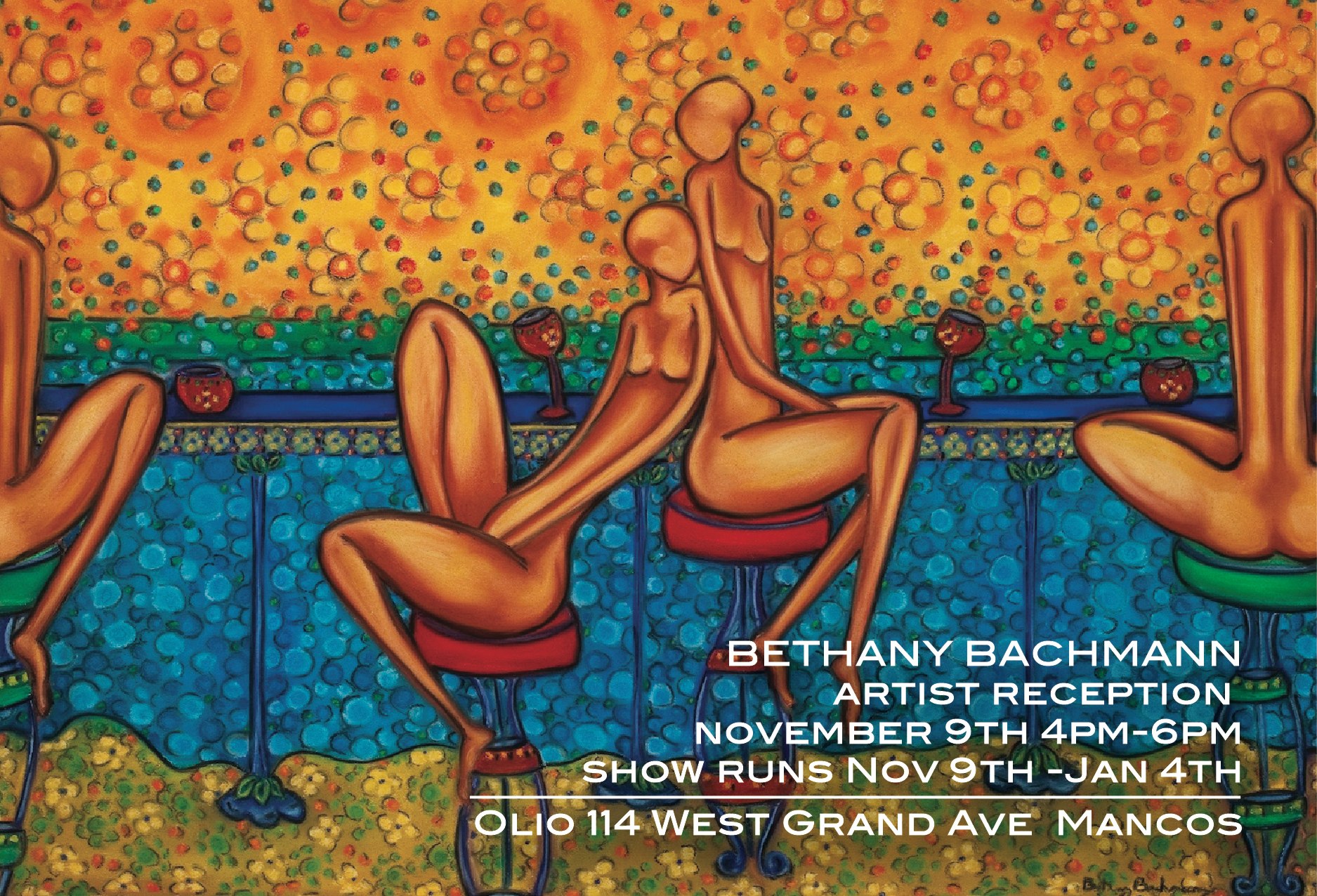
I’m going to my friend Bethany Bachmann’s artist reception today. She reads the final-final drafts of my books for me, which is how I try to make sure, one last time, that a manuscript is good enough to publish. Bethany reads for pleasure and overall opinion of a work, not for critique, so she is called an “alpha reader” in writer parlance. And though we only met a few months ago, we really clicked. I’ve been to a few of her art shows this summer, and I’m pysched to see another one. 🙂

Bethany conveys strong emotion in all of her work, especially longing or secret desire, and her color choices are amazing. You can find more of her work online at www.bethanybachmann.com.

Mark Montgomery- flyer front

Posted in My Thoughts | Leave a comment

I Am Malala: A Truly Great Read

I just finished reading I Am Malala, by Malala Yousafzai today, and it was a truly great read.

There’s a lot of history in this book, both of Pakistan as a whole as well as the Swat Valley, the region in northern Pakistan where Malala grew up. Through the lives of Malala and her family, the book gives you a sense of Pashtun culture, both before and after the Taliban took control of the valley. The horror of living with the constant threat of being shot, mutilated, and bombed is also vividly conveyed.

I was deeply reminded of Anne Frank while reading this book. The constant terrorism the decent people of Pakistan face is beyond words. The Taliban operates in an environment of complete fear, where no life is sacred, where nothing is sacred. The Taliban are the opposite of the tenets of Islam and the teachings of the Prophet Muhammad– they are Hitler and the Nazi SS.

The Pakistan army and government are also completely dysfunctional, and the book gives enough evidence of their ineptitude to leave your blood boiling.

The book opens with a brief account of Malala being shot in the head, and by the time her story catches up to that point, about the last third of the book, I had a hard time keeping my eyes from swimming while I read. Every page made me want to cry.

Pakistan is in need of leadership. Badly. The corruption in the military, especially the way in which the military supports the Taliban, is especially sickening. This is a country the Unites States has given billions and billions of dollars to (during the adminstration of George W. Bush), but U.S. tax dollars only lined the pockets of corrupt individuals, men who are not only happy to let terrorists walk free, but actively support them in terrorizing the people of Pakistan.

I’m so glad that Malala survived being shot in the face, and I’m so glad that she has started the Malala Fund, which I joined today.

But I don’t see a way out of this mess for Pakistan. That country needs a Muslim George Washington (who would never get in bed with the Taliban), and a coalition of a Muslim Adams/Jefferson/Hamilton/Franklin/Patrick Henry unit of individuals who want to recreate a Pakistan free of the Taliban. Until there are Pakistanis in power who are there to lead, not just seize power, and until there’s a military force that can keep those leaders safe (as the good leaders are blown up every day there)– then I don’t see how Pakistan is ever going to come out of the darkness.

There are so many other children being shot and bombed in Pakistan every day, in schools, in the streets, in their homes, and their government is assisting the Taliban in overseeing their torture and demise. It is unspeakably sad.

Posted in My Thoughts | Leave a comment

Old People, Antagonists, and Help Writing Villains

Unless you’re an antiques dealer, the word “old” in America doesn’t inspire joy in most people. It’s not news to anyone that ours is a culture obsessed with youth. From advertising to celebrity culture, young people seem to make the whole world go round. We all sort of live in two different environments. There is the youth-dominated world of the media and consumerism, filled with glossy products to buy and near-naked women slapped on the advertisements to sell the stuff. And we also inhabit the real world, that place filled with electric bills and oil changes and other mundane, non-celebrity-culture stuff.

The word “old” doesn’t help sell new products, and it sure isn’t something anyone wants to be. And yet, like monkey feces, it happens, and for those of us lucky enough to make it past middle age, it happens to all of us.

For most people, being “old” means a whole lot of suck. There are plenty of physical changes: wrinkles and creaky joints. Cancer rates increase. So does heart disease. Stroke. Sleep cycles change.

But the worst thing to deal with seems to be the mental changes, especially those surrounding the loss of identity: loss of work, of loved ones, and the familiarity of your environment. The world keeps right on changing around you, and it’s easy to lose your bearings.

Some people never turn “old” because they never lose their identity. They just keep making new ones, changing who they believe they are right along with their bodies. Life might hit them with cancer, with the death of their loved ones, with terrible disabilities. And yet they find things to keep smiling about. They keep their verve. They keep living.

We often say these people are “young at heart” because they have the fearlessness of teenagers and the wrinkles of experience. These people rock.

And then there are the actual “old people.” The aging folks most young people do everything they can to avoid. These people are bitter. Resentful. Hateful. They feel ugly, outmoded, and slow. They think the world’s out to get them. They are critical of appearances, which fuels their pettiness. With every loss they suffer, their identity narrows, rather than expands. In short, they cannot embrace change.

In writing terms, these people possess all the traits of antagonists. Anyone who wants to write a good book has to write a good villain, and the rigid fearfulness that can set in with old age is the stuff great villains are made of.

Villains are villainy because they lack compassion. They lack empathy. At any stage in our lives, a human can lose compassion and empathy, and at any stage in our lives, we can gain them both back. It’s one of the most fascinating things about life.

I’ve never written a villain as an old person before. (That seems so mean, doesn’t it? Old people have enough to deal with without being portrayed as villains, for Pete’s sake.)

But right now in my life, I have an old person who has decided to be my antagonist. A person I have only known a few months, but who has nevertheless decided that I am the enemy. Bitterness? Check. Resentment? Check. Hatred? Check. In this person’s eyes, I am wrong, everything I say is wrong, and meetings seem to exist for the sole reason of publicly pointing out how wrong I am.

It’s an interesting fact that some people decide that being the villain of the story gives them power, and that only this power can fuel their identity. Antagonism is always a choice, and this old, wrinkled curmudgeon in my life has definitely made a choice to be my antagonist.

Villainy all comes down to identity though. Where people decide their power will come from. Whether it’s the pretty girl in tenth grade who cyber-bullies her peers, or this wrinkled curmudgeon full of bitterness, both have decided that compassion is a weakness embraced only by fools.

I don’t ever want to reach a point where my wrinkles and creaky joints fill me with bitterness. Change is always hitting everyone, all the time. The benefit of aging is that you accumulate the psychological resource of experience, and experience can help you adjust to the change in your life.

My experience has helped me look at the pretty girl who cyber-bullies her peers and the old curmudgeon full of self-righteousness and realize that they are the same person. They are both people who’ve made the same choice about power, and how best to acquire it. Their tactics are identical, even if the logistics are different. The more villainous their behavior, the more powerful they feel, and the stronger their identity becomes.

They are slaves to their egos, and that’s the only way I can maintain any compassion for them. Their egos have hijacked their brains, and they are enslaved. No one likes to be enslaved. Especially when you can’t even realize you’re a slave.

For writers though, this is the paydirt of the psyche: understanding the choice to be bad. How it all comes down to identity. Who we want to believe we are, and therefore become.

Posted in My Thoughts | 1 Comment

Memory, Nostalgia, and the Joys of Proust

After a month of deliberate, leisurely reading, I arrived at the last page of Swann’s Way. Today is October 19, however, and I finished the book a few weeks ago. Which means I kind of freaked myself out with the idea of writing another blog post. I wrote my first entry without any problems. But for some reason, posting a second time made me feel solipsistic, and more than a little neurotic, so I buried myself in my current writing project, happy to deny the fact that I had started a blog.

So I guess I just have to embrace my idiotic neurosis and enjoy the Thrill of the Blog, which means letting the world know I enjoyed reading Marcel Proust’s Swann’s Way.

First, it should be noted that Swann’s Way has the sort of slippery, subtle plot that means “no plot at all” in genre fiction. As I’m currently writing genre fiction, this is how I initially labeled the plot of Swann’s Way: that it has no plot at all.

However, as my true heart’s desire is for literary fiction, which is often full of brilliant words and beautiful sentences in which Little Happens, but the soul is often Laid Bare, then it’s easy enough to see that Swann’s Way does, indeed, have a significant plot. Major plot. Maybe the best plot of all. There are many raving Proust-fans out there who would agree with that statement.

The narrator (who remains unnamed throughout the novel) has a deep longing for the people, places, and emotions he felt as a child, which he can only access through memory, and he illustrates how memories are strange, elusive things often beyond our control. Sometimes we can summon a memory by concentrating hard enough, but often, memory is summoned through our senses—smells, sounds, touch, images, feelings—that remind us of the last time we felt that way, smelled that perfume, heard that piece of music, touched silk that soft. Our minds have a mind of their own.

And so this is the plot of Swann’s Way. The narrator is grappling with memory, and why it operates as it does, and how the memories in our youth are so strong that they transform into something more substantial in our minds, into our beliefs.

And then we grow up, and the world changes around us, and no longer looks as it does in our memories, which are now attached to our beliefs. And when the world doesn’t match our beliefs, we experience internal conflict.

The narrator in Swann’s Way faces this dilemma, and as a grown man, he longs to see the world again as it looked when he was a child. The fact that his memories no longer match the world before him makes him feel he has lost, not his memories, but his beliefs. Was the world truly so much lovelier when he was a child? Or is that a trick of memory?

The narrator isn’t sure. Without using the word nostalgia, he sure makes a compelling case for defining exactly what it means to suffer from it: “But when a belief disappears, there survives it—more and more vigorous so as to mask the absence of the power we have lost to give reality to new things—a fetishistic attachment to the old things which our belief once animated, as if it were in them and not in us that the divine resided and as if our present lack of belief had a contingent clause, the death of the Gods.”

So here is the book’s central conflict: the death of the Gods—the loss of the divine that resides within us. How much more strife can one expect in a story? Swann’s Way has the highest stakes a book can have.

The closing words of the novel are also quite beautiful, and further illuminate the nostalgia the narrator is suffering from: “the memory of a certain image is but regret for a certain moment; and houses, roads, avenues are as fleeting, alas, as the years.”

How much more pessimistic can a human possibly be? To equate memory with regret? Wow. Is that a true statement? Yes. Memory can mean regret. But I would be as ready to say we can equate a memory with fondness as much as regret. I draw on happy memories as proof that happiness exists. So when I face a difficult situation, my brain can feed me this thought: I was happy once before, therefore, I will be happy again.

I know, I know. That is JUST the sort of bubbling optimism that literary fiction shuns. Bring on the depression! Bring on the hopelessness! Bring on… the REGRET! Life is meant to be dramatic, damn it! Where is the drama in optimism? THERE IS NONE. So don’t give me the release of desire and Buddha’s enlightenment. Give me pain, give me death, give me… NOSTALGIA! I need to long for things. Long for people who have died, for buildings that have been torn down, for fashions that no longer exist, for horses and carriages that once filled the streets. I need to long for everything outside my control… including my own memories.

And knowing that I have no control over my memories… memories that inform and create my beliefs… I will also make the mistake of wondering if my memories are where my divinity lies, where my very soul resides… and then wonder if I have killed my own Gods.

I think everyone faces this dilemma in life, especially in adolescence, which is why Swann’s Way is labeled by some as The Greatest Novel of All Time. As a teenager, I found my way out of this personal conundrum as follows: that one need only look at an Alzheimer’s patient to know that our soul does not reside in our memories. Belief does, but not our soul. Divinity is far more profound than memory. Though our egos (asshole things that they are) would like to trick us into believing that’s not the case.

I had many other thoughts as I finished reading Swann’s Way. This is definitely a great novel to read to kick-start Deep Thinking, Reflection, and spur on New Ideas. That’s why it’s been labeled Greatest Novel of All Time.

My favorite part of reading Swann’s Way in September definitely arrived when I watched the film Frances Ha. Frances Ha is a wonderful movie about a 27-year-old woman trying to figure out how to make her life work. As she bumbles her way through her troubles, Frances Ha has the idea to go to Paris one weekend and to read Swann’s Way on the trip.

And she reads the same copy I did, the same translation, with the same book cover. How awesome is that?? The film makes funny jokes about Proust. Proust jokes! Really!! I loved the movie Frances Ha, I loved that my friend April and I read Swann’s Way at the same time I saw Frances Ha, and I loved that life is full of coincidences like this. Because sometimes we grow up and our brains are able to make a memory as strong as a memory we made in our childhoods. Seeing Frances Ha reading Swann’s Way in the movie, I was overcome with so much joyful laughter, so much instant “Wow, This is Awesome!!” that I felt bad for Proust’s narrator, who can only equate memory with regret.

Life is so much more magical than that.

Posted in My Thoughts | Leave a comment

Reading Proust

My fabulous friend April and I are reading Marcel Proust’s Swann’s Way together this month. Marcel Proust was French, and April speaks fluent French, and so this project seemed a good fit for the two of us. I can’t wait to be able to label ourselves as people who have “read Proust.” It seems so MFA-program of us. (Not that I’ve ever enrolled in an MFA program, I’m just betting Proust is the sort of author students read at the Iowa Writers Workshop, so reading him makes me feel “edified and privileged” in a good sort of way.)

In 1899, when Proust was 28 years old, he began to withdraw from the world. It’s interesting to try to imagine myself as Marcel Proust, and how different my life would have been if I’d been 28 in 1899. No Facebook, no YouTube videos of Miley Ray Cyrus twerking, probably still using whale oil in my lamps, and never dreaming that WWI was inching its way onto the scene, as the colonial powers continued their scheme of worldwide domination, bringing us all ever closer to that inevitable day when Miley Ray Cyrus would be twerking on YouTube, and people would post about it on Facebook.

I wonder how Marcel Proust would have explained twerking to his parents. Maybe he would have sought advice from Teddy Wayne, who wrote this beautiful opinion piece in The New York Times about this thorny issue on August 31, 2013. (And it’s well worth the two-minute read for a grin.)

But anyway, back to 1899.

Proust loved flowers and plants, but suffered from such brutal asthma that he hid himself away in his apartment, where he could ignore the bustling world outside, sleep all day and work all night on his masterpiece. Swann’s Way is the first part of that masterpiece, the full collection of which is called In Search of Lost Time. My translation of Swann’s Way (by Lydia Davis) is 444 pages long.

I must confess that the idea of reading Proust terrified me for a long time. I thought he would be insanely difficult to read, on the level of William Faulkner’s The Sound and the Fury. I needed a copy of CliffsNotes to read The Sound and the Fury. I also had to reach the distinguished age of 31 before I considered myself mentally fit enough to attempt it. Despite how short that book is, it took me an entire week of full-time reading to finish it.

I can happily report that Swann’s Way is nowhere near that psychologically taxing.

I’ve read a little more than half of this novel in a week, and the prose is so lovely and enchanting that I keep turning pages, caught up in Proust’s memories of his childhood, his amazing ability with words, his acute ear for dialogue, and his lapidary reasoning to describe the behavior of his family and friends. Also, the boy really loved his mother, and who wouldn’t love a boy like that?

And now I have reached the part of the book where M. Swann, that infamous neighbor of Proust, has found himself falling in love, and I’m highly curious to see what happens next.

Posted in My Thoughts | Leave a comment